之
| ||||||||
Translingual
| Stroke order | |||
|---|---|---|---|
 | |||
| Stroke order | |||
|---|---|---|---|
 | |||
Han character
之 (Kangxi radical 4, 丿+3 in traditional Chinese and Korean, 丿+2 in mainland China and Japanese, 4 strokes in traditional Chinese and Korean, 3 strokes in mainland China and Japanese, cangjie input 戈弓人 (INO), four-corner 30307, composition ⿳丶㇇乀)
Descendants
- し (Hiragana character derived from Man'yōgana)
- シ (Katakana character derived from Man'yōgana)
References
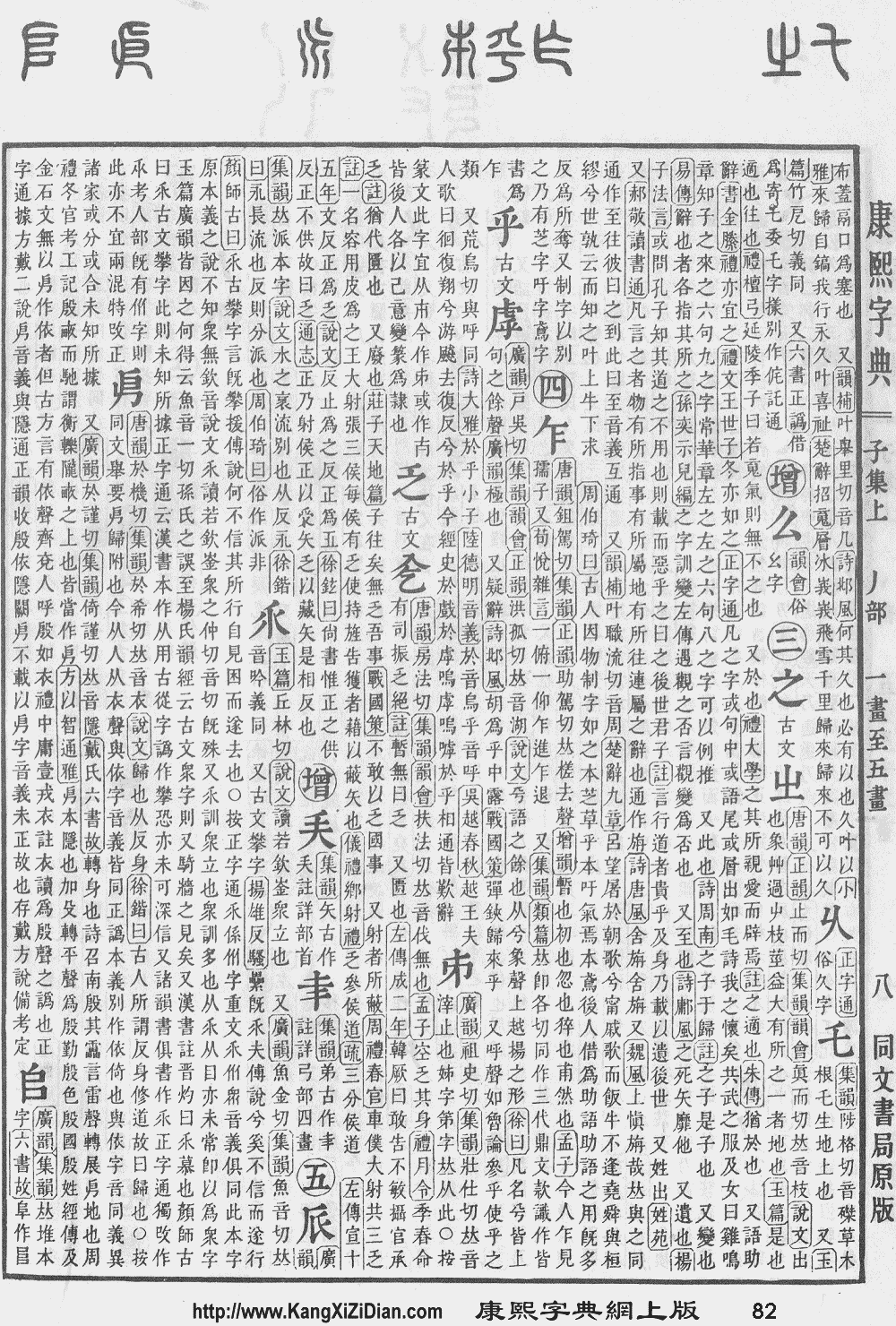
- KangXi: page 82, character 4
- Dai Kanwa Jiten: character 125
- Hanyu Da Zidian (first edition): volume 1, page 43, character 1
- Unihan data for U+4E4B
Chinese
| simp. and trad. |
之 | |
|---|---|---|
| alternative forms | 㞢 𠔇 𡳿 の nonstandard | |
Glyph origin
| Historical forms of the character 之 | ||||||||||||||||||||||||||||||||||||||||||||||||||||||||||||||||||||||||||||||||||||||||||||||||||||||||||||||||||||||||||||||||||||||||||||||||||||||||||||||||||||||||||||||||||||||||||||||||||||||||||||||||||||||||||||||||||||||||||||||||||||
|---|---|---|---|---|---|---|---|---|---|---|---|---|---|---|---|---|---|---|---|---|---|---|---|---|---|---|---|---|---|---|---|---|---|---|---|---|---|---|---|---|---|---|---|---|---|---|---|---|---|---|---|---|---|---|---|---|---|---|---|---|---|---|---|---|---|---|---|---|---|---|---|---|---|---|---|---|---|---|---|---|---|---|---|---|---|---|---|---|---|---|---|---|---|---|---|---|---|---|---|---|---|---|---|---|---|---|---|---|---|---|---|---|---|---|---|---|---|---|---|---|---|---|---|---|---|---|---|---|---|---|---|---|---|---|---|---|---|---|---|---|---|---|---|---|---|---|---|---|---|---|---|---|---|---|---|---|---|---|---|---|---|---|---|---|---|---|---|---|---|---|---|---|---|---|---|---|---|---|---|---|---|---|---|---|---|---|---|---|---|---|---|---|---|---|---|---|---|---|---|---|---|---|---|---|---|---|---|---|---|---|---|---|---|---|---|---|---|---|---|---|---|---|---|---|---|---|---|---|---|---|---|---|---|---|---|---|---|---|---|---|---|---|---|---|
| Shang | Western Zhou | Warring States | Shuowen Jiezi (compiled in Han) | Liushutong (compiled in Ming) | ||||||||||||||||||||||||||||||||||||||||||||||||||||||||||||||||||||||||||||||||||||||||||||||||||||||||||||||||||||||||||||||||||||||||||||||||||||||||||||||||||||||||||||||||||||||||||||||||||||||||||||||||||||||||||||||||||||||||||||||||
| Oracle bone script | Bronze inscriptions | Chu slip and silk script | Small seal script | Transcribed ancient scripts | ||||||||||||||||||||||||||||||||||||||||||||||||||||||||||||||||||||||||||||||||||||||||||||||||||||||||||||||||||||||||||||||||||||||||||||||||||||||||||||||||||||||||||||||||||||||||||||||||||||||||||||||||||||||||||||||||||||||||||||||||
 |
 |
 |
 |
 | ||||||||||||||||||||||||||||||||||||||||||||||||||||||||||||||||||||||||||||||||||||||||||||||||||||||||||||||||||||||||||||||||||||||||||||||||||||||||||||||||||||||||||||||||||||||||||||||||||||||||||||||||||||||||||||||||||||||||||||||||
||||
|
References: Mostly from Richard Sears' Chinese Etymology site (authorisation),
| ||||||||||||||||||||||||||||||||||||||||||||||||||||||||||||||||||||||||||||||||||||||||||||||||||||||||||||||||||||||||||||||||||||||||||||||||||||||||||||||||||||||||||||||||||||||||||||||||||||||||||||||||||||||||||||||||||||||||||||||||||||


Ideogrammic compound (會意) : 止 (“foot”) + 一 (“the beginning place”); compound meaning “to go”.
Etymology
Pronunciation
Definitions
之
- (literary) Indicates that the previous word has possession of the next one.
- 生命之道 ― shēngmìng zhī dào ― the way of life/life's way
- 北部灣之星——欽州/北部湾之星——钦州 ― Běibùwān zhī xīng — Qīnzhōu ― star of the Gulf of Tonkin-- Qinzhou
- 天其永我命于茲新邑,紹復先王之大業,厎綏四方。 [Classical Chinese, trad.]
- From: The Book of Documents, circa 4th – 3rd century BCE
- Tiān qí yǒng wǒ mìng yú zī xīn yì, shàofù xiānwáng zhī dàyè, 厎suí sìfāng. [Pinyin]
- Heaven will perpetuate its decree in our favour in this new city; the great inheritance of the former kings will be continued and renewed, and tranquillity will be secured to the four quarters (of the kingdom)
天其永我命于兹新邑,绍复先王之大业,厎绥四方。 [Classical Chinese, simp.]- 第二條關係雙方當事人之住所,由雙方共同協議;未為協議或協議不成時,得聲請法院定之。 [MSC, trad.]
- From: 2019 May 17, 《司法院釋字第七四八號解釋施行法》
- Dì-èr tiáo guānxì shuāngfāng dāngshìrén zhī zhùsuǒ, yóu shuāngfāng gòngtóng xiéyì; wèi wéi xiéyì huò xiéyì bùchéng shí, dé shēngqǐng fǎyuàn dìng zhī. [Pinyin]
- (please add an English translation of this example)
第二条关系双方当事人之住所,由双方共同协议;未为协议或协议不成时,得声请法院定之。 [MSC, simp.]
- Indicates that the previous word modifies the next one.
- 尺寸之功 ― chǐcùnzhīgōng ― a minor contribution
- 萬乘之國弒其君者,必千乘之家。 [Classical Chinese, trad.]
- From: Mencius, c. 4th century BCE
- Wànshèng zhī guó shì qí jūn zhě, bì qiānshèng zhī jiā. [Pinyin]
- In the kingdom of ten thousand chariots, the murderer of his sovereign shall be the chief of a family of a thousand chariots.
万乘之国弑其君者,必千乘之家。 [Classical Chinese, simp.]- 相同性別之二人,得為經營共同生活之目的,成立具有親密性及排他性之永久結合關係。 [MSC, trad.]
- From: 2019 May 17, 《司法院釋字第七四八號解釋施行法》
- Xiàngtóng xìngbié zhī èr rén, dé wèi jīngyíng gòngtóng shēnghuó zhī mùde, chénglì jùyǒu qīnmìxìng jí páitāxìng zhī yǒngjiǔ jiéhé guānxì. [Pinyin]
- (please add an English translation of this example)
相同性别之二人,得为经营共同生活之目的,成立具有亲密性及排他性之永久结合关系。 [MSC, simp.]
- particle indicating that the preceding element is specialised or qualified by the next
- (archaic) Particle infixed in a subject-predicate construct indicating a subordinate clause.
- 大道之行也,天下為公。 [Classical Chinese, trad.]
- From: The Book of Rites, c. 4th – 2nd century BCE, translated based on James Legge's version
- Dàdào zhī xíng yě, tiānxià wèi gōng. [Pinyin]
- When the Grand Course was pursued, a public and common spirit ruled all under the sky.
大道之行也,天下为公。 [Classical Chinese, simp.]
- (obsolete) this; these
- 之子于歸。 [Pre-Classical Chinese, trad.]
- From: The Classic of Poetry, c. 11th – 7th centuries BCE, translated based on James Legge's version
- Zhī zǐ yúguī. [Pinyin]
- This girl is to get married.
之子于归。 [Pre-Classical Chinese, simp.]
- (obsolete) to sprout; to come about
- (literary) to go
- 吾欲之楚。 [Classical Chinese, trad. and simp.]
- From: Zhanguo Ce, circa 5th – 3rd centuries BCE
- Wú yù zhī chǔ. [Pinyin]
- I want to go to Chu.
- (literary) The third-person pronoun: him, her, it, them, when it appears in a non-subject position in the sentence.
- 取而代之 ― qǔ'érdàizhī ― to take the place of (the aforementioned subject)
- 第二條關係雙方當事人之住所,由雙方共同協議;未為協議或協議不成時,得聲請法院定之。 [MSC, trad.]
- From: 2019 May 17, 《司法院釋字第七四八號解釋施行法》
- Dì-èr tiáo guānxì shuāngfāng dāngshìrén zhī zhùsuǒ, yóu shuāngfāng gòngtóng xiéyì; wèi wéi xiéyì huò xiéyì bùchéng shí, dé shēngqǐng fǎyuàn dìng zhī. [Pinyin]
- (please add an English translation of this example)
第二条关系双方当事人之住所,由双方共同协议;未为协议或协议不成时,得声请法院定之。 [MSC, simp.]
Synonyms
Compounds
|
|
|
References
- “之”, in 漢語多功能字庫 (Multi-function Chinese Character Database), 香港中文大學 (the Chinese University of Hong Kong), 2014–
- Dictionary of Chinese Character Variants (教育部異體字字典), A00029
Japanese
Readings
Etymology 1
| Kanji in this term |
|---|
| 之 |
| の Jinmeiyō |
| kun’yomi |
Orthographic borrowing from Chinese 之 (possessive marker). Formerly used to represent the possessive particle の (no). In modern Japanese, this character is seldom used, and most commonly found in names, such as 龍之介 (Ryūnosuke).
| For pronunciation and definitions of 之 – see the following entry. | ||
| ||
| (This term, 之, is an alternative (rare, literary) spelling of the above term.) |
Etymology 2
| Kanji in this term |
|---|
| 之 |
| これ Jinmeiyō |
| kun’yomi |
| For pronunciation and definitions of 之 – see the following entry. | ||
| ||
| (This term, 之, is an alternative spelling of the above term.) |
Etymology 3
| Kanji in this term |
|---|
| 之 |
| すすむ Jinmeiyō |
| nanori |
Korean
Vietnamese
Han character
之: Hán Việt readings: chi (
之: Nôm readings: gì[1][2][3][4][5], giây[1][2][3][4][5], chi[1][2][3][5]
References
- Nguyễn (2014).
- Nguyễn et al. (2009).
- Trần (2004).
- Hồ (1976).
- Taberd & Pigneau de Béhaine (1838).