命
| ||||||||
Translingual
| Stroke order | |||
|---|---|---|---|
 | |||
Han character
命 (Kangxi radical 30, 口+5, 8 strokes, cangjie input 人一口中 (OMRL), four-corner 80627, composition ⿱亼叩 or ⿹令口)
See also
- 𠴠, 𨉓
References
- KangXi: page 183, character 18
- Dai Kanwa Jiten: character 3473
- Dae Jaweon: page 402, character 15
- Hanyu Da Zidian (first edition): volume 1, page 604, character 11
- Unihan data for U+547D
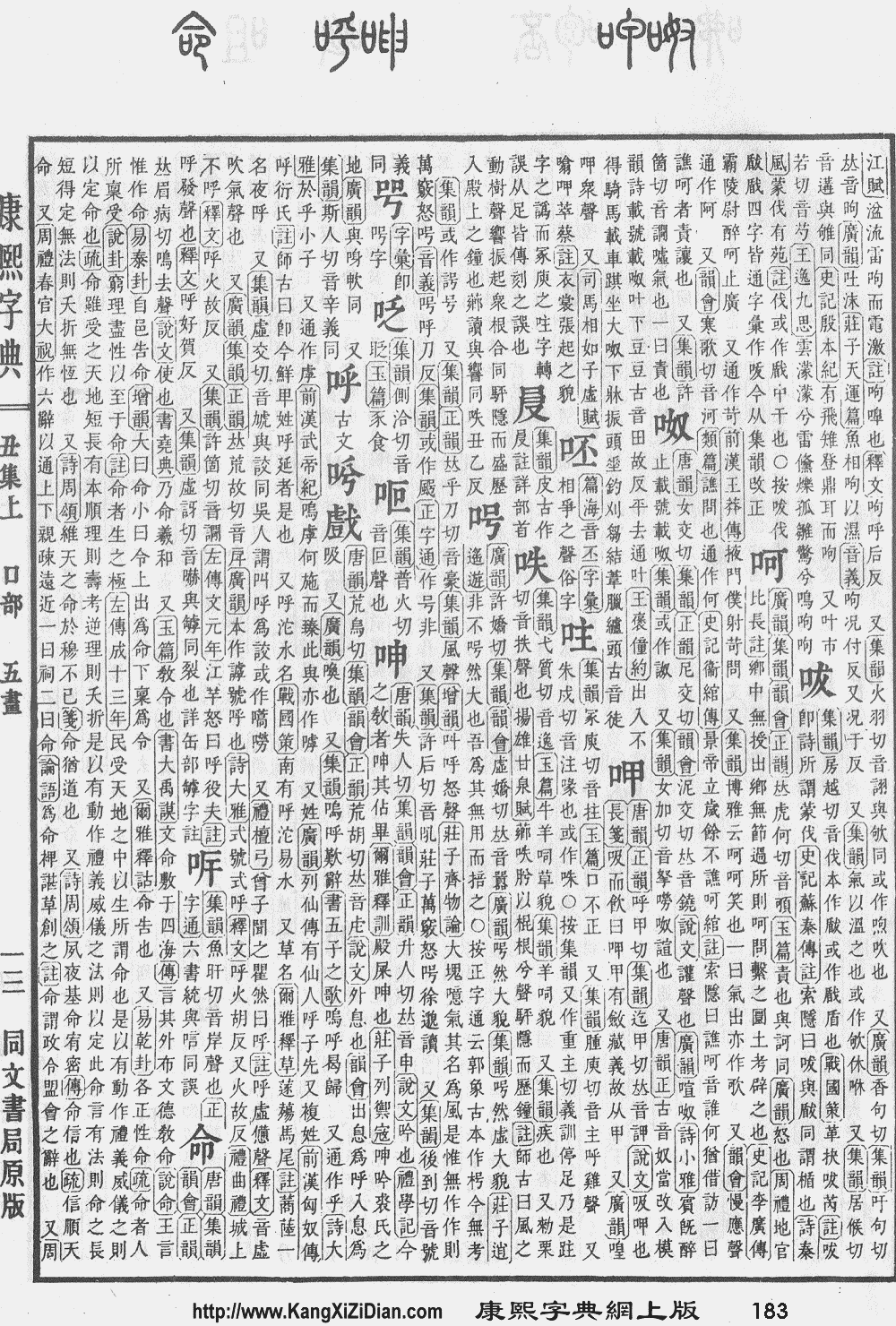
Chinese
| simp. and trad. |
命 | |
|---|---|---|
| alternative forms | 𠇮 𫝇 | |
Glyph origin
| Historical forms of the character 命 | ||||
|---|---|---|---|---|
| Shang | Western Zhou | Warring States | Shuowen Jiezi (compiled in Han) | Liushutong (compiled in Ming) |
| Oracle bone script | Bronze inscriptions | Chu slip and silk script | Small seal script | Transcribed ancient scripts |
 |
 |
 |
 |
 |
| Old Chinese | |
|---|---|
| 令 | *ren, *reŋ, *reŋs, *reːŋ, *reːŋs |
| 怜 | *riːn, *reːŋ |
| 零 | *riːŋ, *reːŋ, *reːŋs |
| 魿 | *ɡriŋ, *reːŋ |
| 命 | *mreŋs |
| 冷 | *raːŋʔ, *reːŋ, *reːŋʔ |
| 跉 | *reŋ, *reːŋ |
| 嶺 | *reŋʔ |
| 領 | *reŋʔ |
| 阾 | *reŋʔ, *reːŋ |
| 柃 | *reŋʔ, *reːŋ |
| 袊 | *reŋʔ |
| 詅 | *reŋs, *reːŋ |
| 旍 | *ʔsleŋ |
| 舲 | *reːŋ |
| 齡 | *reːŋ |
| 囹 | *reːŋ |
| 鴒 | *reːŋ |
| 蛉 | *reːŋ |
| 鈴 | *reːŋ |
| 苓 | *reːŋ |
| 伶 | *reːŋ |
| 泠 | *reːŋ |
| 瓴 | *reːŋ |
| 拎 | *reːŋ |
| 刢 | *reːŋ |
| 玲 | *reːŋ |
| 聆 | *reːŋ |
| 竛 | *reːŋ |
| 軨 | *reːŋ |
| 笭 | *reːŋ, *reːŋʔ |
| 翎 | *reːŋ |
| 閝 | *reːŋ |
| 鹷 | *reːŋ |
| 昤 | *reːŋ |
| 駖 | *reːŋ |
| 彾 | *reːŋ |
| 呤 | *reːŋ |
| 狑 | *reːŋ |
| 秢 | *reːŋ |
| 岭 | *reːŋ |
| 紷 | *reːŋ |
| 砱 | *reːŋ |
| 羚 | *reːŋ |
| 姈 | *reːŋ |
| 蕶 | *reːŋ |
| 澪 | *reːŋ |
Phono-semantic compound (形聲, OC *mreŋs) : semantic 口 (“mouth”) + phonetic 令 (OC *ren, *reŋ, *reŋs, *reːŋ, *reːŋs).
Etymology
Related to 令 (OC *ren, *reŋ, *reŋs, *reːŋ, *reːŋs, “to order; to command; order”) (Wang, 1982). Both may be derived from 名 (OC *meŋ, “name”): “name” (名) > “to name; to give (a name to)” (命) > “to order; to command” > “order; command” > “destiny; fate; lot” > “life” (Schuessler, 2007).
Pronunciation
Definitions
命
Synonyms
- (life): 生命 (shēngmìng)
See also
- 生活 (shēnghuó, “(personal aspects of) life”)
Compounds
|
|
|
Japanese
Readings
Etymology 1
| Kanji in this term |
|---|
| 命 |
| いのち Grade: 3 |
| kun’yomi |
From Old Japanese. Probably a compound of Old Japanese elements 息 (i, “breath”, i in compounds, iki on its own) + の (no, possessive particle) + 霊 (chi, “spirit, force, soul”).
Some analyses describe this as a compound using 生 (i, “life, breath”, i in compounds, iki on its own) as the initial semantic element. This is equally valid, as 息 (iki) and 生き (iki) are cognates.
Noun
命 • (inochi)
Synonyms
Etymology 2
| Kanji in this term |
|---|
| 命 |
| みこと Grade: 3 |
| kun’yomi |
From Old Japanese. Compound of 御 (mi-, honorific prefix) + 言 (koto, “word”).[2] The mi prefix is generally limited to extremely high-status contexts such as gods or emperors.
Alternative forms
- 御言 (mikoto)
Etymology 3
| Kanji in this term |
|---|
| 命 |
| みこと Grade: 3 |
| kun’yomi |
From Old Japanese. Originally a compound of 御 (mi-, honorific prefix) + 事 (koto, “abstract thing”, as opposed to 物, mono, “concrete thing”).[2][1]
Alternative forms
Noun
命 • (mikoto)
- the honorable, the exalted
- Used as a title after the referenced noun when referring to gods, emperors, or other high-status persons.
- the beloved, dearly beloved
- Similarly used as a title after the referenced noun.
- 711–712, Kojiki (Kami tsu maki)
- 和加久佐能 都麻能美許登
- 若草の妻の命
- わかくさのつまのみこと
- Wakakusa no tsuma no mikoto
- dearly beloved young wife
Usage notes
Used ironically from the late Heian period, expressing a sense of mild derision or ridicule.
Etymology 4
| Kanji in this term |
|---|
| 命 |
| めい Grade: 3 |
| on’yomi |
From Middle Chinese 命 (mjængH, “command”). Compare modern Mandarin 命 (mìng, “life, destiny, instruction”).
Synonyms
References
- 2006, 大辞林 (Daijirin), Third Edition (in Japanese), Tōkyō: Sanseidō, →ISBN
- 1988, 国語大辞典(新装版) (Kokugo Dai Jiten, Revised Edition) (in Japanese), Tōkyō: Shogakukan
Okinawan
Pronunciation
- IPA(key): [nut͡ɕi]