志
| ||||||||
 | ||||||||
Translingual
| Stroke order | |||
|---|---|---|---|
 | |||
Han character
志 (Kangxi radical 61, 心+3, 7 strokes, cangjie input 土心 (GP), four-corner 40331, composition ⿱士心)
References
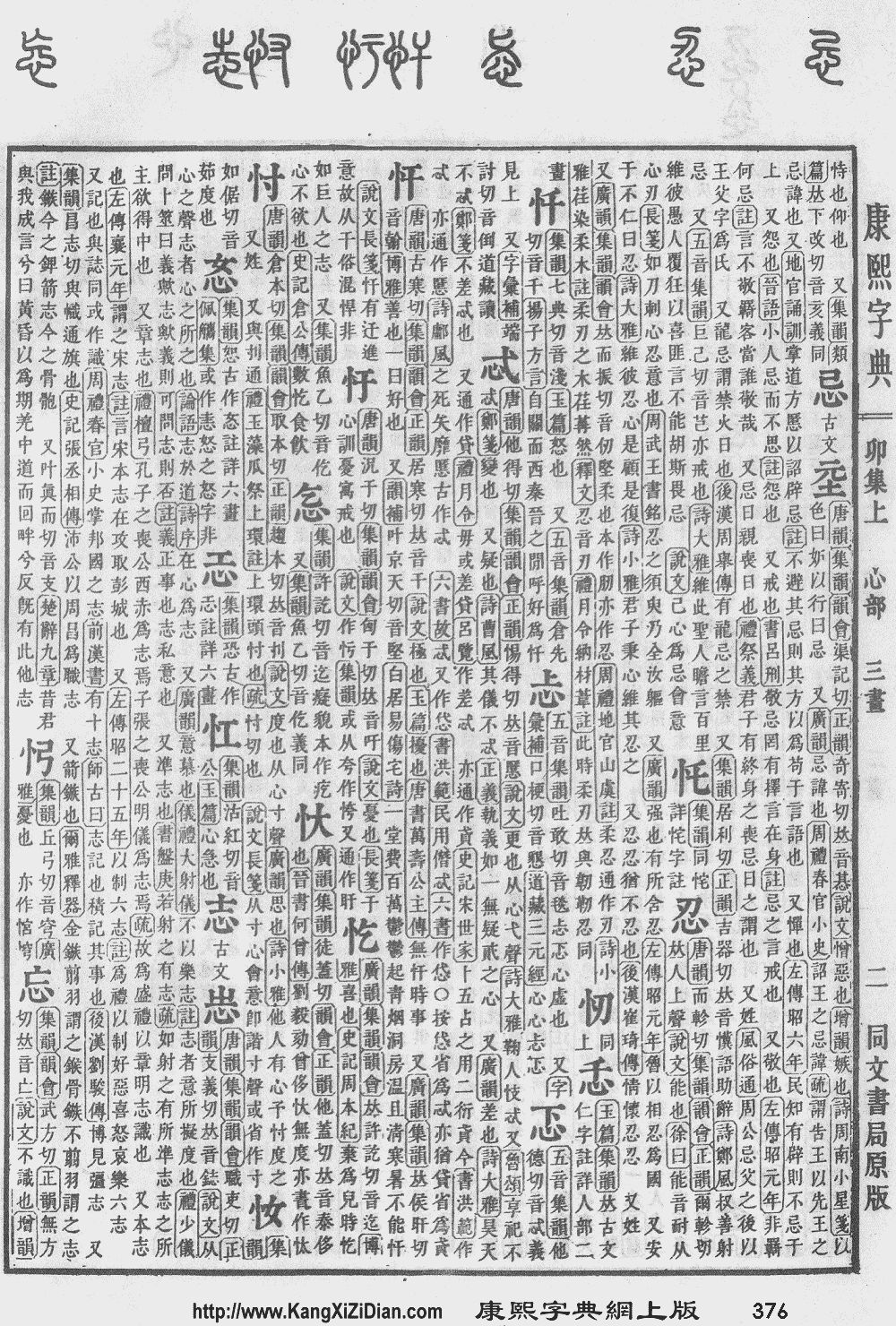
- KangXi: page 376, character 21
- Dai Kanwa Jiten: character 10331
- Dae Jaweon: page 703, character 7
- Hanyu Da Zidian (first edition): volume 4, page 2269, character 4
- Unihan data for U+5FD7
- Unihan data for U+2F89E
Chinese
Glyph origin
Phono-semantic compound (形聲, OC *tjɯs) : phonetic 之 (OC *tjɯ) + semantic 心.
Note that the top has been simplified and is now graphically 士.
Etymology 1
| simp. and trad. |
志 | |
|---|---|---|
| alternative forms | ||
From 之 (OC *tjɯ, “to go; to proceed”) + endopassive suffix *-s, literally “what is being proceeded to” (Schuessler, 2007).
Pronunciation
Definitions
志
- will; determination; aspiration; ambition
- Alternative form of 誌 (“annals; records”).
- a surname
Compounds
|
|
|
Etymology 2
| For pronunciation and definitions of 志 – see 誌 (“records, annals; to memorize; etc.”). (This character, 志, is the simplified form of 誌.) |
Notes:
|
Japanese
Readings
Compounds
Etymology 1
| Kanji in this term |
|---|
| 志 |
| こころざし Grade: 5 |
| kun’yomi |
The 連用形 (ren'yōkei, “continuative or stem form”) of verb 志す (kokorozasu, “to intend to do something, to aspire to do something”).
Usage notes
This is one of only three everyday kanji with a five-mora reading, and one of only two nouns. The only other kanji with five-mora readings are 承, in the verb 承る (uketamawaru), and 詔 (mikotonori). No kanji in common use has a six- or more mora reading.
The unusually long reading is due to two factors: 志 (kokorozashi) is a nominalization of the verb 志す (kokorozasu), which has a long reading (four morae, kokoroza-su), which itself is a noun-verb compound, 心指す (kokorozasu). The nominalization absorbs the okurigana, hence increasing the reading by one mora, yielding 4+1=5, or more finely 3+(1+1)=5 (compare common 話 (hanashi) 2+1=3, from 話す (hanasu)).
Etymology 2
Various name readings.
Proper noun
志 • (Yuki)
- a female given name
志 • (Koko)
- a female given name
志 • (Kokoro)
- a female given name
志 • (Nozomi)
- a female given name
志 • (Shii)
- a female given name
志 • (Nozomu)
- a male given name
志 • (Shi)
- a surname