世
 | ||||||||
Translingual
| Stroke order | |||
|---|---|---|---|
 | |||
| Stroke order | |||
|---|---|---|---|
 | |||
Han character
世 (Kangxi radical 1, 一+4, 5 strokes, cangjie input 心廿 (PT), four-corner 44717, composition ⿻廿𠃊)
Derived characters
Descendants
- せ (Hiragana character derived from man'yōgana)
- セ (Katakana character derived from man'yōgana)
Further reading
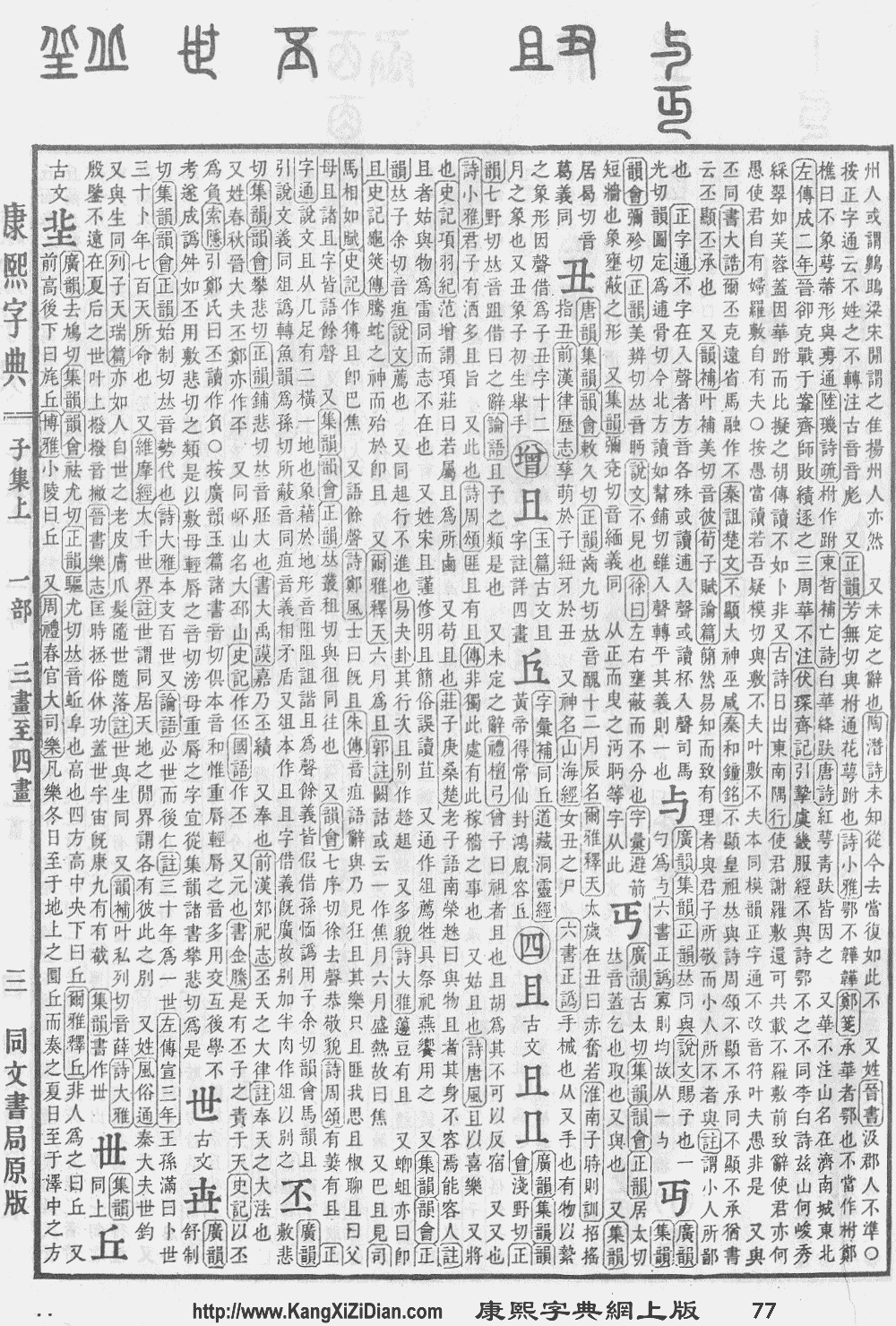
- KangXi: page 77, character 11
- Dai Kanwa Jiten: character 31
- Dae Jaweon: page 155, character 2
- Hanyu Da Zidian (first edition): volume 1, page 14, character 6
- Unihan data for U+4E16
Chinese
| simp. and trad. |
世 | |
|---|---|---|
| alternative forms | ||
Glyph origin
| Historical forms of the character 世 | |||||||||||||||||||||||||||||||||||||||||||||||||||||||||||
|---|---|---|---|---|---|---|---|---|---|---|---|---|---|---|---|---|---|---|---|---|---|---|---|---|---|---|---|---|---|---|---|---|---|---|---|---|---|---|---|---|---|---|---|---|---|---|---|---|---|---|---|---|---|---|---|---|---|---|---|
| Western Zhou | Shuowen Jiezi (compiled in Han) | Liushutong (compiled in Ming) | |||||||||||||||||||||||||||||||||||||||||||||||||||||||||
| Bronze inscriptions | Small seal script | Transcribed ancient scripts | |||||||||||||||||||||||||||||||||||||||||||||||||||||||||
 |
 |
 | |||||||||||||||||||||||||||||||||||||||||||||||||||||||||
||
|
References: Mostly from Richard Sears' Chinese Etymology site (authorisation),
| |||||||||||||||||||||||||||||||||||||||||||||||||||||||||||


| Old Chinese | |
|---|---|
| 貰 | *ɦljebs, *hljebs |
| 跇 | *l̥ʰebs, *lebs |
| 迣 | *ʔljebs |
| 世 | *hljebs |
| 泄 | *lebs, *sled |
| 枻 | *lebs |
| 詍 | *lebs |
| 靾 | *lebs |
| 袣 | *lebs |
| 抴 | *lebs, *led |
| 呭 | *lebs |
| 勩 | *lebs, *libs |
| 屜 | *l̥ʰeːbs |
| 鰈 | *l̥ʰaːb, *l'eːb |
| 渫 | *zreːb, *sled |
| 煠 | *zreːb, *l̥ʰeb, *leb |
| 喋 | *rlaːb, *ʔl'eːb, *l'eːb |
| 鞢 | *rlaːb, *sleːb |
| 殜 | *l'eb, *leb, *lab |
| 葉 | *hljeb, *leb |
| 弽 | *hljeb, *hleːb |
| 韘 | *hljeb, *sleːb |
| 枼 | *leb |
| 楪 | *leb |
| 揲 | *leb, *l'eːb, *ɦljed |
| 鍱 | *leb |
| 偞 | *leb, *hleːb |
| 蝶 | *l̥ʰeːb, *l'eːb |
| 牒 | *l'eːb |
| 蹀 | *l'eːb |
| 諜 | *l'eːb |
| 堞 | *l'eːb |
| 牃 | *l'eːb |
| 褋 | *l'eːb |
| 惵 | *l'eːb |
| 碟 | *l'eːb |
| 屧 | *sleːb |
| 屟 | *sleːb |
| 紲 | *sled |
| 齛 | *sled |
| 疶 | *sled |
| 緤 | *sled |
| 媟 | *sled |
- Pictogram (象形) – three leaves on a branch. The derivative 葉 (OC *hljeb, *leb) refers to the original word.
- Ideogrammic compound (會意/会意) : Triplication of 十 (“ten”) - thirty, such as a variant form 丗. Thirty years make one generation (thirty times twelve months gives 360 months). Compare 廿 (OC *njɯb, “twenty”).
Etymology
世 (OC *hljebs) is derived from iterative devoicing of 葉 (OC *leb, “leaf”) + *-s suffix, meaning successive foliages of a tree > generations. Compare Tibetan ལོ་མ (lo ma, “leaf”), Western Tibetan ལོབ་མ (lob ma, “leaf”) and Tibetan ལོ (lo, “year”).
Pronunciation
Definitions
世
- generation
- 子曰:「如有王者,必世而後仁。」 [Classical Chinese, trad.]
- From: The Analects of Confucius, c. 475 – 221 BCE, translated based on James Legge's version
- Zǐ yuē: “Rú yǒu wángzhě, bì shì ér hòu rén.” [Pinyin]
- The Master said, "If a truly royal ruler were to arise, it would still require a generation, and then virtue would prevail."
子曰:“如有王者,必世而后仁。” [Classical Chinese, simp.]
- (literary, or in compounds) for many generations; spanning many generations
- 下武維周,世有哲王。三后在天,王配于京。 [Pre-Classical Chinese, trad.]
- From: The Classic of Poetry, c. 11th – 7th centuries BCE, translated based on James Legge's version
- Xià wǔ wéi Zhōu, shì yǒu zhé wáng. Sān hòu zài tiān, wáng pèi yú jīng. [Pinyin]
- Successors tread in the steps [of their predecessors] in our Zhou; for generations there had been wise kings. The three sovereigns were in heaven; and king [Wu] was their worthy successor in his capital.
下武维周,世有哲王。三后在天,王配于京。 [Pre-Classical Chinese, simp.]
- (in terms of address) longstanding friendship between two families; generations of family friendship
- 世伯 ― shìbó ― uncle (friend of one's father)
- lifetime; all one's life; one's whole life
- era; period; time
- 鴻荒之世,聖人惡之,是以法始乎伏犠而成乎堯。 [Classical Chinese, trad.]
- From: Yang Xiong, Fa Yan (Exemplary Sayings), 9 CE
- Hónghuāng zhī shì, shèngrén wù zhī, shìyǐ fǎ shǐ hū Fúxī ér chéng hū Yáo. [Pinyin]
- The sages hated the primeval time. Thus, laws and institutions were established by Fuxi and were completed by Yao.
鸿荒之世,圣人恶之,是以法始乎伏犠而成乎尧。 [Classical Chinese, simp.]
- (geology) epoch (geochronologic unit)
- 全新世 ― quánxīnshì ― holocene
- world; people in the world
- 世稱東方生之盛也,言不純師,行不純表,其流風、遺書,蔑如也。 [Classical Chinese, trad.]
- From: Yang Xiong, Fa Yan (Exemplary Sayings), 9 CE
- Shì chēng Dōngfāng shēng zhī shèng yě, yán bù chún shī, xíng bù chún biǎo, qí liúfēng, yíshū, mièrú yě. [Pinyin]
- The world lauds the exuberance of Dongfang Shuo's life. But in speaking, he was not sincere enough to be a teacher, and in action, he was not a sincere enough to be a role model. The remnants of his writings that are still floating around should be discarded.
世称东方生之盛也,言不纯师,行不纯表,其流风、遗书,蔑如也。 [Classical Chinese, simp.]
- (literary, or in compounds) dynasty; regime
- 問今是何世,乃不知有漢,無論魏晉。 [Classical Chinese, trad.]
- From: The Peach Blossom Spring (桃花源記), by Tao Yuanming, 421 (Wiktionary translation)
- Wèn jīn shì hé shì, nǎi bùzhī yǒu Hàn, wúlùn Wèi Jìn. [Pinyin]
- They asked what the current ruling dynasty was. Surprisingly, they had not even heard of the Han, let alone the Wei and the Jin.
问今是何世,乃不知有汉,无论魏晋。 [Classical Chinese, simp.]- 爰自麗世之季,及至我朝之初,屢經島夷之陸梁,寺亦焚燬。 [Korean Literary Sinitic, trad.]
- From: Former inscription at Gunjasa Temple, Hamyang County, 1684
- 원자여세지계(로) 급지아조지초(히) 누경도이지육량(하야) 사역분훼(라)
Won ja Yeo se ji gye[-ro], geupji ajo ji cho[-hi], nu gyeong doi ji yungnyang[-haya], sa yeok bunhwe[-ra]. [Sino-Korean] - From the end of the Goryeo dynasty to the early years of the present dynasty, [the area] suffered repeated incursions by the island savages, and the temple was also burnt and destroyed.
- (literary, or in compounds) year; age
- (literary, or in compounds) worldly; profane; secular
- 人情世故 ― rénqíngshìgù ― ways of the world
- a surname
Synonyms
- (generation): 代 (dài)
- (for many generations):
- (lifetime):
- (era):
- (world):
- (dynasty):
Compounds
|
|
|
Japanese
Readings
Etymology 1
| Kanji in this term |
|---|
| 世 |
| よ Grade: 3 |
| kun’yomi |
⟨yo2⟩ → /yo/
From Old Japanese, pronunciation is distinct from 夜 (/yo1/, “night, nighttime”).
Change in meaning of 節 (yo), in the sense of the bamboos and reeds bulging at certain intervals.[1]
Alternative forms
Pronunciation
Noun
世 • (yo)
Derived terms
- 神世 (kamiyo)
Etymology 2
| Kanji in this term |
|---|
| 世 |
| せい Grade: 3 |
| on’yomi |
From Middle Chinese 世 (MC ɕiᴇiH). The kan'on reading, so likely a later borrowing.
Korean
Etymology
From Middle Chinese 世 (MC ɕiᴇiH).
| Historical Readings | ||
|---|---|---|
| Dongguk Jeongun Reading | ||
| Dongguk Jeongun, 1448 | 솅〮 (Yale: syéy) | |
| Middle Korean | ||
| Text | Eumhun | |
| Gloss (hun) | Reading | |
| Hunmong Jahoe, 1527 | 누리〮 (Yale: nwùlí) | 셰〯 (Yale: syěy) |
| Sinjeung Yuhap, 1576 | 인간 (Yale: inkan) | 셰 (Yale: syey) |
Pronunciation
- (SK Standard/Seoul) IPA(key): [sʰe̞(ː)]
- Phonetic hangul: [세(ː)]
- Though still prescribed in Standard Korean, most speakers in both Koreas no longer distinguish vowel length.
Compounds
- 세가 (世家, sega)
- 세간 (世間, segan)
- 세계 (世界, segye)
- 세기 (世紀, segi)
- 세대 (世代, sedae)
- 세도 (世道, sedo)
- 세로 (世路, sero)
- 세사 (世事, sesa)
- 세상 (世上, sesang)
- 세상 (世相, sesang)
- 세속 (世俗, sesok)
- 세습 (世襲, seseup)
- 세자 (世子, seja)
- 세정 (世情, sejeong)
- 세조 (世祖, Sejo)
- 세종 (世宗, Sejong)
- 세칭 (世稱, seching)
- 세태 (世態, setae)
- 세파 (世波, sepa)
- 세평 (世評, sepyeong)
- 개세 (慨世, gaese)
- 개세 (蓋世, gaese)
- 거세 (擧世, geose)
- 격세 (隔世, gyeokse)
- 경세 (經世, gyeongse)
- 근세 (近世, geunse)
- 금세 (今世, geumse)
- 기세 (棄世, gise)
- 기세 (欺世, gise)
- 난세/란세 (亂世, nanse/ranse)
- 내세/래세 (來世, naese/raese)
- 누세/루세 (累世, nuse/ruse)
- 도세 (渡世, dose)
- 돈세 (遯世, donse)
- 둔세 (遁世, dunse)
- 별세 (別世, byeolse)
- 사세 (斯世, sase)
- 섭세 (涉世, seopse)
- 성세 (盛世, seongse)
- 속세 (俗世, sokse)
- 시세 (時世, sise)
- 신세 (身世, sinse)
- 아세 (阿世, ase)
- 염세 (厭世, yeomse)
- 위세 (緯世, wise)
- 이세 (二世, ise)
- 일세 (一世, ilse)
- 절세 (絶世, jeolse)
- 제세 (濟世, jese)
- 조세 (早世, jose)
- 중세 (中世, jungse)
- 진세 (塵世, jinse)
- 처세 (處世, cheose)
- 치세 (治世, chise)
- 피세 (避世, pise)
- 행세 (行世, haengse)
- 혁세 (奕世, hyeokse)
- 현세 (現世, hyeonse)
- 후세 (後世, huse)
- 희세 (希世, huise)
- 희세 (稀世, huise)
- 세계관 (世界觀, segyegwan)
- 세계어 (世界語, segyeeo)
- 세계적 (世界的, segyejeok)
- 세기말 (世紀末, segimal)
- 세상사 (世上事, sesangsa)
- 세속적 (世俗的, sesokjeok)
- 관세음 (觀世音, gwanseeum)
- 구세군 (救世軍, gusegun)
- 구세주 (救世主, guseju)
- 불세출 (不世出, bulsechul)
- 신세대 (新世代, sinsedae)
- 왕세손 (王世孫, wangseson)
- 왕세자 (王世子, wangseja)
- 은세계 (銀世界, eunsegye)
- 일세기 (一世紀, ilsegi)
- 창세기 (創世記, changsegi)
- 처세술 (處世術, cheosesul)
- 처세훈 (處世訓, cheosehun)
- 기개세 (氣蓋世, gigaese)
- 여세마둔 (厲世摩鈍, yeosemadun)
- 염세주의 (厭世主義, yeomsejuui)
- 기성세대 (旣成世代, giseongsedae)
Vietnamese
Han character
世: Hán Việt readings: thế
世: Nôm readings: thế, thá, thé, thể
- This term needs a translation to English. Please help out and add a translation, then remove the text
{{rfdef}}.