下
| ||||||||
Translingual
| Stroke order | |||
|---|---|---|---|
 | |||
| Stroke order | |||
|---|---|---|---|
 | |||
Han character
下 (Kangxi radical 1, 一+2, 3 strokes, cangjie input 一卜 (MY), four-corner 10230, composition ⿱一卜)
Derived characters
References
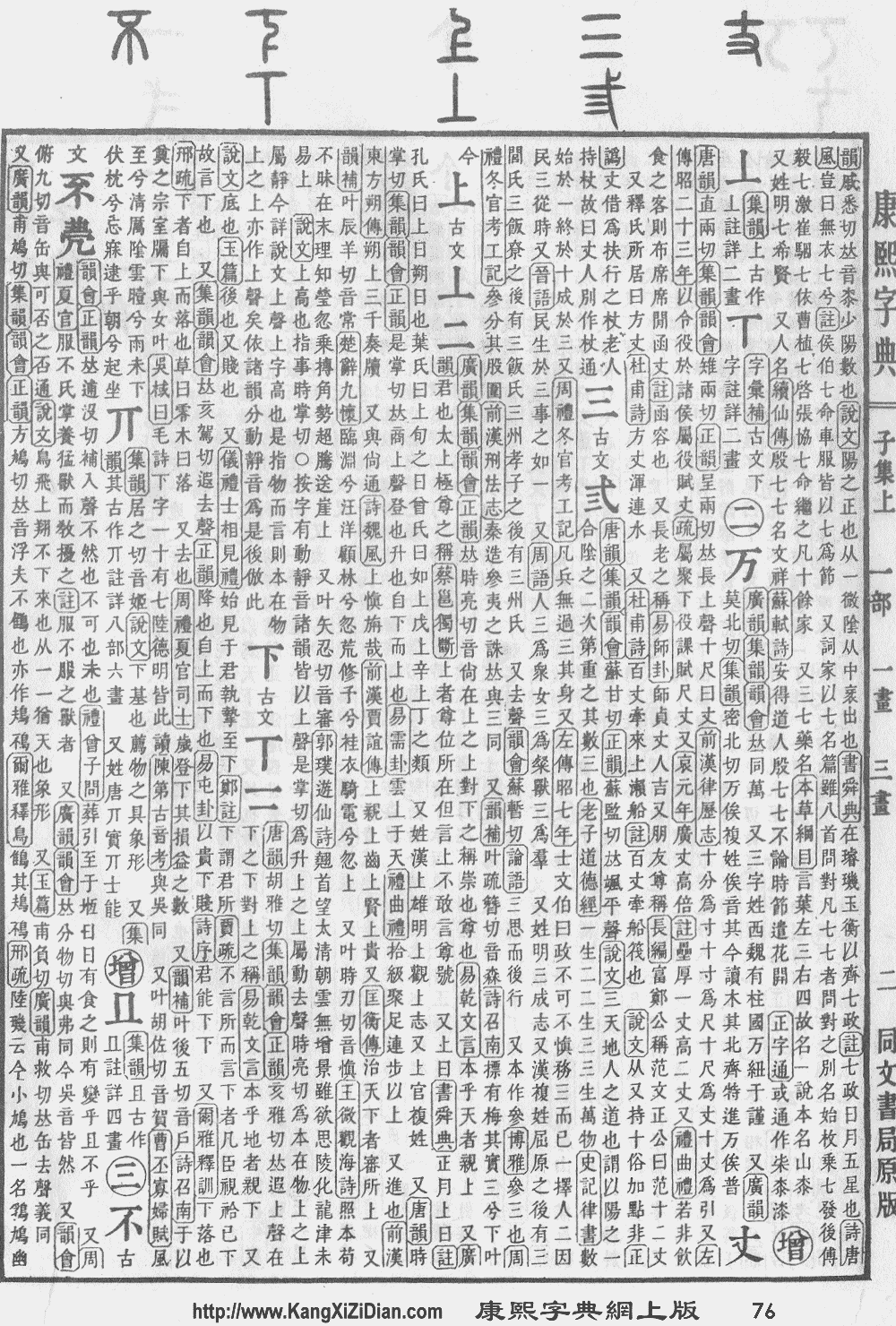
- KangXi: page 76, character 10
- Dai Kanwa Jiten: character 14
- Dae Jaweon: page 147, character 1
- Hanyu Da Zidian (first edition): volume 1, page 7, character 1
- Unihan data for U+4E0B
Chinese
| simp. and trad. |
下 | |
|---|---|---|
| alternative forms | 丅 ancient 𠄟 | |
Glyph origin
| Historical forms of the character 下 | ||||||||||||||||||||||||||||||||||||||||||||||||||||||
|---|---|---|---|---|---|---|---|---|---|---|---|---|---|---|---|---|---|---|---|---|---|---|---|---|---|---|---|---|---|---|---|---|---|---|---|---|---|---|---|---|---|---|---|---|---|---|---|---|---|---|---|---|---|---|
| Shang | Western Zhou | Spring and Autumn | Warring States | Shuowen Jiezi (compiled in Han) | Liushutong (compiled in Ming) | |||||||||||||||||||||||||||||||||||||||||||||||||
| Oracle bone script | Bronze inscriptions | Bronze inscriptions | Bronze inscriptions | Chu slip and silk script | Qin slip script | Ancient script | Small seal script | Transcribed ancient scripts | ||||||||||||||||||||||||||||||||||||||||||||||
 |
 |
 |
 |
 |
 |
 |
 |
 | ||||||||||||||||||||||||||||||||||||||||||||||
||||||||
|
References: Mostly from Richard Sears' Chinese Etymology site (authorisation),
| ||||||||||||||||||||||||||||||||||||||||||||||||||||||


下 in its shell and bone form is an ideogram (指事) that shows the concept of down by showing one line below another (contrast 上). The shell and bone form evolved into 下, the character used today.
Etymology
From Proto-Sino-Tibetan *(k/g)la-k/j/t (“to fall”) (STEDT):
- inside Sinitic, cognate to 落 (OC *ɡ·raːɡ, “to fall, to drop”), 露 (OC *ɡ·raːɡs, “dew”), 陊 (OC *l'aːlʔ, *l'alʔ, “to collapse”) and 阤 (OC *l'alʔ, *hljalʔ, “hillside, slope”);
- outside Sinitic, cognate to Mizo tla ~ tlâk (“to fall”), thla ~ thlâk (“to drop”), Burmese ကျ (kya., “to fall”) and ချ (hkya., “to drop”).
Schuessler (2007) instead proposed an Austroasiatic origin by comparing 下 (OC *ɡraːʔ, “to descend, down, below”) to Khmer [script needed] (gra'ka, “be low, debased”); additionally, he suggested that Sino-Tibetan influence had possibly caused the weakening of foreign final *-k to OC final *-ʔ. He derives the departing tone (去聲) pronunciation via two derivations:
- 下 (OC *ɡraːs, “to be put down”) is an exopassive derivation (ibid.);
- 下 (OC *ɡraːs, “to descend, to fall”) is a later, general departing tone derivative (ibid.).
Pronunciation
Definitions
下
- (lower; inferior; located below)
- Antonym: 上 (shàng)
- (to go to a lower place)
- Antonym: 上 (shàng)
- to go down; to descend (as complement) downwards; down
- 你快下來。/你快下来。 ― Nǐ kuài xià lái. ― Come down here.
- 下海 ― xiàhǎi ― to go to sea
- 下樓/下楼 ― xiàlóu ― to go downstairs
- 下山 ― xiàshān ― to go down the mountain
- 走下 ― zǒuxià ― to walk down
- 落下 ― luòxià ― to fall down
- 跳下深淵/跳下深渊 ― tiàoxià shēnyuān ― to jump down to an abyss
- (as complement) completely, thoroughly
- to get out of; to leave; to alight; to get off
- 下船 ― xiàchuán ― to disembark from a boat
- 下床 ― xiàchuáng ― to get out of bed
- † to go to somewhere considered poor or inferior
- (colloquial) Short for 下線 (“to log out”).
- (to move something to a lower place)
- (with limited objects, often figuratively) to put something down
- 下筆/下笔 ― xiàbǐ ― to start writing (lit., "to put the inkbrush down")
- 下腳/下脚 ― xiàjiǎo ― to have a small place to stand in (lit., "to put the feet down")
- 下藥/下药 ― xiàyào ― to drug someone (lit., "to put the drug down")
- 下榻 ― xiàtà ― to stay the night (lit., "to put the bed down")
- to give or issue something to an inferior person
- 下令 ― xiàlìng ― to issue an order
- to send an invitation
- † to conquer
- (with limited objects, often figuratively) to put something down
- (a short time)
Synonyms
| Variety | Location | Words |
|---|---|---|
| Formal (Written Standard Chinese) | 下 | |
| Mandarin | Beijing | 下 |
| Taiwan | 下 | |
| Yantai (Muping) | 下 | |
| Jinan | 下 | |
| Wanrong | 下 | |
| Xi'an | 下 | |
| Yinchuan | 下 | |
| Xining | 下 | |
| Ürümqi | 下 | |
| Yangzhou | 下 | |
| Malaysia | 下 | |
| Singapore | 下 | |
| Cantonese | Guangzhou | 落 |
| Hong Kong | 落 | |
| Yangjiang | 落 | |
| Nanning | 落 | |
| Kuala Lumpur (Guangfu) | 落 | |
| Singapore (Guangfu) | 落 | |
| Gan | Nanchang | 下 |
| Pingxiang | 下 | |
| Hakka | Meixian | 落 |
| Jin | Taiyuan | 下 |
| Xinzhou | 下 | |
| Min Bei | Jian'ou | 下 |
| Min Nan | Xiamen | 落 |
| Quanzhou | 落 | |
| Zhangzhou | 落 | |
| Zhao'an | 落 | |
| Taipei | 落 GT | |
| Penang (Hokkien) | 落 | |
| Singapore (Hokkien) | 落 | |
| Manila (Hokkien) | 落 | |
| Chaozhou | 落 | |
| Shantou | 落 | |
| Jieyang | 落 | |
| Singapore (Teochew) | 落 | |
| Wenchang | 落 | |
| Haikou | 落 | |
| Qionghai | 落 | |
| Singapore (Hainanese) | 落 | |
| Wu | Hangzhou | 下, 落 |
| Hangzhou (Yuhang) | 落 | |
| Wenzhou | 落 | |
| Jinhua | 落 | |
| Note | GT - General Taiwanese (no specific region identified) | |
| Variety | Location | Words |
|---|---|---|
| Formal (Written Standard Chinese) | 一下 | |
| Mandarin | Taiwan | 一下, 看看 |
| Malaysia | 一下 | |
| Singapore | 一下 | |
| Cantonese | Guangzhou | 下 |
| Hong Kong | 下 | |
| Macau | 下 | |
| Kuala Lumpur (Guangfu) | 下 | |
| Singapore (Guangfu) | 下 | |
| Min Nan | Xiamen | 看覓 |
| Quanzhou | 看覓 | |
| Zhangzhou | 看覓 | |
| Taipei | 看覓 | |
| Kaohsiung | 看覓 | |
| Penang (Hokkien) | 看覓 | |
| Singapore (Hokkien) | 看覓, 一下 | |
| Manila (Hokkien) | 看覓, 一下 | |
| Chaozhou | 睇, 下睇 | |
| Shantou | 一下 | |
| Singapore (Teochew) | 睇 | |
| Wu | Shanghai | 一記, 看 |
| Suzhou | 一記, 看 | |
| Ningbo | 一記, 看 | |
| Variety | Location | Words |
|---|---|---|
| Formal (Written Standard Chinese) | 低 | |
| Mandarin | Beijing | 低 |
| Taiwan | 低 | |
| Jinan | 低 | |
| Xi'an | 低 | |
| Wuhan | 低, 矮 | |
| Chengdu | 矮, 低 | |
| Yangzhou | 低 | |
| Hefei | 低, 矮 | |
| Malaysia | 低 | |
| Singapore | 低 | |
| Cantonese | Guangzhou | 低 |
| Hong Kong | 低 | |
| Taishan | 低 | |
| Yangjiang | 低 | |
| Singapore (Guangfu) | 低 | |
| Gan | Nanchang | 低, 矮 |
| Hakka | Meixian | 低, 矮 |
| Jin | Taiyuan | 低 |
| Min Bei | Jian'ou | 矮 |
| Min Dong | Fuzhou | 下, 矮 |
| Min Nan | Xiamen | 下 |
| Quanzhou | 下 | |
| Zhangzhou | 下 | |
| Tainan | 下 | |
| Penang (Hokkien) | 下 | |
| Singapore (Hokkien) | 下 | |
| Manila (Hokkien) | 下 | |
| Chaozhou | 下, 矮 | |
| Shantou | 下 | |
| Jieyang | 下 | |
| Singapore (Teochew) | 下 | |
| Pontianak (Teochew) | 下 | |
| Singapore (Hainanese) | 低 | |
| Wu | Suzhou | 低 |
| Ningbo | 低, 矮 | |
| Zhoushan | 低, 矮 | |
| Wenzhou | 低, 矮 | |
| Xiang | Changsha | 低, 矮, 下 |
| Shuangfeng | 低, 矮 | |
See also
- 落 (luò)
Compounds
|
|
|
References
- “下”, in 漢語多功能字庫 (Multi-function Chinese Character Database), 香港中文大學/香港中文大学 (the Chinese University of Hong Kong), 2014–
- Dictionary of Chinese Character Variants (教育部異體字字典), A00005
- “Entry #175”, in 臺灣閩南語常用詞辭典 [Dictionary of Frequently-Used Taiwan Minnan] (in Chinese and Min Nan), Ministry of Education, R.O.C., 2011.
Japanese
Readings
Compounds
Noun
下 • (shita)
- the underneath
- Antonym: 上 (ue)
- 1928, 梶井基次郎 [Kajii Motojirō], 桜の樹の下には (Sakura no ki no shita ni wa) [Under the cherry trees], 新字新仮名 edition:
- 桜の樹の下には屍体が埋まっている!これは信じていいことなんだよ。
- Sakura no ki no shita ni wa shitai ga umatte iru! Kore wa shinjite ii koto na n da yo.
- There are dead bodies buried under the cherry trees! This is something you should believe.
- 桜の樹の下には屍体が埋まっている!これは信じていいことなんだよ。
Noun
下 • (shimo)
Derived terms
- 下一段活用 (shimo ichidan katsuyō)
- 下総 (Shimōsa)
- 下掛かる (shimogakaru)
- 下期 (shimoki)
- 下五 (shimogo)
- 下肥 (shimogoe)
- 下座 (shimoza)
- 下々 (shimojimo)
- 下女中 (shimojochū)
- 下野 (shimotsuke)
- 下手 (shimote)
- 下二段活用 (shimo nidan katsuyō)
- 下の句 (shimo no ku)
- 下関 (Shimonoseki)
- 下ネタ (shimoneta)
- 下半期 (shimohanki)
- 下半身 (shimohanshin)
- 下膨れ (shimobukure)
- 僕, 下部 (shimobe)
- 下屋敷 (shimoyashiki)
- 風下 (kazashimo)
- 上下, 裃 (kamishimo)
- 川下 (kawashimo)
- 水下 (minashimo)
Noun
下 • (moto)
Etymology 4
| Kanji in this term |
|---|
| 下 |
| げ Grade: 1 |
| goon |
From Middle Chinese 下 (MC ɦˠaX, ɦˠaH).
The 呉音 (goon, literally “Wu sound”) reading, so likely the initial borrowing from Middle Chinese.
Pronunciation
Etymology 5
| Kanji in this term |
|---|
| 下 |
| か Grade: 1 |
| kan’on |
From Middle Chinese 下 (MC ɦˠaX, ɦˠaH).
The 漢音 (kan'on, literally “Han sound”) reading, so likely a later borrowing from Middle Chinese.
Pronunciation
- IPA(key): [ka̠]
References
- 2006, 大辞林 (Daijirin), Third Edition (in Japanese), Tōkyō: Sanseidō, →ISBN
- 1998, NHK日本語発音アクセント辞典 (NHK Japanese Pronunciation Accent Dictionary) (in Japanese), Tōkyō: NHK, →ISBN
- 2006, 大辞林 (Daijirin), Third Edition (in Japanese), Tōkyō: Sanseidō, →ISBN
- 1995, 大辞泉 (Daijisen) (in Japanese), Tōkyō: Shogakukan, →ISBN
Korean
Hanja
Okinawan
References
- 1896: 沖縄語典 (Okinawa Goten, “Okinawan Dictionary”). In Japanese. http://kindai.ndl.go.jp/info:ndljp/pid/992016/46
Old Japanese
Etymology 1
From Proto-Japonic *sita.
Noun
下 (sita) (kana した)
- the below
- looking down
- 711–712, Kojiki (poem 57)
- ...佐斯夫袁佐斯夫能紀斯賀斯多迩淤斐陀弖流波毘呂由都麻都婆岐...
- ...sasibu wo sasibu no2 ki2 si ga sita ni opi2dateru pabi1ro2 yu tu ma-tubaki1...
- (please add an English translation of this usage example)
- 711–712, Kojiki (poem 57)
- a place
- 711–712, Kojiki (poem 5)
- ..多久夫須麻佐夜具賀斯多爾阿和由岐能和加夜流牟泥遠多久豆怒能斯路岐多陀牟岐...
- ...takubusuma sayagu ga sita ni wakayaru mune wo takuduno1 no2 siro1ki1 tadamuki...
- (please add an English translation of this usage example)
- 711–712, Kojiki (poem 5)
- Antonym: 上 (upe2)
- looking down
Derived terms
- 下問ひ, 下訪ひ (sitado1pi1)
- 下泣き (sitanaki1)
- 天の下 (ame2no2sita)
Descendants
- Japanese: 下 (shita)
Etymology 2
From Proto-Japonic *simo.
Vietnamese
Han character
下: Hán Việt readings: hạ[1][2][3]
下: Nôm readings: hạ[1][2][3]
- chữ Hán form of hạ (“to lower; to bring down; to take down”).
References
- Nguyễn (2014).
- Nguyễn et al. (2009).
- Trần (2004).