丁
 | ||||||||
Translingual
| Stroke order | |||
|---|---|---|---|
 | |||
| Stroke order | |||
|---|---|---|---|
 | |||
Han character
丁 (Kangxi radical 1, 一+1, 2 strokes, cangjie input 一弓 (MN), four-corner 10200, composition ⿱一亅)
Derived characters
Further reading
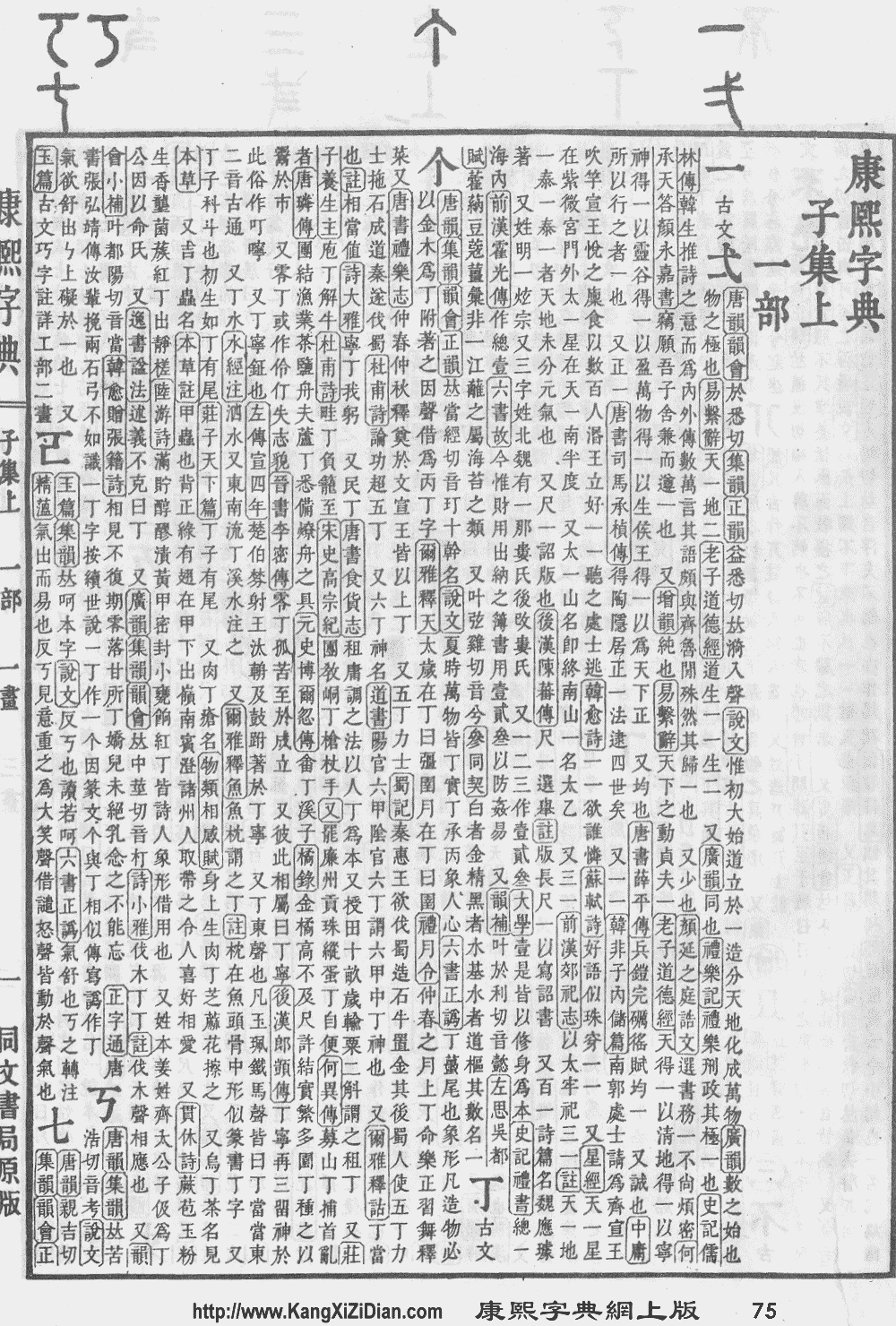
- KangXi: page 75, character 3
- Dai Kanwa Jiten: character 2
- Dae Jaweon: page 135, character 1
- Hanyu Da Zidian (first edition): volume 1, page 2, character 5
- Unihan data for U+4E01
Chinese
| simp. and trad. |
丁 | |
|---|---|---|
| alternative forms | 𠆤 | |
Glyph origin
| Historical forms of the character 丁 | ||||||||||||||||||||||||||||||||||||||||||||||||||||||||||||||||||||||||||||||||||||||||||||||||||||||||||||||||||||||||||||||||||||||||||||||||||||||||||||||||||||||||||||||||||||||||||||||||||||||||||
|---|---|---|---|---|---|---|---|---|---|---|---|---|---|---|---|---|---|---|---|---|---|---|---|---|---|---|---|---|---|---|---|---|---|---|---|---|---|---|---|---|---|---|---|---|---|---|---|---|---|---|---|---|---|---|---|---|---|---|---|---|---|---|---|---|---|---|---|---|---|---|---|---|---|---|---|---|---|---|---|---|---|---|---|---|---|---|---|---|---|---|---|---|---|---|---|---|---|---|---|---|---|---|---|---|---|---|---|---|---|---|---|---|---|---|---|---|---|---|---|---|---|---|---|---|---|---|---|---|---|---|---|---|---|---|---|---|---|---|---|---|---|---|---|---|---|---|---|---|---|---|---|---|---|---|---|---|---|---|---|---|---|---|---|---|---|---|---|---|---|---|---|---|---|---|---|---|---|---|---|---|---|---|---|---|---|---|---|---|---|---|---|---|---|---|---|---|---|---|---|---|---|---|
| Shang | Western Zhou | Spring and Autumn | Warring States | Shuowen Jiezi (compiled in Han) | Liushutong (compiled in Ming) | Libian (compiled in Qing) | Kangxi Dictionary (compiled in Qing) | |||||||||||||||||||||||||||||||||||||||||||||||||||||||||||||||||||||||||||||||||||||||||||||||||||||||||||||||||||||||||||||||||||||||||||||||||||||||||||||||||||||||||||||||||||||||||||||||||||
| Oracle bone script | Bronze inscriptions | Bronze inscriptions | Bronze inscriptions | Chu slip and silk script | Qin slip script | Small seal script | Transcribed ancient scripts | Clerical script | Ming typeface | |||||||||||||||||||||||||||||||||||||||||||||||||||||||||||||||||||||||||||||||||||||||||||||||||||||||||||||||||||||||||||||||||||||||||||||||||||||||||||||||||||||||||||||||||||||||||||||||||
 |
 |
 |
 |
 |
 |
 |
 |
 |
 | |||||||||||||||||||||||||||||||||||||||||||||||||||||||||||||||||||||||||||||||||||||||||||||||||||||||||||||||||||||||||||||||||||||||||||||||||||||||||||||||||||||||||||||||||||||||||||||||||
|||||||||
|
References: Mostly from Richard Sears' Chinese Etymology site (authorisation),
| ||||||||||||||||||||||||||||||||||||||||||||||||||||||||||||||||||||||||||||||||||||||||||||||||||||||||||||||||||||||||||||||||||||||||||||||||||||||||||||||||||||||||||||||||||||||||||||||||||||||||||


| Old Chinese | |
|---|---|
| 圢 | *tʰeːnʔ, *tʰeːŋʔ |
| 町 | *tʰeːnʔ, *tʰeːŋ, *tʰeːŋʔ, *deːŋʔ |
| 打 | *rteŋʔ, *teːŋʔ |
| 盯 | *rteŋʔ, *rdeŋ |
| 朾 | *rteːŋ, *rdeːŋ |
| 丁 | *rteːŋ, *teːŋ |
| 玎 | *rteːŋ, *teːŋ |
| 虰 | *rdeːŋ, *tʰeŋ, *teːŋ |
| 揨 | *rdeːŋ |
| 釘 | *teːŋ, *teːŋs |
| 靪 | *teːŋ, *teːŋʔ |
| 仃 | *teːŋ |
| 叮 | *teːŋ |
| 疔 | *teːŋ |
| 頂 | *teːŋʔ |
| 奵 | *teːŋʔ |
| 耵 | *teːŋʔ |
| 酊 | *teːŋʔ |
| 葶 | *teːŋʔ, *deːŋ |
| 矴 | *teːŋs |
| 訂 | *teːŋs, *tʰeːŋ, *deːŋʔ |
| 飣 | *teːŋs |
| 汀 | *tʰeːŋ, *tʰeːŋs |
| 艼 | *tʰeːŋ, *tʰeːŋʔ |
| 庁 | *tʰeːŋ |
| 婷 | *deːŋ |
| 停 | *deːŋ |
| 聤 | *deːŋ |
| 渟 | *deːŋ |
| 楟 | *deːŋ |
| 亭 | *deːŋ |
Pictogram (象形) – different theories exist:
- a city wall. The derivative 成 and later 城 is now used to represent this sense. Characters like 邑, 正/征 contains it as a semantic component.
- a head. The derivative 天 and 頂 is now used to represent this sense. Characters like 元 contains it as a semantic component.
- a nail. The derivative 釘 is now used to represent this sense.
Pronunciation
Definitions
丁
- the fourth of the ten heavenly stems
- fourth
- robust; vigorous
- male adult; man
- person; may specifically refer to member of a family
- 人丁 ― réndīng ― person
- small cube
- 肉丁 ― ròudīng ― pork cubes
- (literary) to encounter
- (Hong Kong Cantonese) Short for 出前一丁 (“Demae Itcho”), a type of instant noodles.
- a surname
- 丁肇中 ― Dīng Zhàozhōng ― Samuel Chao Chung Ting (Chinese-American physicist)
- 「他總仍舊是偷。這一回,是自己發昏,竟偷到丁舉人家裡去了。他家的東西,偷得的麼?」 [MSC, trad.]
- From: 1919, Lu Xun, 孔乙己 (Kung I-chi)
- “tā zǒng réngjiù shì tōu. Zhè yī huí, shì zìjǐ fāhūn, jìng tōu dào Dīng jǔrén jiā lǐ qù le. Tā jiā de dōngxi, tōu de de me?” [Pinyin]
- "He was stealing again. This time he was fool enough to steal from Mr. Ting, the provincial scholar! As if anybody could get away with that!"
“他总仍旧是偷。这一回,是自己发昏,竟偷到丁举人家里去了。他家的东西,偷得的么?” [MSC, simp.]
Synonyms
Compounds
|
|
|
Descendants
- → Zhuang: ding
Pronunciation
Etymology 3
Glyph approximation of J (zei1).
Pronunciation
Definitions
丁
- (Hong Kong Cantonese, slang, euphemistic) penis (Classifier: 條/条)
- (Hong Kong Cantonese, Internet slang) to masturbate; to have sexual fantasy towards another individual
Synonyms
Etymology 4
| For pronunciation and definitions of 丁 – see 叮 (“to sting; to bite; to advise; to urge; to repeat what one says to make sure; etc.”). (This character, 丁, is the second-round simplified form of 叮.) |
Notes:
|
Etymology 5
| For pronunciation and definitions of 丁 – see 盯 (“to gaze upon; to keep eyes on; to stare at”). (This character, 丁, is the second-round simplified form of 盯.) |
Notes:
|
Etymology 6
| For pronunciation and definitions of 丁 – see 釘 (“gold slab; nail; etc.”). (This character, 丁, is the second-round simplified form of 釘.) |
Notes:
|
Etymology 7
| For pronunciation and definitions of 丁 – see 靪 (“to resole a shoe; patch; etc.”). (This character, 丁, is the second-round simplified form of 靪.) |
Notes:
|
References
- “丁”, in 漢語多功能字庫 (Multi-function Chinese Character Database), 香港中文大學/香港中文大学 (the Chinese University of Hong Kong), 2014–
- Dictionary of Chinese Character Variants (教育部異體字字典), A00002
- “Entry #46”, in 臺灣閩南語常用詞辭典 [Dictionary of Frequently-Used Taiwan Minnan] (in Chinese and Min Nan), Ministry of Education, R.O.C., 2011.
Japanese
Kanji
Readings
- Go-on: ちょう (chō, Jōyō)←ちやう (tyau, historical)
- Kan-on: てい (tei, Jōyō)←てい (tei, historical)
- Kun: ひのと (hinoto, 丁); あたる (ataru, 丁たる)
As in the onomatopoeia 丁丁:
- Go-on: ちょう (chō, Jōyō)←ちやう (tyau, historical)
- Kan-on: とう (tō)←たう (tau, historical)
Etymology 2
| Kanji in this term |
|---|
| 丁 |
| ちょう Grade: 3 |
| goon |
Noun
丁 • (chō)
Etymology 3
| Kanji in this term |
|---|
| 丁 |
| ちょう Grade: 3 |
| goon |
| Alternative spellings |
|---|
| 挺 梃 |
From Middle Chinese 挺 (MC deŋ, deŋX). 丁 is a daiyōji replacing 挺.
Pronunciation
- IPA(key): [t͡ɕo̞ː]
Counter
丁 • (-chō)
- counter for long and thin things, e.g. guns, hoes, candles.
- 二丁の拳銃
- nichō no kenjū
- two pistols
- 二丁の拳銃
- counter for foods such as tofu.
Etymology 4
| Kanji in this term |
|---|
| 丁 |
| ひのと Grade: 3 |
| kun’yomi |
火 (hi, “fire”, one of the Five Elements) + の (no, attributive marker) + 弟 (oto, “younger brother”)
Pronunciation
Korean
Etymology
From Middle Chinese 丁 (MC teŋ). Recorded as Middle Korean 뎌ᇰ (tyeng) (Yale: tyeng) in Hunmong Jahoe (訓蒙字會 / 훈몽자회), 1527.
Hanja
Wikisource
丁 (eumhun 넷째 천간(天干) 정 (netjjae cheon'gan jeong))
丁 (eumhun 고무래 정 (gomurae jeong))
丁 (eumhun 장정 정 (jangjeong jeong))
Compounds
References
- 국제퇴계학회 대구경북지부 (國際退溪學會 大邱慶北支部) (2007). Digital Hanja Dictionary, 전자사전/電子字典.
- Naver Hanja Dictionary: 丁
Vietnamese
Han character
丁: Hán Việt readings: đinh (
丁: Nôm readings: đứa[1][2][3][6][5][7], đinh[1][2][4][7], đềnh[1], tênh[2], tranh[2], đĩnh[3]
References
- Nguyễn (2014).
- Nguyễn et al. (2009).
- Trần (2004).
- Bonet (1899).
- Génibrel (1898).
- Hồ (1976).
- Taberd & Pigneau de Béhaine (1838).