中
| ||||||||
Translingual
| Stroke order | |||
|---|---|---|---|
 | |||
| Stroke order | |||
|---|---|---|---|
 | |||
Han character
中 (Kangxi radical 2, 丨+3, 4 strokes, cangjie input 中 (L), four-corner 50006, composition ⿻口丨)
Derived characters
References
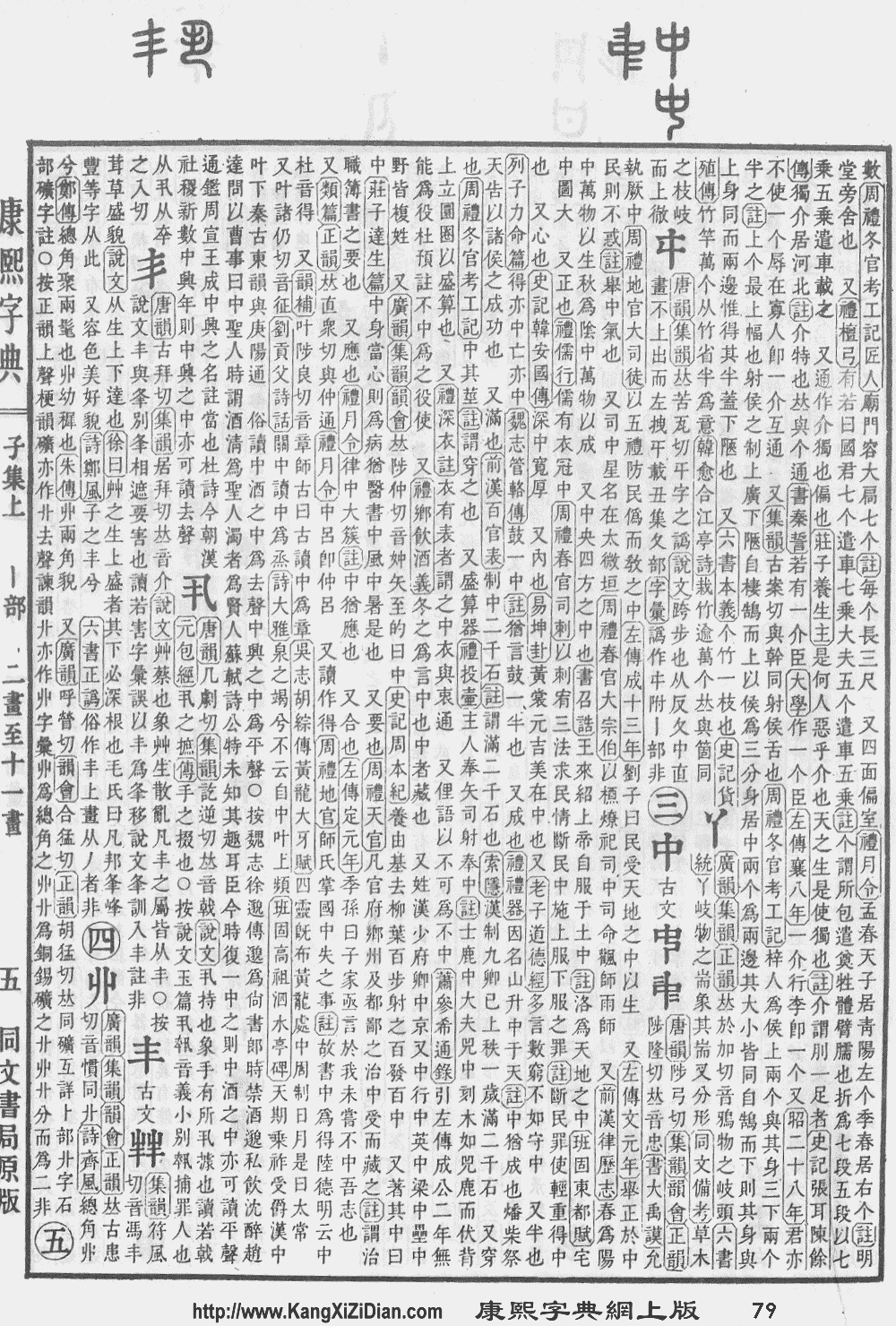
- KangXi: page 79, character 3
- Dai Kanwa Jiten: character 73
- Dae Jaweon: page 158, character 6
- Hanyu Da Zidian (first edition): volume 1, page 28, character 10
- Unihan data for U+4E2D
Chinese
| simp. and trad. |
中 | |
|---|---|---|
| alternative forms | 𠁦 𠁧 𠁩 𠔈 𠔗 | |
Glyph origin
| Historical forms of the character 中 | ||||||||||||||||||||||||||||||||||||||||||||||||||||||||||||||||||||||||||||||||||||||||||||||
|---|---|---|---|---|---|---|---|---|---|---|---|---|---|---|---|---|---|---|---|---|---|---|---|---|---|---|---|---|---|---|---|---|---|---|---|---|---|---|---|---|---|---|---|---|---|---|---|---|---|---|---|---|---|---|---|---|---|---|---|---|---|---|---|---|---|---|---|---|---|---|---|---|---|---|---|---|---|---|---|---|---|---|---|---|---|---|---|---|---|---|---|---|---|---|
| Shang | Western Zhou | Spring and Autumn | Warring States | Shuowen Jiezi (compiled in Han) | Liushutong (compiled in Ming) | Libian (compiled in Qing) | ||||||||||||||||||||||||||||||||||||||||||||||||||||||||||||||||||||||||||||||||||||||||
| Bronze inscriptions | Oracle bone script | Bronze inscriptions | Bronze inscriptions | Bronze inscriptions | Chu slip and silk script | Qin slip script | Shizhoupian script | Ancient script | Small seal script | Transcribed ancient scripts | Clerical script | |||||||||||||||||||||||||||||||||||||||||||||||||||||||||||||||||||||||||||||||||||
 |
 |
 |
 |
 |
 |
 |
 |
 |
 |
 |
 | |||||||||||||||||||||||||||||||||||||||||||||||||||||||||||||||||||||||||||||||||||
|||||||||||
|
References: Mostly from Richard Sears' Chinese Etymology site (authorisation),
| ||||||||||||||||||||||||||||||||||||||||||||||||||||||||||||||||||||||||||||||||||||||||||||||


Pictogram (象形) – a flagpole. Based on archaeological evidence, the middle box has been interpreted as a drum (建鼓). This flagpole with a drum was placed in the center of a field to gather people and to detect the direction of the wind. In addition, the pronunciation of 中 (OC *tuŋ, *tuŋs) is reminiscent of the beating of a drum.
Shuowen interprets the character as a vertical stroke 丨 passing through the center of 口, indicating the center.
It has also been interpreted as an arrow in the center of a target.
Etymology
“Middle; centre” (Pronunciation 1) > “to hit the centre; to attain” (Pronunciation 2).
From Proto-Sino-Tibetan *t/duŋ. Cognate with Tibetan གཞུང (gzhung, “middle, center”).
Related to:
Pronunciation 1
Definitions
中
- middle; center
- medium; intermediary
- within; among; in
- while; in the process of; during; in the middle of
- to be fit for
- heart; innermost being
- intermediary
- (dialectal) all right; OK
- Short for 中國/中国 (Zhōngguó, “China; Chinese”).
- Short for 中學/中学 (zhōngxué, “middle school”). Used only in the abbreviation of the name.
- 三中 ― Sān Zhōng ― No.3 Middle School
- 1st tetragram of the Taixuanjing; "the center" (𝌆)
- a surname
Synonyms
- (China):
Compounds
|
|
|
Pronunciation 2
Definitions
中
Synonyms
- (Singapore Hokkien) 著 (tio̍h)
Compounds
Japanese
Readings
- Go-on: ちゅう (chū, Jōyō)←ちゆう (tyū, historical); じゅう (jū, Jōyō †)←ぢゆう (dyū, historical)
- Kan-on: ちゅう (chū, Jōyō)←ちゆう (tyū, historical); じゅう (jū, Jōyō †)←ぢゆう (dyū, historical)
- Kun: なか (naka, 中, Jōyō); うち (uchi, 中); あたる (ataru, 中たる); あたる (ataru, 中る); あてる (ateru, 中てる)
- Nanori: あたり (atari); あつ (atsu); あつる (atsuru); かなえ (kanae); かなめ (kaname); ただし (tadashi); とうる (tōru); とおる (tōru); ひとし (hitoshi); みつる (mitsuru); わたる (wataru)
Compounds
Common:
- 中央 (chūō)
- 中華 (chūka)
- 中核 (chūkaku)
- 中間 (chūkan)
- 中継 (chūkei)
- 中堅 (chūken)
- 中元 (chūgen)
- 中古 (chūko)
- 中国 (chūgoku)
- 中止 (chūshi)
- 中傷 (chūsho)
- 中心 (chūshin)
- 中旬 (chūjun)
- 中枢 (chūsū)
- 中世 (chūsei)
- 中性 (chūsei)
- 中絶 (chūzetsu)
- 中断 (chūdan)
- 中途 (chūto)
- 中東 (chūtō)
- 中道 (chūdō)
- 中毒 (chūdoku)
- 中年 (chūnen)
- 中腹 (chūfuku)
- 中立 (chūritsu)
- 中流 (chūryū)
- 中和 (chūwa)
- 中々 (nakanaka)
- 中庭 (nakaniwa)
- 中身 (nakame)
- 中産階級 (chūsankaikyō)
- 間中 (aidajū)
- 御中 (onchū)
- 渦中 (kachū)
- 海中 (kaichū)
- 寒中 (kanchū)
- 空中 (kūchū)
- 宮中 (kyūchū)
- 胸中 (kyōchū)
- 獄中 (gokuchū)
- 最中 (saichū)
- 背中 (senaka)
- 市中 (shichū)
- 車中 (shachū)
- 手中 (shuchū)
- 暑中 (shochū)
- 集中 (shūchū)
- 掌中 (chōchū)
- 心中 (shinjū), 心中 (shinchū)
- 女中 (jochū)
- 陣中 (jinchū)
- 戦中 (senchū)
- 水中 (suichū)
- 対中 (taichū)
- 地中 (chichū)
- 的中 (tekichū)
- 途中 (tochū)
- 日中 (nitchū)
- 熱中 (netchū)
- 年中 (nenjū)
- 野中 (nonaka)
- 文中 (bunchū)
- 人中 (hitonaka)
- 訪中 (hōchū)
- 町中 (machinaka)
- 命中 (meichū)
- 夢中 (muchū)
- 夜中 (yonaka)
- 連中 (renchū)
- 受付中 (uketsuke-chū)
- 仕事中 (shigoto-chū)
- 準備中 (junbi-chū)
- 営業中 (eigyō-chū)
- 脳卒中 (nōsotchū)
- 一晩中 (hitobanjū)
- 真ん中 (mannaka)
- 世の中 (yononaka)
- お話し中 (ohanashi-chū)
Uncommon:
Etymology 1
| Kanji in this term |
|---|
| 中 |
| なか Grade: 1 |
| kun’yomi |
| For pronunciation and definitions of 中 – see the following entry. | ||
| ||
| (This term, 中, is an alternative spelling of the above term.) |
Noun
中 • (chū)
Suffix
中 • (-chū)
Etymology 3
| Kanji in this term |
|---|
| 中 |
| じゅう Grade: 1 |
| on’yomi |
(This etymology is missing or incomplete. Please add to it, or discuss it at the Etymology scriptorium. Particularly: “from a later Chinese reading, sound shift, or rendaku?”)
Pronunciation
- IPA(key): [(d͡)ʑɨᵝː]
Suffix
- during, in the course of, throughout
- all over, everywhere
Usage notes
The distinction between じゅう (jū) and ちゅう (chū) can be somewhat confusing: じゅう (jū) means throughout, in all places, as in 一日中 (ichinichijū, “all day long”) or 体中 (karadajū, “throughout the body”), while ちゅう (chū) means within, but not everywhere, as in 授業中 (jugyōchū, “in class, during class”). Contrast “I worked on this all day long” with “I worked on this in class (but not necessarily for the entire time)”.
Etymology 4
| Kanji in this term |
|---|
| 中 |
| うち Grade: 1 |
| kun’yomi |
(This etymology is missing or incomplete. Please add to it, or discuss it at the Etymology scriptorium.)
Usage notes
内 is the most common kanji for this pronunciation.
Etymology 5
Various nanori readings.
Pronunciation
- IPA(key): [t͡ɕɨ̃ᵝɴ]
See also
Korean
Etymology
From Middle Chinese 中 (MC ʈɨuŋ).
| Historical Readings | ||
|---|---|---|
| Dongguk Jeongun Reading | ||
| Dongguk Jeongun, 1448 | 듀ᇰ (Yale: tyùng) | |
| Middle Korean | ||
| Text | Eumhun | |
| Gloss (hun) | Reading | |
| Hunmong Jahoe, 1527 | 가온〮ᄃᆡᆺ (Yale: kàwóntòy-s) | 듀ᇰ (Yale: tyùng) |
Pronunciation
- (SK Standard/Seoul) IPA(key): [t͡ɕuŋ]
- Phonetic hangul: [중]
Compounds
- 공중 (空中, gongjung)
- 도중 (途中, dojung)
- 명중 (命中, myeongjung)
- 병중 (病中, byeongjung)
- 백발백중 (百發百中, baekbalbaekjung)
- 시중 (市中, sijung)
- 열중 (熱中, yeoljung)
- 적중 (的中, jeokjung)
- 중앙 (中央, jung'ang)
- 중도 (中道, jungdo)
- 중독 (中毒, jungdok)
- 중간 (中間, junggan)
- 중고 (中古, junggo)
- 중국 (中國, jungguk)
- 중계 (中繼, junggye)
- 중견 (中堅, junggyeon)
- 중학교 (中學校, junghakgyo)
- 중흥 (中興, jungheung)
- 중지 (中止, jungji)
- 중립 (中立, jungnip)
- 중년 (中年, jungnyeon)
- 중상 (中傷, jungsang)
- 중성 (中性, jungseong)
- 중심 (中心, jungsim)
- 중순 (中旬, jungsun)
- 중위 (中位, jung'wi)
- 중용 (中庸, jung'yong)
- 지중해 (地中海, jijunghae)
- 집중 (集中, jipjung)
- 해중 (海中, haejung)
Old Korean
Alternative forms
- 希 (*-huy) (probably represents lenition of initial *k)
Particle
中 (*-kuy, *-huy)
- in; at; amid (locative case marker, attested in isolation only before the eleventh century)
- c. 690, 得烏 (Deugo), “慕竹旨郞歌 (Mojukjirang-ga)”, in 三國遺事 (Samguk Yusa) [Memorabilia of the Three Kingdoms]:
- 蓬次叱巷中宿尸夜音
- nights where you will sleep in a village of mugwort plants
- c. 740, 忠談師 (Chungdamsa), “讚耆婆郞歌 (Changiparang-ga)”, in 三國遺事 (Samguk Yusa) [Memorabilia of the Three Kingdoms]:
- 川理叱磧惡希
- by the side of the stream
- c. 965, 均如 (Gyunyeo), “常隨彿學歌 (Sangsubulhak-ga)”, in 均如傳 (Gyunyeo-jeon) [Works of Gyunyeo]:
- 命乙施好尸歲史中置
- even in the age that I cast my life away
-
Reconstruction notes
- Conventionally reconstructed as *-kuy because Idu manuals in Han'gul read this character as 희 (-huy), which is believed to reflect an ancient reading tradition. Middle Korean intervocalic /h/ is usually lenited from Old Korean */k/ based on internal and dialectal reconstruction. The non-lenited form also survives directly in pronouns: 이ᅌᅥ긔〮 (ìngèkúy, “here”), 뎌ᇰ어긔〮 (tyèngèkúy, “there”), etc.
- Assumed to be a logogram borrowed from Chinese, as no Chinese reading or native Korean equivalent of 中 whose phonology is even remotely similar to *kuy is known. The Chinese word often bears a locative meaning as well, and there is a certain parallel in the Vietnamese Nôm use of the same character to write the native preposition trong (“in; inside”).
- First-millennium Old Korean also featured the locative particle 良 (*-a). The two particles were compounded as 良中 (*-a-kuy) as early as the seventh century. The compounded form becomes predominant in the corpus after the eleventh century, after which 中 *-kuy in isolation is rarely encountered (although a likely Middle Korean reflex is attested in Hangul form as late as the fifteenth century). The compounded form eventually fused into a single morpheme, becoming the Middle Korean locative particle 에〮/애〮 (-éy/áy).
- At some point, perhaps even before widespread compounding, */k/ was lenited to */h/. Lenition may have begun as early as the eighth century, given the attestation of the 希 form in the poem 讚耆婆郞歌 Changiparang-ga, whose claimed date of composition is 740.
- Nam Pung-hyun suggests that 矣 (*-uy), another apparent locative particle attested in the Old Korean corpus, should be connected to 中 (*-kuy.) He classifies both as "uy-type locatives", in contrast to 良 (*-a) as an "a-type locative", and speculates that the uy-type locatives were reserved for animate beings while 良 could be used indiscriminately.
Descendants
See also
References
- 배대은 (1996), “이두 처격조사의 통시적 고찰 [A diachronic study of locative case markers in Idu]”, in Baedalmal, volume 21, pages 139–156
- 이승재 (2000), “차자표기 자료의 격조사 연구 [Study of case markers in the Chinese-based orthography [of Korean]]”, in Gugeo Gukmunhak, volume 127, pages 107–132
- Hwang Seon-yeop (2006). "Godae gugeo-ui cheogyeok josa" 고대국어의 처격조사] ["The locative case markers of Old Korean"]. Hanmal Yeon'gu Hakhoe Jeon'guk Haksul Daehoe (conference). Seongnam, South Korea. pp. 35–48.
- Nam Pung-hyun (2012), “Old Korean”, in The Languages of Japan and Korea, Routledge, →ISBN, pages 41–72
Vietnamese
Han character
中: Hán Việt readings: trung (
中: Nôm readings: trúng[1][2][3][4][6], trong[1][2][3][7], trung[1][2][4][6], truồng[3][4][5][6], đúng[3], truông[7]
Compounds
- 地中海 (Địa Trung Hải)
- 中隊 (trung đội)
- 中庸 (Trung Dung)
- 中華 (Trung Hoa)
- 中圻 (Trung Kì)
- 中國 (Trung Quốc)
- 中心 (trung tâm)
- 中便 (trung tiện)
- 㗂中 (tiếng Trung)
- 中央 (trung ương)
- 越中 (Việt Trung)
References
- Nguyễn (2014).
- Nguyễn et al. (2009).
- Trần (2004).
- Bonet (1899).
- Génibrel (1898).
- Taberd & Pigneau de Béhaine (1838).
- Hồ (1976).