重
| ||||||||
Translingual
| Stroke order | |||
|---|---|---|---|
 | |||
Han character
重 (Kangxi radical 166, 里+2, 9 strokes, cangjie input 竹十田土 (HJWG), four-corner 20104, composition ⿱千里)
Derived characters
References
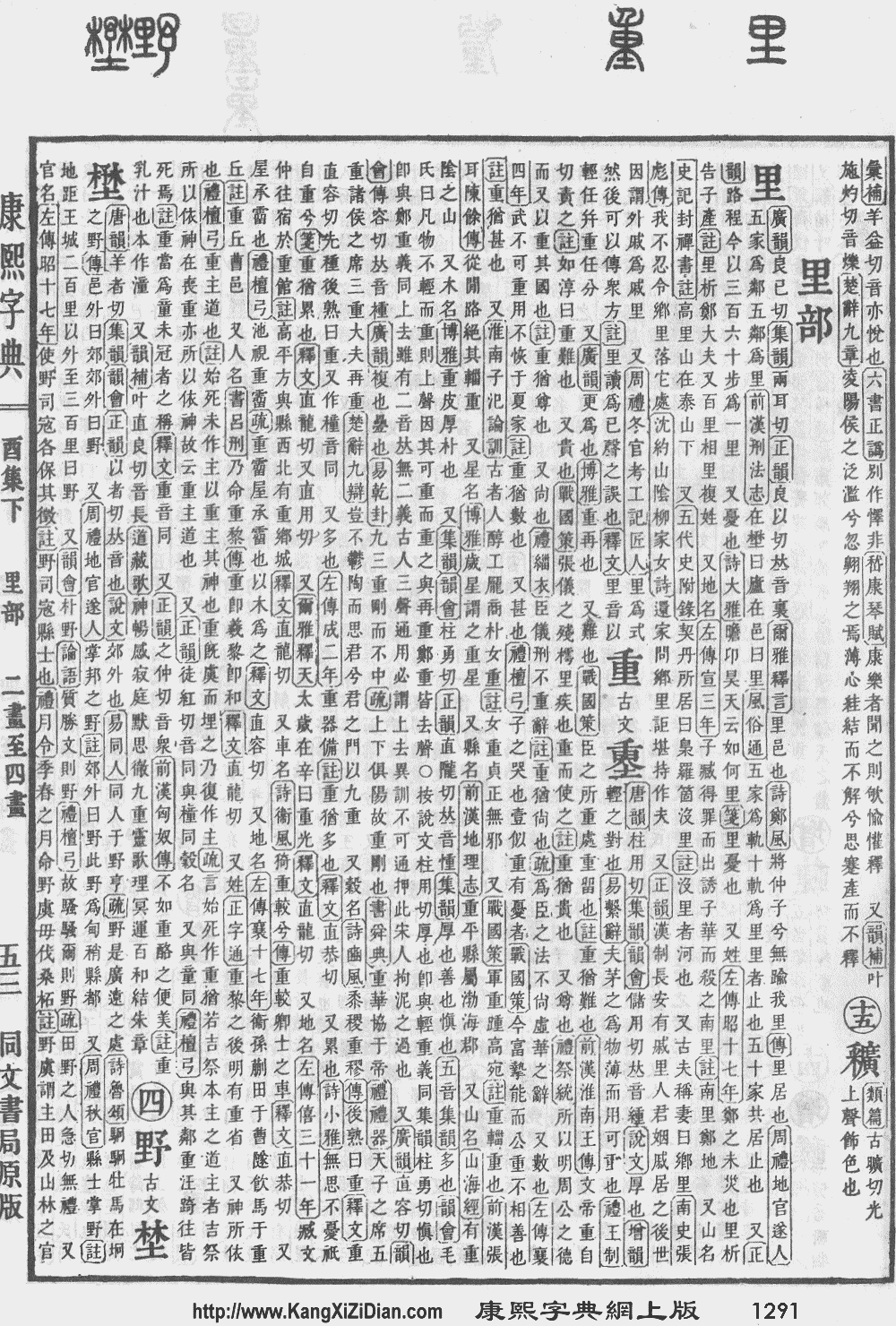
- KangXi: page 1291, character 3
- Dai Kanwa Jiten: character 40132
- Dae Jaweon: page 1791, character 7
- Hanyu Da Zidian (first edition): volume 6, page 3680, character 2
- Unihan data for U+91CD
Chinese
| simp. and trad. |
重 | |
|---|---|---|
| alternative forms | 𡍴 ancient 𡍺 ancient 𨤣 | |
Glyph origin
| Historical forms of the character 重 | ||||
|---|---|---|---|---|
| Shang | Western Zhou | Warring States | Shuowen Jiezi (compiled in Han) | Liushutong (compiled in Ming) |
| Oracle bone script | Bronze inscriptions | Chu slip and silk script | Small seal script | Transcribed ancient scripts |
 |
 |
 |
 |
 |
| Old Chinese | |
|---|---|
| 撞 | *rdoːŋ, *rdoːŋs |
| 幢 | *rdoːŋ, *rdoːŋs |
| 橦 | *rdoːŋ, *doːŋ, *tjoŋ |
| 噇 | *rdoːŋ |
| 𩪘 | *rdoːŋ |
| 艟 | *rdoːŋs, *tʰjoŋ |
| 憧 | *rdoːŋs, *tʰjoŋ |
| 畽 | *tʰoːnʔ, *tʰuːnʔ |
| 董 | *toːŋʔ |
| 蕫 | *toːŋʔ, *doːŋ |
| 箽 | *toːŋʔ |
| 懂 | *toːŋʔ |
| 湩 | *toːŋs, *tuːŋʔ, *toŋs |
| 曈 | *tʰoːŋ, *tʰoːŋʔ, *doːŋ |
| 童 | *doːŋ |
| 僮 | *doːŋ |
| 瞳 | *doːŋ |
| 罿 | *doːŋ, *tʰjoŋ |
| 犝 | *doːŋ |
| 潼 | *doːŋ, *tʰjoŋ |
| 穜 | *doːŋ, *doŋ |
| 動 | *doːŋʔ |
| 慟 | *doːŋs |
| 堹 | *toŋs |
| 諥 | *toŋs |
| 蹱 | *tʰoŋ, *tʰoŋs, *tjoŋ |
| 重 | *doŋ, *doŋʔ, *doŋs |
| 緟 | *doŋ, *doŋs |
| 蝩 | *doŋ |
| 褈 | *doŋ, *tʰjoŋ |
| 鐘 | *tjoŋ, *tjoŋ |
| 鍾 | *tjoŋ |
| 籦 | *tjoŋ |
| 種 | *tjoŋʔ, *tjoŋs |
| 腫 | *tjoŋʔ |
| 踵 | *tjoŋʔ |
| 歱 | *tjoŋʔ |
| 喠 | *tjoŋʔ, *tʰjoŋʔ |
| 偅 | *tjoŋs |
| 衝 | *tʰjoŋ |
| 揰 | *tʰjoŋs |
| 尰 | *djoŋʔ |
Phono-semantic compound (形聲, OC *doŋ, *doŋʔ, *doŋs) and ideogrammic compound (會意) : semantic 人 (“man”) + phonetic 東 (OC *toːŋ, “bag”) – a man carrying a bag. A glyph 土 (“earth”) was later added to show that the bag-carrying man is standing on the ground. From this composition is the current form.
Etymology
Pronunciation 3 is the exoactive derivation of pronunciation 1.
Pronunciation 1
Synonyms
| Variety | Location | Words |
|---|---|---|
| Classical Chinese | 重 | |
| Formal (Written Standard Chinese) | 重 | |
| Mandarin | Beijing | 沉, 重 |
| Taiwan | 重 | |
| Jinan | 沉, 重 | |
| Xi'an | 沉, 重 | |
| Wuhan | 重 | |
| Chengdu | 重 | |
| Guilin | 重 | |
| Yangzhou | 重 | |
| Hefei | 重 | |
| Cantonese | Guangzhou | 重 |
| Hong Kong | 重 | |
| Yangjiang | 重 | |
| Gan | Nanchang | 重 |
| Hakka | Meixian | 重 |
| Jin | Taiyuan | 重, 沉 |
| Min Bei | Jian'ou | 重 |
| Min Dong | Fuzhou | 重 |
| Min Nan | Xiamen | 重 |
| Quanzhou | 重 | |
| Zhangzhou | 重 | |
| Chaozhou | 重 | |
| Wu | Suzhou | 重 |
| Wenzhou | 重 | |
| Xiang | Changsha | 重 |
| Shuangfeng | 重 | |
Compounds
|
|
|
Pronunciation 2
Definitions
重
- weight
- weighty; important
- 重任 ― zhòngrèn ― important task
- grave; serious
- solemn
- prudent
- to respect; to attach importance to
- 重義輕利/重义轻利 ― zhòngyìqīnglì ― to value righteousness and care little for material gain
- 俗尚廉恥,人性和善少言,重佛法,域中並無宰殺。 [Classical Chinese, trad.]
- From: Tang Dynasty, Fan Chuo, Manshu, chapter 10, part 2
- Súshàng liánchǐ, rénxìng héshàn shǎo yán, zhòng fófǎ, yù zhōng bìng wú zǎishā. [Pinyin]
- Their traditional customs are integrity and decency; the people are good-natured and do not chatter idly, seriously respecting Buddhist law, and nothing is killed in the region.
俗尚廉耻,人性和善少言,重佛法,域中并无宰杀。 [Classical Chinese, simp.]
- (Cantonese) still
- alt. forms: 仲
- (Cantonese) even more
- alt. forms: 仲
Synonyms
Pronunciation 3
Definitions
重
Compounds
Japanese
Readings
From Middle Chinese 重 (MC ɖɨoŋX); compare Mandarin 重 (zhòng):
From Middle Chinese 重 (MC ɖɨoŋ); compare Mandarin 重 (chóng):
From native Japanese roots:
- Kun: え (e, 重, Jōyō)←へ (fe, historical); かさなる (kasanaru, 重なる, Jōyō); かさねる (kasaneru, 重ねる, Jōyō); おも (omo, 重); おもい (omoi, 重い, Jōyō); おもなう (omonau, 重なう); おもり (omori, 重り); おもんずる (omonzuru, 重んずる); ほとんど (hotondo, 重んど)
- Nanori: あつ (atsu); あつし (atsushi); いかし (ikashi); え (e); おもし (omoshi); かさぬ (kasanu); かず (kazu); かたし (katashi); さね (sane); しげ (shige); しげし (shigeshi); しげる (shigeru); のぶ (nobu); ふさ (fusa)
Compounds
- 重油 (jūyu, “fuel oil”)
- 重量 (jūryō, “weight”)
- 重力 (jūryoku, “gravity, force of gravity”)
- 重圧 (jūatsu, “pressure”)
- 重心 (jūshin, “center of gravity”)
- 重傷 (jūshō, “heavy wound”)
- 重態 (jūtai, “serious condition”)
- 重税 (jūzei, “heavy taxation”)
- 重要 (jūyō, “important, momentous”)
- 重点 (jūten, “important point, emphasis”)
- 重大 (jūdai, “serious, important”)
- 重視 (jūshi, “importance, stress”)
- 重任 (jūnin, “heavy responsibility, reappointment”)
- 重宝 (chōhō, “convenience, usefulness”)
- 重文 (jūbun, “compound sentence”)
- 重用 (jūyō), 重用 (chōyō, “appointing to a responsible post”)
- 重箱 (jūbako, “nest of boxes”)
- 重奏 (jūsō, “duet”)
- 重合 (jūgō, “polymerization”)
- 重積 (jūseki, “piling up”)
- 重々, 重重 (jūjū, “repeatedly, extremely”)
- 重複 (chōfuku), 重複 (jūfuku, “duplication, repetition”)
- 重盗 (jūtō, “double seal”)
- 重版 (jūhan, “second printing”)
- 重婚 (jūkon, “bigamy”)
- 重荷 (omoni, “heavy load”)
- 重い (omoi, “heavy, serious”)
- 重さ (omosa, “weight”)
- 重み (omomi, “weight, importance”)
- 重り (omori, “weight, plumb”)
- 重ね (kasane, “pile, lapping over”)
- 過重 (kajū, “overweight”)
- 体重 (taijū, “body weight”)
- 比重 (hijū, “specific gravity, relative importance”)
- 荷重 (kajū, “load”)
- 厳重 (genjū, “strict, rigor”)
- 貴重 (kichō, “precious, valuable”)
- 尊重 (sonchō, “respect, esteem”)
- 偏重 (henchō, “preponderance, overestimation”)
- 珍重 (chinchō, “prize, value highly”)
- 慎重 (shinchō, “prudence, discretion”)
- 荘重 (sōchō, “solemn, grave”)
- 多重 (tajū, “multiple, multiplex”)
- 三重 (sanjū, “threefold, triple”)
- 幾重 (ikue), 幾重 (ikujū, “manyfold”)
- 二重 (futae), 二重 (nijū, “twofold”)
- 重金属 (jūkinzoku, “heavy metal”)
- 重工業 (jūkōgyō, “heavy industry”)
- 重電機 (jūdenki, “heavy electric apparatus”)
- 重騎兵 (jūkihei, “heavy cavalry”)
- 重労働 (jūrōdō, “heavy labor”)
- 重たい (omotai, “heavy”)
- 重ねる (kasaneru, “pile up, repeat”)
- 重ねて (kasanete, “repeatedly, again”)
- 重なる (kasanaru, “be piled up, fall on”)
- 重なり (kasanari, “pile, overlapping”)
- 重商主義 (jūshōshugi, “mercantilism”)
- 重畳たる (chōjōtaru, “piled up, excellent”)
- 重苦しい (omokurushii, “heavy, oppressed”)
- 八重咲き (yaezaki, “double blossom”)
- 積み重ねる (tsumikasaneru, “pile up”)
- 折り重なる (orikasanaru, “lie on top of one another”)
- 重要文化財 (jūyō bunkazai, “important cultural property”)
- 腰が重い (koshiga omoi, “be slow to act”)
- 重い罪 (omoi tsumi, “serious crime”)
- 重い任務 (omoi ninmu, “important task”)
- 糸に重りを付ける (ito ni omori o tsukeru, “weight a line”)
- 不幸が重なる (fukō ga kasanaru, “have a series of misfortunes”)
Derived terms
- 隔てる (hedateru)
See also
- 重 (e)
Etymology 2
/-pe/ → /-ɸe/ → /-we/ → /-e/. Cognate with 重 (he, “division”). The divergent phonological development is due to the non-null environment caused by being suffixed to the previous morpheme.
Alternative forms
See also
- 重な
Korean
Etymology 1
(This etymology is missing or incomplete. Please add to it, or discuss it at the Etymology scriptorium.)
Vietnamese
Han character
重: Hán Nôm readings: trọng, chồng, chuộng, trộng, trụng, trùng, chõng, trửng
- This term needs a translation to English. Please help out and add a translation, then remove the text
{{rfdef}}.