内
| ||||||||
Translingual
| Stroke order | |||
|---|---|---|---|
 | |||
| Stroke order | |||
|---|---|---|---|
 | |||
Han character
内 (Kangxi radical 13, 冂+2, 4 strokes, cangjie input 人月 (OB) or X人月 (XOB), composition ⿻冂人)
References
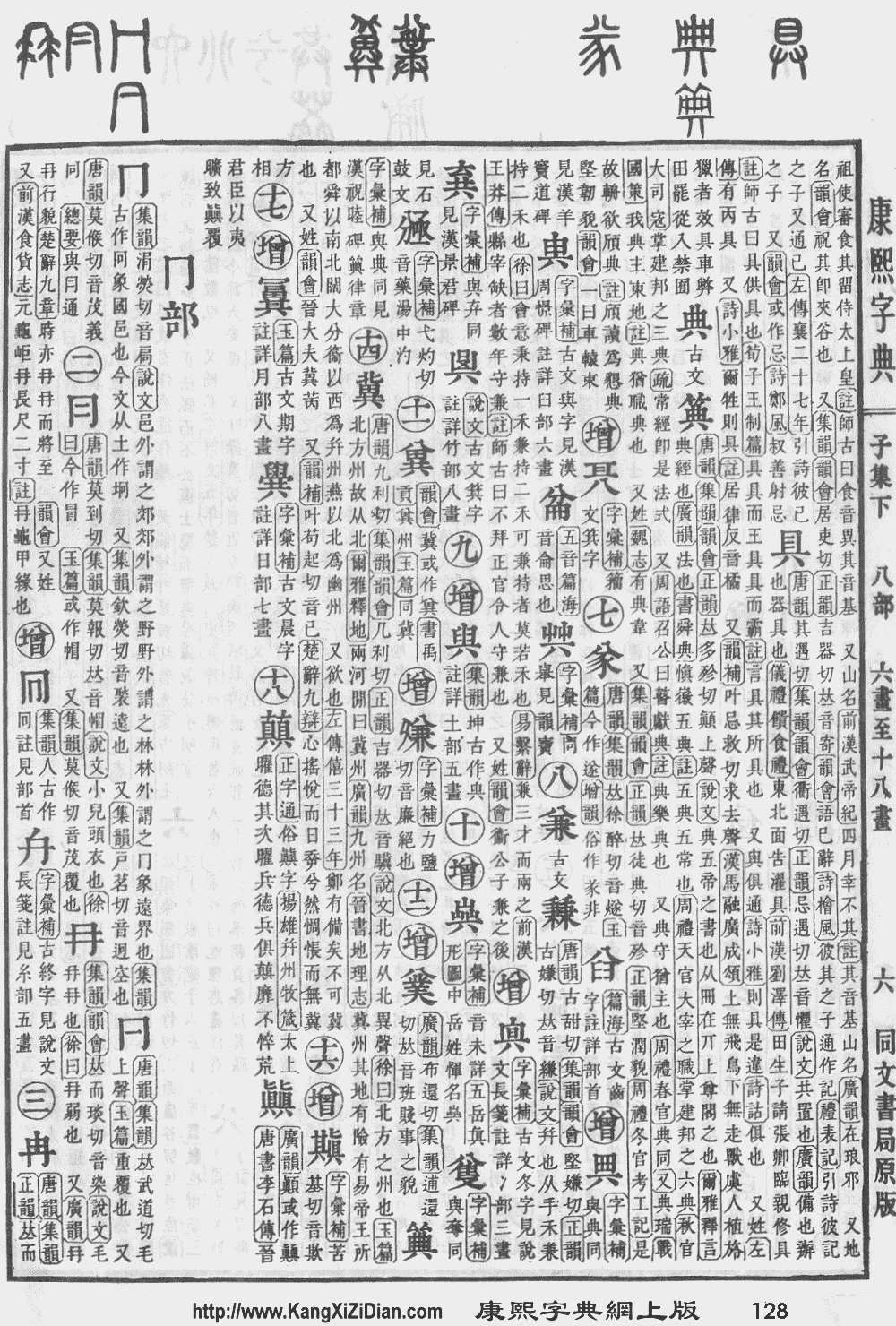
- KangXi: not present, would follow page 128, character 35
- Dai Kanwa Jiten: character 1512
- Hanyu Da Zidian (first edition): volume 1, page 97, character 2
- Unihan data for U+5185
Chinese
Glyph origin
| Historical forms of the character 内 | ||||
|---|---|---|---|---|
| Shang | Western Zhou | Warring States | Shuowen Jiezi (compiled in Han) | Liushutong (compiled in Ming) |
| Oracle bone script | Bronze inscriptions | Chu slip and silk script | Small seal script | Transcribed ancient scripts |
 |
 |
 |
 |
 |
Definitions
| For pronunciation and definitions of 内 – see 內 (“inside; interior; internal; inner; room; inner room; etc.”). (This character, 内, is the simplified and variant form of 內.) |
Notes:
|
Japanese
| 内 | |
| 內 |
Readings
From Middle Chinese 內 (MC nuʌiH); compare Mandarin 內 (nèi):
From Middle Chinese 內 (MC nʌp̚); compare Mandarin 內 (nà):
- Go-on: のう (nō)←なふ (nafu, historical); のう (nō)←のふ (nofu, historical)
- Kan-on: どう (dō)←だふ (dafu, historical)
From native Japanese roots:
Antonyms
Compounds
Compounds
- 内骨格 (naikokkaku): an endoskeleton
- 内形 (naikei): inner shape/form
- 内祖母 (naisobo): (rare) paternal grandmother, father's mother
- 案内 (annai)
- 域内 (ikinai)
- 以内 (inai)
- 内内 (uchiuchi), 内々 (uchiuchi)
- 園内 (ennai)
- 円内 (ennai)
- 屋内 (okunai)
- 海内 (kaidai)
- 閣内 (kakunai)
- 家庭内 (kateinai)
- 家内 (kanai)
- 館内 (kannai)
- 管内 (kannai)
- 学内 (gakunai)
- 企業内 (kigyōnai)
- 期内 (kinai)
- 機内 (kinai)
- 畿内 (kinai)
- 区内 (kunai)
- 境内 (keidai)
- 県内 (kennai)
- 圏内 (kennai)
- 月内 (getsunai)
- 港内 (kōnai)
- 口内 (kōnai)
- 校内 (kōnai)
- 坑内 (kōnai)
- 構内 (kōnai)
- 国内 (kokunai)
- 極内 (gokunai)
- 御府内 (gofunai)
- 参内 (sandai)
- 室内 (shitsunai): inside a room, indoor
- 市内 (shinai)
- 車内 (shanai)
- 社内 (shanai)
- 州内 (shūnai)
- 週内 (shūnai)
- 入内 (judai)
- 場内 (jōnai)
- 城内 (jōnai)
- 船内 (sennai)
- 対内 (tainai)
- 体内 (tainai)
- 胎内 (tainai)
- 竹内 (takeuchi)
- 武内 (takeuchi)
- 町内 (chōnai)
- 邸内 (teinai)
- 廷内 (teinai)
- 店内 (tennai)
- 島内 (tōnai)
- 党内 (tōnai)
- 都内 (tonai)
- 仲間内 (nakamauchi)
- 年内 (nennai)
- 河内 (hanoi)
- 表内 (hyōnai)
- 鼻内 (binai)
- 部内 (bunai)
- 幕内 (makuuchi)
- 身内 (miuchi)
- 洛内 (rakunai)
- 埒内 (rachinai)
- 領内 (ryōnai)
- 林内 (rinnai)
- 枠内 (wakunai)
- 湾内 (wannai)
- 内圧 (naiatsu)
- 内意 (naii)
- 内因 (naiin)
- 内謁 (naietsu)
- 内閲 (naietsu)
- 内宴 (naien)
- 内縁 (naien)
- 内苑 (naien)
- 内奥 (naiō)
- 内応 (naiō)
- 内科 (naika)
- 内火艇 (naikatei)
- 内懐 (uchibutokoro)
- 内海 (naikai)
- 内界 (naikai)
- 内外 (naigai)
- 内角 (naikaku)
- 内兜 (uchikabuto), 内冑 (uchikabuto)
- 内勘定 (uchikanjō)
- 内患 (naikan)
- 内観 (naikan)
- 内含 (naigan)
- 内気 (uchiki)
- 内規 (naiki)
- 内儀 (naigi)
- 内議 (naigi)
- 内宮 (naikū)
- 内局 (naikyoku)
- 内曲球 (naikyokkyū)
- 内勤 (naikin)
- 内金 (uchikin)
- 内訓 (naikun)
- 内径 (naikei)
- 内芸者 (uchigeisha)
- 内検 (naiken), 内見 (naiken)
- 内玄関 (uchigenkan)
- 内股 (uchimata), 内腿 (uchimata)
- 内股 (uchimomo)
- 内交渉 (naikōshō)
- 内向 (naikō)
- 内攻 (naikō)
- 内港 (naikō)
- 内腔 (naikū): lumen (cavity within tubular organ)
- 内航 (naikō)
- 内項 (naikō)
- 内剛 (naigō)
- 内合 (naigō)
- 内堀 (uchibori), 内壕 (uchibori), 内濠 (uchibori)
- 内国 (naikoku)
- 内沙汰 (uchizata)
- 内債 (naisai)
- 内妻 (naisai)
- 内済 (naisai)
- 内在 (naizai)
- 内旨 (naishi)
- 内視鏡 (naishikyō)
- 内事 (naiji)
- 内侍 (naishi)
- 内治 (naichi)
- 内示 (naiji)
- 内耳 (naiji)
- 内室 (naishitsu)
- 内実 (naijitsu)
- 内斜視 (naishashi)
- 内需 (naiju)
- 内住 (naijū)
- 外剛内柔 (gaigō-naijū)
- 内柔外剛 (naijū-gaigō)
- 内祝 (uchiiwai)
- 内出血 (naishukketsu)
- 内所 (naisho)
- 内緒 (naisho)
- 内証 (naishō)
- 内助 (naijo)
- 内傷 (naishō)
- 内省 (naisei)
- 青内障 (aosokohi)
- 緑内障 (ryokunaishō)
- 白内障 (hakunaishō)
- 黒内障 (kokunaishō)
- 内情 (naijō), 内状 (naijō)
- 内職 (naishoku)
- 内心 (naishin)
- 内申 (naishin)
- 内親王 (naishinnō)
- 内診 (naishin)
- 内陣 (naijin)
- 内政 (naisei)
- 内積 (naiseki)
- 内接 (naisetsu)
- 内戦 (naisen)
- 内線 (naisen)
- 内倉 (uchigura)
- 内奏 (naisō)
- 内層 (naisō)
- 内挿 (naisō)
- 内争 (naisō)
- 内相 (naishō)
- 内装 (naisō)
- 内臓 (naizō)
- 内蔵 (naizō)
- 内側 (uchigawa)
- 内孫 (uchimago)
- 内諾 (naidaku)
- 内達 (naitatsu)
- 内探 (naitan)
- 内談 (naidan)
- 内地 (naichi)
- 内池 (uchiike)
- 内着 (uchigi)
- 内中 (uchinaka)
- 内通 (naitsū)
- 内偵 (naitei)
- 内定 (naitei)
- 内庭 (naitei)
- 内廷 (naitei)
- 内弟子 (uchideshi)
- 内的 (naiteki)
- 内典 (naiten)
- 内殿 (naiden)
- 内湯 (uchiyu)
- 内燃機関 (nainenkikan)
- 内発 (naihatsu)
- 内罰的 (naibatsuteki)
- 内反脚 (naihankyaku)
- 内反足 (naihansoku)
- 内皮 (naihi)
- 内俵 (uchidawara)
- 内部 (naibu)
- 内風呂 (uchiburo)
- 内服 (naifuku)
- 内福 (naifuku)
- 内分 (naibun)
- 内紛 (naifun)
- 内聞 (naibun)
- 内壁 (naiheki)
- 内弁慶 (uchibenkei)
- 内包 (naihō)
- 内報 (naihō)
- 内方 (naihō)
- 内法 (uchinori)
- 内幕 (uchimaku)
- 内膜 (naimaku)
- 内密 (naimitsu)
- 内務 (naimu)
- 内命 (naimei)
- 内面 (naimen)
- 内蒙 (naimō)
- 内野 (naiya)
- 内約 (naiyaku)
- 内訳 (uchiwake)
- 内憂 (naiyū)
- 内容 (naiyō)
- 内用 (naiyō)
- 内乱 (nairan)
- 内覧 (nairan)
- 内裏 (dairi)
- 内陸 (nairiku)
- 歯内療法 (shinairyōhō)
- 内力 (nairyoku)
- 内輪 (uchiwa)
- 内輪 (nairin)
- 内遊星 (naiyūsei)
- 内惑星 (naiwakusei)
- 内枠 (uchiwaku)
- 内鰐 (uchiwani)
- 内帑 (naido)
- 内訌 (naikō)
- 内踝 (uchikurubushi)
Etymology 1
| Kanji in this term |
|---|
| 内 |
| うち Grade: 2 |
| kun’yomi |
| Alternative spelling |
|---|
| 內 (kyūjitai) |
From Old Japanese.
Noun
内 • (uchi)
- inside, within (physical location)
- between, among
- while, during, inside or within a span of time
- (when used possessively) one's own, my, our
- 内の会社
- uchi no kaisha
- our company
- 1996 September 15, Adachi, Mitsuru, “5×4P 第1話 お茶をにごす [5×4P Chapter 1: Tea-Bragging]”, in SHORT PROGRAM [SHORT PROGRAM], volume 2 (fiction), Tokyo: Shogakukan, →ISBN, page 104:
- あ———
- A———
- Ah—
- Dōshita no Sachiko?
- What is it, Sachiko?
- Omoidashita. Uchi no otō-san da wa, ano hito——
- I remember now. That guy over there— is my father
- A——
- Oh—
- あ———
- 内の会社
Derived terms
Derived terms
- その内 (sono uchi)
- 手の内 (te no uchi)
- 松の内 (matsu no uchi)
- 此の内 (kono uchi), この内 (kono uchi)
- 内ゲバ (uchi geba)
- 内ポケット (uchi poketto)
- 内衣し (uchikakushi), 内隠し (uchikakushi)
- 内回り (uchi mawari)
- 内開き (uchibiraki)
- 内借り (uchigari)
- 内貸し (uchigashi)
- 内張り (uchibari)
- 内渡し (uchi watashi)
- 内払い (uchi barai)
- 嫌よ嫌よも好きのうち (iya yo iya yo mo suki no uchi)
See also
Japanese first-person pronouns
Japanese first-person pronouns by speakers and situations according to Yuko Saegusa, Concerning the First Personal Pronoun of Native Japanese Speakers (2009)
| Speaker | Situation | 1 | 2 | 3 |
|---|---|---|---|---|
| Female | To friends | うち 49% | First name 26% | あたし 15% |
| In the family | First name 33% | あたし 29% | うち 23% | |
| In a class | わたし 86% | あたし 7% | うち 6% | |
| To an unknown visitor | わたし 75% | あたし, first name, うち 8% each | ||
| To the class teacher | わたし 66% | First name 13% | あたし 9% | |
| Male | To friends | おれ 72% | ぼく 19% | First name 4% |
| In the family | おれ 62% | ぼく 23% | うち 6% | |
| In a class | ぼく 85% | おれ 13% | First name, nickname 1% each | |
| To an unknown visitor | ぼく 64% | おれ 26% | First name 4% | |
| To the class teacher | ぼく 67% | おれ 27% | First name 3% | |
| Speaker | Situation | 1 | 2 | 3 |
|---|---|---|---|---|
| Female | To friends | うち 39% | あたし 30% | わたし 22% |
| In the family | あたし 28% | First name 27% | うち 18% | |
| In a class | わたし 89% | あたし 7% | 自分 3% | |
| To an unknown visitor | わたし 81% | あたし 10% | 自分 6% | |
| To the class teacher | わたし 77% | あたし 17% | 自分 7% | |
| Male | To friends | おれ 87% | うち 4% | わたし, 自分 2% each |
| In the family | おれ 88% | ぼく, 自分 5% each | ||
| In a class | わたし 48% | 自分 28% | ぼく 22% | |
| To an unknown visitor | ぼく 36% | 自分 29% | わたし 22% | |
| To the class teacher | 自分 38% | ぼく 29% | わたし 22% | |
Etymology 2
| Kanji in this term |
|---|
| 内 |
| ない Grade: 2 |
| Alternative spelling |
|---|
| 內 (kyūjitai) |
From Middle Chinese 內 (MC nuʌiH).
Pronunciation
- IPA(key): [na̠i]
Korean
Hanja
- This term needs a translation to English. Please help out and add a translation, then remove the text
{{rfdef}}.
Vietnamese
This article is issued from Wiktionary. The text is licensed under Creative Commons - Attribution - Sharealike. Additional terms may apply for the media files.