口
| ||||||||
| ||||||||
Translingual
| Stroke order | |||
|---|---|---|---|
 | |||
| Stroke order | |||
|---|---|---|---|
 | |||
Han character
口 (Kangxi radical 30, 口+0, 3 strokes, cangjie input 口 (R), four-corner 60000, composition ⿱冂一)
- Kangxi radical #30, ⼝.
- Shuowen Jiezi radical №22
Usage notes
This character (口) is used within characters. If a square is used as an enclosure around another character, then the character 囗 (U+56D7) is used instead.
Derived characters
Further reading
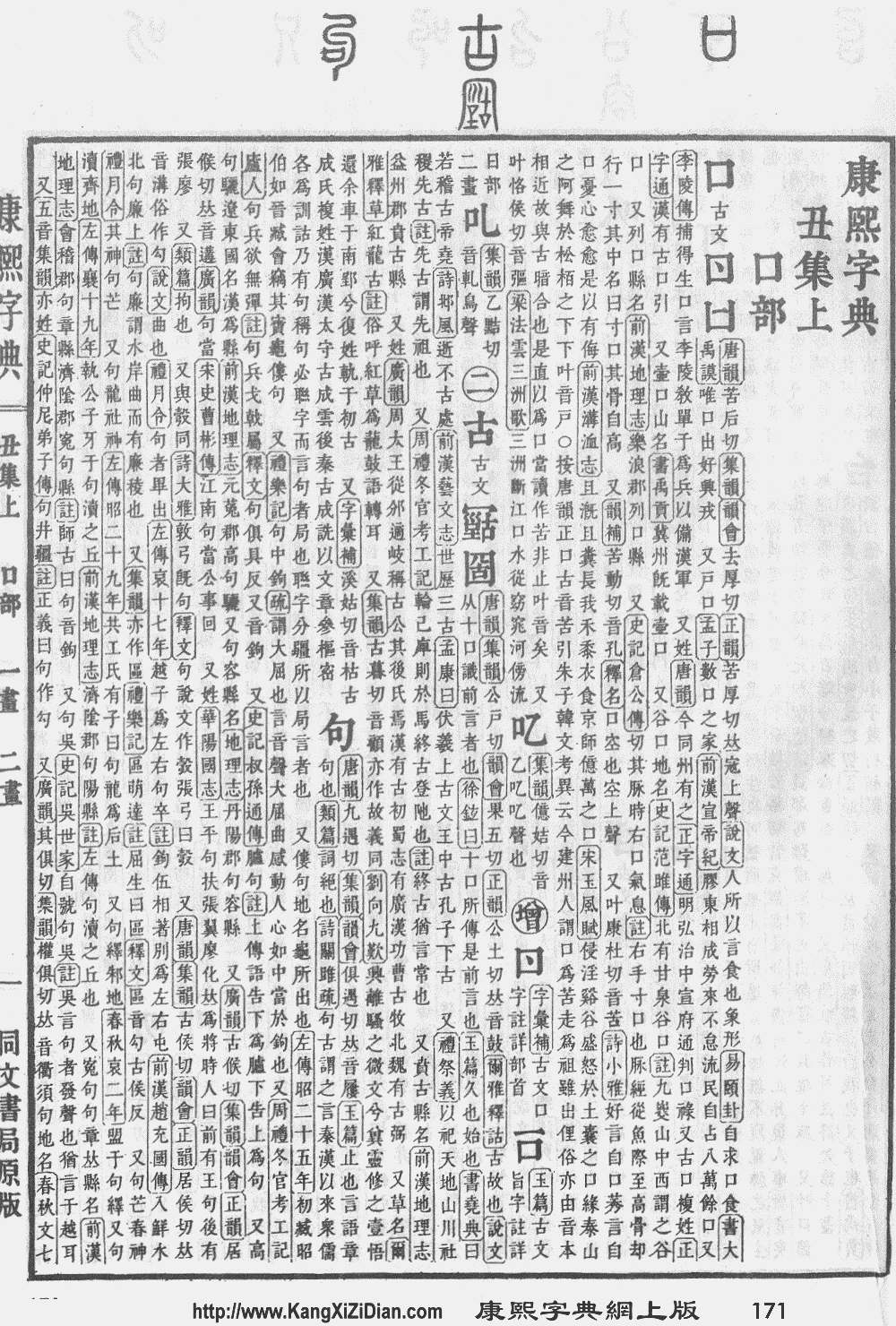
- KangXi: page 171, character 1
- Dai Kanwa Jiten: character 3227
- Dae Jaweon: page 379, character 17
- Hanyu Da Zidian (first edition): volume 1, page 566, character 14
- Unihan data for U+53E3
Chinese
| simp. and trad. |
口 | |
|---|---|---|
| alternative forms | 𠙵 𠮚 囗 | |
Glyph origin
| Historical forms of the character 口 | |||||
|---|---|---|---|---|---|
| Shang | Western Zhou | Warring States | Shuowen Jiezi (compiled in Han) | Liushutong (compiled in Ming) | |
| Bronze inscriptions | Oracle bone script | Bronze inscriptions | Chu slip and silk script | Small seal script | Transcribed ancient scripts |
 |
 |
 |
 |
 |
 |
Pictogram (象形) – resembles an open mouth.
In the oracle bone script, radical 口 is used for characters having abstract meanings. Such a character can have a figurative meaning derived from the phonetic part, e.g. 右 (OC *ɢʷɯʔ, *ɢʷɯs, “right”) = 又 (OC *ɢʷɯs, “right hand”) + 口 and 𪪺 (“strong; powerful”) = 弓 (OC *kʷɯŋ, “bow”) + 口, or be an unrelated borrowing, e.g. 否 (OC *brɯʔ, *pɯʔ, “no”) = 不 (OC *pɯ, *pɯʔ, *pɯ', “calyx”) + 口.
Etymology 1
From Proto-Sino-Tibetan *ku(w) (“mouth”). Cognate with Garo ku·sik (“mouth”), Tangut 𗋈 (*ŋwu², “mouth”).
Pronunciation
Definitions
口
- (anatomy) mouth, especially the lips and internal mouth cavity (Classifier: 把 c)
- entrance; opening; mouth (of an object)
- gateway
- hole; cut
- port
- perimeter
- government organ; department
- Classifier for family members, populations and guns.
- Classifier for bites or mouthfuls.
- (neologism, slang) to fellate
- A surname
Synonyms
Compounds
|
|
|
Etymology 2
| For pronunciation and definitions of 口 – see 名 (“name; given name; etc.”). (This character, 口, is an ancient form of 名.) |
References
- “口”, in 漢語多功能字庫 (Multi-function Chinese Character Database), 香港中文大學/香港中文大学 (the Chinese University of Hong Kong), 2014–
Japanese
Readings
Compounds
- 口吟 (kugin)
- 口受 (kuju)
- 口授 (kuju)
- 口説, 口舌 (kuzechi)
- 口説, 口舌 (kuzetsu)
- 口宣 (kuzen)
- 口調 (kuchō)
- 口伝 (kuden)
- 口炎 (kōen)
- 口演 (kōen)
- 口外 (kōgai)
- 口蓋 (kōgai)
- 口角 (kōkaku)
- 口気 (kōki)
- 口供 (kōkyō)
- 口琴 (kōkin)
- 口吟 (kōgin)
- 口腔 (kōkū)
- 口径 (kōkei)
- 口語 (kōgo)
- 口腔 (kōkō)
- 口座 (kōza)
- 口才 (kōsai)
- 口才 (kōzai)
- 口耳 (kōji)
- 口実 (kōjitsu)
- 口受 (kōju)
- 口授 (kōju)
- 口臭 (kōshū)
- 口述 (kōjutsu)
- 口承 (kōshō)
- 口誦 (kōshō)
- 口上 (kōjō)
- 口唇 (kōshin)
- 口銭 (kōsen)
- 口装 (kōsō)
- 口中 (kōchū)
- 口答 (kōtō)
- 口頭 (kōtō)
- 口内 (kōnai)
- 口碑 (kōhi)
- 口腹 (kōfuku)
- 口吻 (kōfun)
- 口辺 (kōhen)
- 口弁 (kōben)
- 口味 (kōmi)
- 口約 (kōyaku)
- 口糧 (kōryō)
- 口論 (kōron)
Etymology 1
| Kanji in this term |
|---|
| 口 |
| くつ Grade: 1 |
| kun’yomi |
/kutu/ → /kut͡su/
From Old Japanese. Appears in compound terms listed in the Wamyō Ruijushō of 938 CE.
The ancient combining form of modern reading kuchi.[1] Likely the original form.
No longer productive in modern Japanese. Only found in older compounds.
There are interesting potential phonetic and semantic overlaps with Middle Chinese 窟 (MC kʰuət̚, “hole; cave”), 口 (MC kʰəuX, “mouth; opening; hole”); Korean 굳 (gut), 굿 (gut, “hole; hollow; cavity”); possibly even Ainu クㇳ (kut), クッチ (kutchi, “throat”). One possibility is that these represent prehistoric nativized borrowings from Chinese. However, there is yet no clear evidence of relatedness.
Pronunciation
- IPA(key): [kɯ̟ᵝt͡sɨᵝ]
- The pitch accent is derived from the entire compound word.
Derived terms
Etymology 2
| Kanji in this term |
|---|
| 口 |
| くち Grade: 1 |
| kun’yomi |
*/kutu i/ → /kuti/ → /kut͡ɕi/
From Old Japanese, ultimately from Proto-Japonic *kutuy. First attested in the Kojiki of 712 CE.[2] Also appears in the Man'yōshū, completed some time after 759 CE.[3]
Shift from kutu above, probably by fusion with ancient nominal particle い (i). Compare the phonetic development of 神 (kami, “spirit, god”) from kamu + i, 木 (ki, “tree”) from ko + i, 目 (me, “eye”) from ma + i.
Noun
口 • (kuchi)
- mouth
- opening
- This term needs a translation to English. Please help out and add a translation, then remove the text
{{rfdef}}.- 書き口
- kakikuchi
- (please add an English translation of this example)
- 書き口
- This term needs a translation to English. Please help out and add a translation, then remove the text
{{rfdef}}. - taste (in food), preference
Derived terms
- 口荒 (kuchiara)
- 口占, 口裏 (kuchiura)
- 口絵 (kuchie)
- 口可笑 (kuchiokashi)
- 口重 (kuchiomo)
- 口金 (kuchigane)
- 口軽 (kuchigaru)
- 口綺麗, 口奇麗 (kuchigirei)
- 口癖 (kuchiguse)
- 口々, 口口 (kuchikuchi)
- 口々, 口口 (kuchiguchi)
- 口車 (kuchiguruma)
- 口巧者 (kuchigōsha)
- 口言葉, 口詞 (kuchikotoba)
- 口先 (kuchisaki)
- 口三味線 (kuchizamisen)
- 口三味線 (kuchijamisen)
- 口銭 (kuchisen)
- 口達者 (kuchidassha)
- 口茶 (kuchija)
- 口八丁 (kuchihatchō)
- 口速, 口早 (kuchibaya)
- 口火 (kuchibi)
- 口拍子 (kuchibyōshi)
- 口笛 (kuchibue)
- 口不調法 (kuchibuchōhō)
- 口下手 (kuchibeta)
- 口紅 (kuchibeni)
- 口返答 (kuchihentō)
- 口前 (kuchimae)
- 口真似 (kuchimane)
- 口忠実 (kuchimame)
- 口元, 口許 (kuchimoto)
- 口輪 (kuchiwa)
- 口脇 (kuchiwaki)
- 口話法 (kuchiwahō)
- 糸口 (itoguchi): the end of a spool or ball of thread
- 入口 (iriguchi): entrance
- 奥口 (okuguchi): the inner doors of a house
- 表口 (omoteguchi): the front entrance/exit
- 傷口 (kizuguchi): an open wound
- 蛇口 (jaguchi)
- 出口 (deguchi): exit
Etymology 3
| Kanji in this term |
|---|
| 口 |
| く Grade: 1 |
| goon |
From Middle Chinese 口 (MC kʰəuX). The 呉音 (goon), so likely the initial borrowing.
Pronunciation
- IPA(key): [kɯ̟ᵝ]
Noun
口 • (ku)
Counter
口 • (-ku)
- used to count people
- used to count per-person portions
- used to count open-mouthed containers
- used to count bladed weapons or tools
Etymology 4
| Kanji in this term |
|---|
| 口 |
| こう Grade: 1 |
| kan’on |
From Middle Chinese 口 (MC kʰəuX). The 漢音 (kan'on), so likely a later borrowing.
Pronunciation
- IPA(key): [ko̞ː]
References
- 1988, 国語大辞典(新装版) (Kokugo Dai Jiten, Revised Edition) (in Japanese), Tōkyō: Shogakukan
- “口”, in 日本国語大辞典 (Nihon Kokugo Daijiten, “Nihon Kokugo Daijiten”) (in Japanese), 2nd edition, Tōkyō: Shogakukan, 2000, →ISBN
- c. 759, Man'yōshū (book 14, poem 3532), text here
- 2006, 大辞林 (Daijirin), Third Edition (in Japanese), Tōkyō: Sanseidō, →ISBN
- 1998, NHK日本語発音アクセント辞典 (NHK Japanese Pronunciation Accent Dictionary) (in Japanese), Tōkyō: NHK, →ISBN
- 2011, 新明解国語辞典 (Shin Meikai Kokugo Jiten), Seventh Edition (in Japanese), Tōkyō: Sanseidō, →ISBN
Korean
Etymology
From Middle Chinese 口 (MC kʰəuX).
| Historical readings |
|---|
|
Pronunciation
- (in 口文, 口錢, and 口硬):
- (SK Standard/Seoul) IPA(key): [ku]
- Phonetic hangul: [구]
- (mouth; entrance; hole; etc.):
- (SK Standard/Seoul) IPA(key): [ku(ː)]
- Phonetic hangul: [구(ː)]
- Though still prescribed in Standard Korean, most speakers in both Koreas no longer distinguish vowel length.
Compounds
- 인구 (人口, in'gu)
- 가구 (家口, gagu)
- 구결 (口訣, gugyeol)
- 구호 (口號, guho)
- 창구 (窓口, changgu)
- 함구 (緘口, hamgu)
- 구실 (口實, gusil)
- 구미 (口味, gumi)
- 항구 (港口, hanggu)
- 입구 (入口, ipgu)
- 구술 (口述, gusul)
- 금구 (噤口, geumgu)
- 구두 (口頭, gudu)
- 출구 (出口, chulgu)
- 하구 (河口, hagu)
- 대구 (大口, daegu)
- 구화 (口話, guhwa)
- 식구 (食口, sikgu)
- 구전 (口錢, gujeon)
- 구문 (口文, gumun)
- 구어 (口語, gueo)
- 구전 (口傳, gujeon)
- 화구 (火口, hwagu)
- 포구 (浦口, pogu)
- 강구 (江口, ganggu)
- 도구 (渡口, dogu)
- 구순 (口脣, gusun)
- 구령 (口令, guryeong)
- 구수 (口數, gusu)
- 갱구 (坑口, gaenggu)
- 구강 (口腔, gugang)
- 구설 (口舌, guseol)
- 호구 (戶口, hogu)
- 경구 (經口, gyeonggu)
- 구각 (口角, gugak)
- 구답 (口答, gudap)
Okinawan
Pronunciation
- IPA(key): /kut͡ɕi/
Compounds
- 沖縄口 (uchināguchi, “Okinawan language”)
- ウランダ口 (urandaguchi, “European language, Western language”)
- 書ち口 (kachiguchi, “written language”)
- 口しば (kuchishiba, “lips”)
- 島口 (shimaguchi, “island language, local language”)
- 唐口 (tōguchi, “Chinese language”)
- 那覇口 (nāfaguchi, “Naha dialect”)
- 目口 (mīkuchi, “facial expression”)
- 大和口 (yamatuguchi, “standard Japanese language”)
Vietnamese
References
- Nguyễn et al. (2009).
- Trần (2004).