ajo
Albanian
Etymology
From Proto-Albanian *a-jā, compound of proclitic particle a and jā, from *h₁eyéh₂ (compare Latin eā), from Proto-Indo-European *h₁ey. More at ai.
Pronunciation
- IPA(key): [aˈjɔ]
Declension
Finnish
Pronunciation
- IPA(key): /ˈɑjo/, [ˈɑjo̞]
- Rhymes: -ɑjo
- Syllabification(key): a‧jo
Noun
ajo
- driving
- riding (motorcycle)
- chase
- (computing) execution, run
- (motor racing) (endurance) race
- Le Mansin 24 tunnin ajo ― 24 Hours of Le Mans
Declension
| Inflection of ajo (Kotus type 1/valo, no gradation) | |||
|---|---|---|---|
| nominative | ajo | ajot | |
| genitive | ajon | ajojen | |
| partitive | ajoa | ajoja | |
| illative | ajoon | ajoihin | |
| singular | plural | ||
| nominative | ajo | ajot | |
| accusative | nom. | ajo | ajot |
| gen. | ajon | ||
| genitive | ajon | ajojen | |
| partitive | ajoa | ajoja | |
| inessive | ajossa | ajoissa | |
| elative | ajosta | ajoista | |
| illative | ajoon | ajoihin | |
| adessive | ajolla | ajoilla | |
| ablative | ajolta | ajoilta | |
| allative | ajolle | ajoille | |
| essive | ajona | ajoina | |
| translative | ajoksi | ajoiksi | |
| instructive | — | ajoin | |
| abessive | ajotta | ajoitta | |
| comitative | — | ajoineen | |
| Possessive forms of ajo (type valo) | ||
|---|---|---|
| possessor | singular | plural |
| 1st person | ajoni | ajomme |
| 2nd person | ajosi | ajonne |
| 3rd person | ajonsa | |
Compounds
- aika-ajo
- ajoaika
- ajoaine
- ajoankkuri
- ajoharjoittelu
- ajohevonen
- ajohiekka
- ajohärkä
- ajojahti
- ajojää
- ajokaista
- ajokalusto
- ajokeli
- ajokelpoinen
- ajokielto
- ajokilometri
- ajokoe
- ajokoira
- ajokonsoli
- ajokortti
- ajokunto
- ajokuntoinen
- ajolinja
- ajolähtö
- ajomatka
- ajomestari
- ajometsästys
- ajomies
- ajomiina
- ajonestin
- ajonestolaite
- ajoneuvo
- ajonopeus
- ajonuotitus
- ajo-ohje
- ajo-ominaisuus
- ajo-opetus
- ajopeli
- ajopiirturi
- ajoporo
- ajopulpetti
- ajopuu
- ajopyynti
- ajopäiväkirja
- ajorata
- ajosiima
- ajosuunta
- ajotaito
- ajotekniikka
- ajotie
- ajotietokone
- ajotilanne
- ajoturvallisuus
- ajoura
- ajovalot
- ajoverkko
- ajoviima
- ajovuoro
- alasajo
- asianajo
- autonajo
- enduroajo
- eräajo
- etappiajo
- etuajo
- etuajo-oikeus
- etuajo-oikeutettu
- harjoitusajo
- hevosajot
- hiekanajo
- hirvenajo
- huoltoajo
- hälytysajo
- insinööriajo
- inssiajo
- jäärata-ajo
- kaista-ajo
- kamera-ajo
- karhunajo
- karilleajo
- katurata-ajot
- kaupunkiajo
- kautta-ajo
- ketunajo
- kiihdytysajo
- kilpa-ajo
- kilvanajo
- koeajo
- kokoontumisajo
- kortteliajo
- kumoonajo
- kuninkuusajo
- lannanajo
- lumenajo
- luotettavuusajo
- läpiajo
- maantieajo
- maastoajo
- matka-ajo
- metsäajo
- metsänajo
- metsäänajo
- nopeusajo
- nurinajo
- ohiajo
- ojaanajo
- parranajo
- peräänajo
- pisteajo
- porokuninkuusajo
- ralliajo
- rata-ajo
- riistanajo
- risteysajo
- ryhmäajo
- saaliinajo
- sisäänajo
- sonnanajo
- soppajono
- soranajo
- surmanajo
- takaa-ajo
- taloudellisuusajo
- talviajo
- tapaninajo
- tasoitusajo
- testausajo
- tieltäajo
- tietokoneajo
- tilausajo
- totutusajo
- tuuliajo
- ulosajo
- yhteenajo
- yksityisajo
- yliajo
- ympäriajo
Indonesian
Etymology
From Minangkabau [Term?].
Pronunciation
- IPA(key): /ˈad͡ʒo/
- Hyphenation: ajo
Noun
ajo (first-person possessive ajoku, second-person possessive ajomu, third-person possessive ajonya)
Further reading
- “ajo” in Kamus Besar Bahasa Indonesia, Jakarta: Language Development and Fostering Agency — Ministry of Education, Culture, Research, and Technology of the Republic Indonesia, 2016.
Ingrian
Pronunciation
- (Ala-Laukaa) IPA(key): /ˈɑjo/, [ˈɑjo̞]
- (Soikkola) IPA(key): /ˈɑjo/, [ˈɑjo̞]
- Rhymes: -ɑjo
- Hyphenation: a‧jo
Declension
| Declension of ajo (type 4/koivu, no gradation, gemination) | ||
|---|---|---|
| singular | plural | |
| nominative | ajo | ajot |
| genitive | ajon | aijoin, ajoloin |
| partitive | aijoa | ajoja, ajoloja |
| illative | aijoo | aijoi, ajoloihe |
| inessive | ajos | ajois, ajolois |
| elative | ajost | ajoist, ajoloist |
| allative | ajolle | ajoille, ajoloille |
| adessive | ajol | ajoil, ajoloil |
| ablative | ajolt | ajoilt, ajoloilt |
| translative | ajoks | ajoiks, ajoloiks |
| essive | ajonna, aijoon | ajoinna, ajoloinna, aijoin, ajoloin |
| exessive1) | ajont | ajoint, ajoloint |
| 1) obsolete *) the accusative corresponds with either the genitive (sg) or nominative (pl) **) the comitative is formed by adding the suffix -ka? or -kä? to the genitive. | ||
References
- Ruben E. Nirvi (1971) Inkeroismurteiden Sanakirja, Helsinki: Suomalais-Ugrilainen Seura, page 9
Latin
Pronunciation
- (Classical) IPA(key): /ˈai̯.i̯oː/, [ˈäi̯ːoː]
- (Ecclesiastical) IPA(key): /ˈa.jo/, [ˈäːjo]
Verb
ajō (present infinitive ajere, perfect active ait); third conjugation iō-variant, irregular, highly defective
- (Medieval Latin) Alternative form of aiō
Conjugation
| Conjugation of ajō (third conjugation iō-variant, irregular, active only, highly defective) | |||||||
|---|---|---|---|---|---|---|---|
| indicative | singular | plural | |||||
| first | second | third | first | second | third | ||
| active | present | ajō | ais | ait | — | — | ajunt |
| imperfect | ajēbam | ajēbās | ajēbat | ajēbāmus | ajēbātis | ajēbant | |
| perfect | — | aistī | ait | — | — | — | |
| subjunctive | singular | plural | |||||
| first | second | third | first | second | third | ||
| active | present | — | ajās | ajat | — | — | ajant |
| imperative | singular | plural | |||||
| first | second | third | first | second | third | ||
| active | present | — | ai | — | — | — | — |
| future | — | — | — | — | — | — | |
| non-finite forms | active | passive | |||||
| present | perfect | future | present | perfect | future | ||
| infinitives | ajere | — | — | — | — | — | |
| participles | ajēns | — | — | — | — | — | |
Northern Kurdish
Etymology
Derived from ajotin (“to drive”).
Pronunciation
- IPA(key): /ɑːˈʒoː/
Declension
Declension of ajo
| Definite feminine and masculine gender | ||||
|---|---|---|---|---|
| Case | Feminine (sg) | Masculine (sg) | Plural | |
| Nominative | ajo | ajo | ajo | |
| Construct | ajoya | ajoyê | ajoyên | |
| Oblique | ajoyê | ajoyî | ajoyan | |
| Demonstrative oblique | wê ajoyê | wî ajoyî | wan ajoyan | |
| Vocative | ajoyê | ajoyo | ajoyino | |
| Indefinite feminine and masculine gender | ||||
| Rewş | Feminine (sg) | Masculine (sg) | Plural | |
| Nominative | ajoyek | ajoyek | ajoyin | |
| Construct | ajoyeke | ajoyekî | ajoyine | |
| Oblique | ajoyekê | ajoyekî | ajoyinan | |
References
- Chyet, Michael L. (2020), “ajo”, in Ferhenga Birûskî: Kurmanji–English Dictionary (Language Series; 1), volume 1, London: Transnational Press, page 4
Portuguese
Spanish
Pronunciation
- IPA(key): /ˈaxo/ [ˈa.xo]
Audio (Spain) (file) - Rhymes: -axo
- Syllabification: a‧jo
Derived terms
- ajete
- ajiaceite
- ajillo
- ajoblanco
- ajo chalote
- ajo de oso
- ajo y agua
- el que se pica, ajos come (“if the shoe/cap fits, wear it”)
- en el ajo
- ir al ajo del asunto
Descendants
Etymology 2
Shortened from carajo.
Etymology 3
See the etymology of the corresponding lemma form.
Verb
ajo
Further reading
- “ajo”, in Diccionario de la lengua española, Vigésima tercera edición, Real Academia Española, 2014
Yoruba
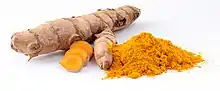
Àjó
Pronunciation
- IPA(key): /à.d͡ʒó/
Pronunciation
- IPA(key): /à.d͡ʒò/
Noun
àjò
Derived terms
- ìrìn àjò (“journey; voyage”)
Zacatlán-Ahuacatlán-Tepetzintla Nahuatl
References
- Instituto Lingüístico de Verano, A.C. (2006) Pequeño diccionario ilustrado: Náhuatl de los municipios de Zacatlán, Tepetzintla y Ahuacatlán, segunda edición edition, Tlalpan, D.F. México: Instituto Lingüístico de Verano, A.C., page 21
This article is issued from Wiktionary. The text is licensed under Creative Commons - Attribution - Sharealike. Additional terms may apply for the media files.