駐
See also: 驻
| ||||||||
Translingual
Han character
駐 (Kangxi radical 187, 馬+5, 15 strokes, cangjie input 尸火卜土 (SFYG), four-corner 70314, composition ⿰馬主)
References
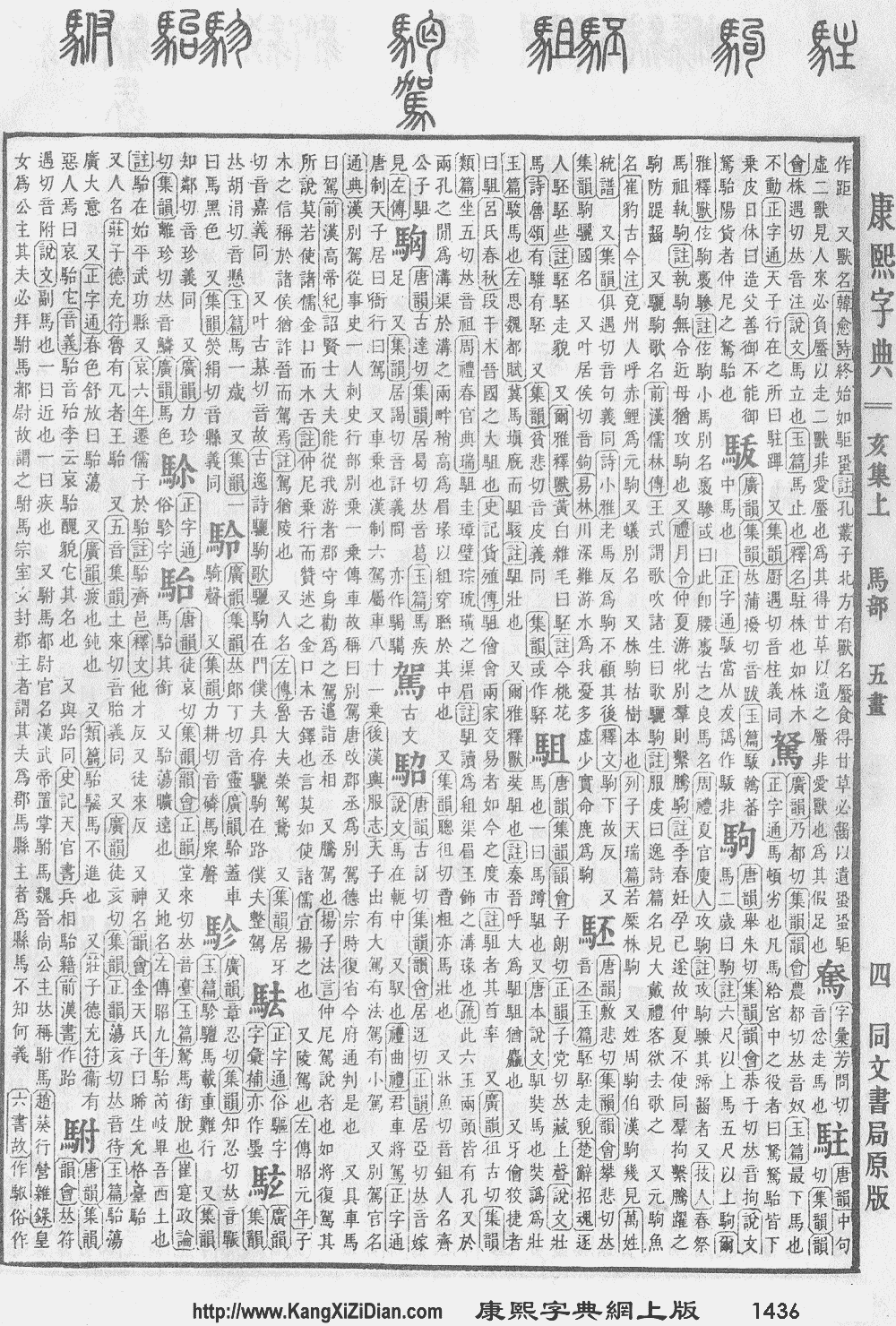
- KangXi: page 1436, character 2
- Dai Kanwa Jiten: character 44660
- Dae Jaweon: page 1960, character 27
- Hanyu Da Zidian (first edition): volume 7, page 4549, character 9
- Unihan data for U+99D0
Chinese
| trad. | 駐 | |
|---|---|---|
| simp. | 驻 | |
Glyph origin
Characters in the same phonetic series (主) (Zhengzhang, 2003)
Phono-semantic compound (形聲/形声, OC *tos) : semantic 馬/马 (“horse”) + phonetic 主 (OC *tjoʔ). Cf. 住 (zhù), with the 人 radical replacing 馬.
Etymology
Possibly from Proto-Sino-Tibetan, with *-s nominalization or stative suffix. 輟 (OC *tod) is a likely cognate via causative formation. (Jin, 2004)
Pronunciation
Definitions
駐
Synonyms
- (to halt):
Compounds
Japanese
Readings
Korean
Etymology
From Middle Chinese 駐 (MC ʈɨoH).
Compounds
Compounds
- 주한 (駐韓, juhan)
- 주둔 (駐屯, judun, “stationing of troops”)
- 주차장 (駐車場, juchajang, “parking lot”)
- 주재 (駐在, jujae, “a residence, especially in the service of a country or company afar.”)
- 주차 (駐車, jucha, “parking, especially of cars”)
- 주류 (駐留, juryu, “stationing of troops”)
- 상주 (常駐, sangju, “continuous presence”)
Vietnamese
This article is issued from Wiktionary. The text is licensed under Creative Commons - Attribution - Sharealike. Additional terms may apply for the media files.