蹲
| ||||||||
Translingual
Han character
蹲 (Kangxi radical 157, 足+12, 19 strokes, cangjie input 口一廿田戈 (RMTWI), four-corner 68146, composition ⿰⻊尊)
References
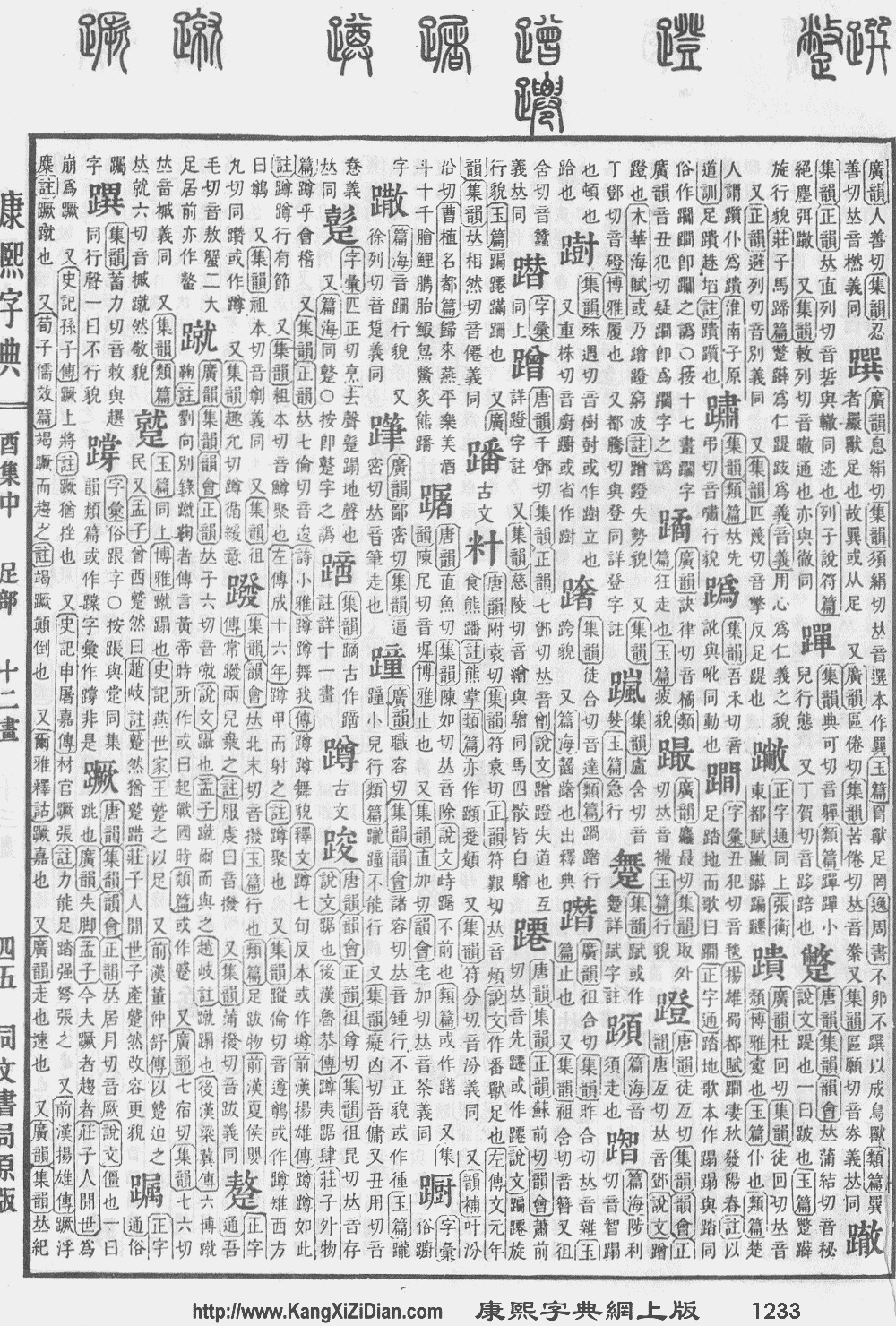
- KangXi: page 1233, character 32
- Dai Kanwa Jiten: character 37874
- Dae Jaweon: page 1705, character 42
- Hanyu Da Zidian (first edition): volume 6, page 3741, character 7
- Unihan data for U+8E72
Chinese
Glyph origin
Characters in the same phonetic series (尊) (Zhengzhang, 2003)
Phono-semantic compound (形聲, OC *zuːn) : semantic 足 (“foot”) + phonetic 尊 (OC *ʔsuːn) – to sit.
Etymology 1
| trad. | 蹲 | |
|---|---|---|
| simp. # | 蹲 | |
| 2nd round simp. | 𧿬 | |
Pronunciation
Definitions
蹲
Synonyms
- (to squat):
Dialectal synonyms of 蹲 (“to squat”) [map]
- (to stay):
Compounds
Pronunciation
Pronunciation
Definitions
蹲
- † Only used in 蹲蹲 (“dancing rhythmically”).
Pronunciation
Pronunciation
Pronunciation
Definitions
蹲
- † Only used in 蹲循 and 蹲節/蹲节.
Etymology 7
| For pronunciation and definitions of 蹲 – see 鷷 (“pheasant”). (This character, 蹲, is a variant form of 鷷.) |
References
- “蹲”, in 漢語多功能字庫 (Multi-function Chinese Character Database), 香港中文大學 (the Chinese University of Hong Kong), 2014–
Japanese
Kanji
蹲
- This term needs a translation to English. Please help out and add a translation, then remove the text
{{rfdef}}.
Readings
Korean
Hanja
蹲 (eum 준 (jun))
- This term needs a translation to English. Please help out and add a translation, then remove the text
{{rfdef}}.
Vietnamese
Han character
- This term needs a translation to English. Please help out and add a translation, then remove the text
{{rfdef}}.
References
This article is issued from Wiktionary. The text is licensed under Creative Commons - Attribution - Sharealike. Additional terms may apply for the media files.