紅
| ||||||||
Translingual
Han character
紅 (Kangxi radical 120, 糸+3, 9 strokes, cangjie input 女火一 (VFM), four-corner 21910, composition ⿰糹工)
References
- KangXi: page 916, character 1
- Dai Kanwa Jiten: character 27243
- Dae Jaweon: page 1343, character 8
- Hanyu Da Zidian (first edition): volume 5, page 3363, character 5
- Unihan data for U+7D05
Chinese
| trad. | 紅 | |
|---|---|---|
| simp. | 红 | |
Glyph origin
| Historical forms of the character 紅 |
|---|
| Shuowen Jiezi (compiled in Han) |
| Small seal script |
 |
| Old Chinese | |
|---|---|
| 缸 | *kroːŋ, *ɡroːŋ |
| 篢 | *kluːmʔ, *koːŋ |
| 贑 | *kluːmʔ |
| 涳 | *ŋr'oːŋ, *kʰroːŋ, *kʰoːŋ |
| 江 | *kroːŋ |
| 肛 | *kroːŋ, *qʰroːŋ |
| 扛 | *kroːŋ |
| 杠 | *kroːŋ |
| 豇 | *kroːŋ |
| 茳 | *kroːŋ |
| 釭 | *kroːŋ, *koːŋ, *kuːŋ |
| 矼 | *kroːŋ |
| 玒 | *kroːŋ, *koːŋ |
| 虹 | *kroːŋs, *koːŋs, *ɡoːŋ |
| 腔 | *kʰroːŋ |
| 崆 | *kʰroːŋ, *kʰoːŋ |
| 羫 | *kʰroːŋ |
| 控 | *kʰroːŋ, *kʰoːŋs |
| 椌 | *kʰroːŋ, *kʰoːŋ |
| 悾 | *kʰroːŋ, *kʰoːŋ, *kʰoːŋs |
| 跫 | *kʰroːŋ, *kʰoŋ, *ɡoŋ |
| 啌 | *qʰroːŋ |
| 谾 | *qʰroːŋ, *qʰoːŋ |
| 舡 | *qʰroːŋ |
| 缻 | *ɡroːŋ |
| 項 | *ɡroːŋʔ |
| 屸 | *ɡ·roːŋ |
| 功 | *koːŋ |
| 工 | *koːŋ |
| 疘 | *koːŋ |
| 魟 | *koːŋ, *qʰoːŋ, *ɡoːŋ |
| 攻 | *koːŋ, *kuːŋ |
| 愩 | *koːŋ |
| 碽 | *koːŋ |
| 貢 | *koːŋs |
| 羾 | *koːŋs |
| 空 | *kʰoːŋ, *kʰoːŋs |
| 箜 | *kʰoːŋ |
| 硿 | *kʰoːŋ |
| 埪 | *kʰoːŋ |
| 鵼 | *kʰoːŋ |
| 倥 | *kʰoːŋ, *kʰoːŋʔ, *kʰoːŋs |
| 鞚 | *kʰoːŋs |
| 叿 | *qʰoːŋ |
| 嗊 | *qʰoːŋʔ |
| 訌 | *ɡoːŋ |
| 紅 | *ɡoːŋ |
| 仜 | *ɡoːŋ |
| 葒 | *ɡoːŋ |
| 渱 | *ɡoːŋ |
| 鴻 | *ɡoːŋ, *ɡoːŋʔ |
| 汞 | *ɡoːŋʔ |
| 澒 | *ɡoːŋʔ |
| 鞏 | *koŋʔ |
| 巩 | *koŋʔ |
| 銎 | *kʰoŋ, *qʰoŋ |
| 恐 | *kʰoŋʔ, *kʰoŋs |
| 蛩 | *ɡoŋ |
| 筇 | *ɡoŋ |
| 桏 | *ɡoŋ |
| 邛 | *ɡoŋ |
Phono-semantic compound (形聲, OC *ɡoːŋ) : semantic 糸 (“silk”) + phonetic 工 (OC *koːŋ).
Etymology
彤 (OC *l'uːŋ, “red”) could be a variant of 紅 (OC *ɡoːŋ) (Schuessler, 2007). May be related to 虹 (OC *kroːŋs, *ɡoːŋ, “rainbow”).
Originally referred to lighter shades of red; gradually replaced 赤 (chì, “red”) as the basic color term for "red".
Pronunciation 1
Definitions
紅
- red
- (colloquial) popular; in vogue
- 翻紅/翻红 ― fānhóng ― to be popular again
- 董晨宇介紹,這種突然病毒式紅起來的詞彙又稱「米姆」,像「雨女無瓜」這樣由老電視劇而來的「米姆」也有先例。 [MSC, trad.]
- From: 2019 June 18, 陆宇婷 (Lu Yuting), 蒋肖斌 (Jiang Xiaobin), 《“雨女无瓜”成流行语,老剧靠“梗”翻红》, in China Youth Daily, page 8
- Dǒng Chényǔ jièshào, zhè zhǒng tūrán bìngdúshì hóng qǐlái de cíhuì yòu chēng “mǐmǔ”, xiàng “yǔnǚwúguā” zhèyàng yóu lǎo diànshìjù ér lái de “mǐmǔ” yě yǒu xiānlì. [Pinyin]
- (please add an English translation of this example)
董晨宇介绍,这种突然病毒式红起来的词汇又称“米姆”,像“雨女无瓜”这样由老电视剧而来的“米姆”也有先例。 [MSC, simp.]
- the red clothes and bunting used on festive occasions
- festive occasion; wedding
- (figurative) revolutionary; Communist; Red
- bonus; dividend
- (literary) flower
- 殘紅/残红 ― cánhóng ― fallen petals
- (literary) beautiful woman
- (literary) blood
- (euphemistic, Cantonese, Hakka) blood tofu
- a surname. Hong
Synonyms
Compounds
Pronunciation 2
Definitions
紅
- † Substitute character for 功 (gōng).
- † Substitute character for 工 (gōng).
- Placename in the State of Lu during the Spring and Autumn Period in Chinese history, northeast of modern Tai'an, Shandong.
Pronunciation 3
References
- “Entry #5382”, in 臺灣閩南語常用詞辭典 [Dictionary of Frequently-Used Taiwan Minnan] (in Chinese and Min Nan), Ministry of Education, R.O.C., 2011.
Japanese
Readings
- Go-on: ぐ (gu)
- Kan-on: こう (kō, Jōyō)
- Kan’yō-on: く (ku, Jōyō †)
- Kun: くれない (kurenai, 紅, Jōyō)←くれなゐ (kurenawi, historical); べに (beni, 紅, Jōyō); あかい (akai, 紅い); もみ (momi, 紅)
- Nanori: あかし (akashi); あかね (akane); あかり (akari); いろ (iro); かのう (kanō); くう (kū); くれ (kure); くれい (kurei); くれお (kureo); くれな (kurena); くれん (kuren); まどか (madoka); れな (rena)
Compounds
Etymology 1


| Kanji in this term |
|---|
| 紅 |
| くれない Grade: 6 |
| kun’yomi |
⟨kure no2 awi⟩ → /kurenawi/ → /kurenai/
From Old Japanese.
Shift from 呉の藍 (Kure no ai),[1][2] itself a compound of 呉 (Kure, “China”) + の (no, possessive particle) + 藍 (ai, “indigo → dye”)). The safflower, from which the crimson dye was extracted, was brought to Japan from China.
Noun
紅 • (kurenai) ←くれなゐ (kurenawi)?
- the color crimson, a vivid red edging towards pink
- Synonyms: 紅色 (kurenai-iro, kōshoku, beni-iro), 丹紅 (tankō)
- the safflower (Carthamus tinctorius), from which this color is extracted
- 905, Kokin Wakashū (book 13, poem 661)
- 紅の色にはいでじ隠れ沼の下にかよひて恋は死ぬとも
- kurenai no iro ni wa ideji kakure nu no shita ni kayoite koi wa shinu to mo
- I shall not show it as a safflower flaunts its red―not though I perish of a love kept as secret as streams in a hidden marsh.[3]
- 紅の色にはいでじ隠れ沼の下にかよひて恋は死ぬとも
- 905, Kokin Wakashū (book 13, poem 661)
- a 伽羅 (kyara)-class incense
Derived terms
Proverbs
Etymology 2

| Kanji in this term |
|---|
| 紅 |
| べに Grade: 6 |
| kun’yomi |
*/peni/ → /beni/
First attested in The Pillow Book, completed in 1002.
Shift from *heni, attested in the Wamyō Ruijushō (938 CE) with the original sense of "rouge".
The ni is definitely 丹 (ni, “red earth, cinnabar”), while the initial pe/be remains uncertain.
Noun
紅 • (beni)
- the color crimson, a vivid red edging towards pink
- Synonyms: 紅色 (kurenai-iro, kōshoku, beni-iro), 丹紅 (tankō)
- Short for 紅花 (benibana). the safflower (Carthamus tinctorius), from which this color is extracted
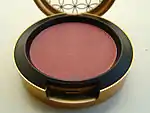
- the crimson pigment extracted from safflower petals, used in cosmetics and as a food coloring
- Synonym: 臙脂 (enji)
- rouge (red cosmetic traditionally made from safflowers)
- Synonym: 頬紅 (hōbeni)
- lipstick, lip liner (also traditionally made from safflowers)
- Synonym: 口紅 (kuchibeni)
Derived terms
Idioms

Etymology 4


| Kanji in this term |
|---|
| 紅 |
| もみ Grade: 6 |
| kun’yomi |
From 揉み (momi, “kneading”, stem form of verb momu), by extension from the kneading of cloth during the dyeing process.
Alternative forms
- 紅絹
Noun
紅 • (momi)
Derived terms
Etymology 5
| Kanji in this term |
|---|
| 紅 |
| こう Grade: 6 |
| kan’on |
From Middle Chinese 紅 (MC ɦuŋ).
Noun
紅 • (kō)
Idioms
Derived terms
References
Korean
Old Japanese
Etymology
Shift from 呉の藍 (Kure no2 awi),[1][2] itself a compound of 呉 (Kure, “China”) + の (no2, possessive particle) + 藍 (awi, “indigo → dye”).
Derived terms
- 紅の (kurenawi no2, pillow word)
- 紅色 (kurenawi-iro2)
- 紅の末摘花 (kurenawi no2 suwetumupana)
Descendants
- Japanese: 紅 (くれない, kurenai)
Vietnamese
Han character
紅: Hán Việt readings: hồng (
紅: Nôm readings: hồng[1][2][4][5][3], hường[2][6][5], hông[7]
Compounds
References
- Nguyễn (2014).
- Nguyễn et al. (2009).
- Trần (2004).
- Bonet (1899).
- Génibrel (1898).
- Hồ (1976).
- Taberd & Pigneau de Béhaine (1838).