紫
| ||||||||
Translingual
Han character
紫 (Kangxi radical 120, 糸+6, 12 strokes, cangjie input 卜心女戈火 (YPVIF), four-corner 21903, composition ⿱此糸)
References
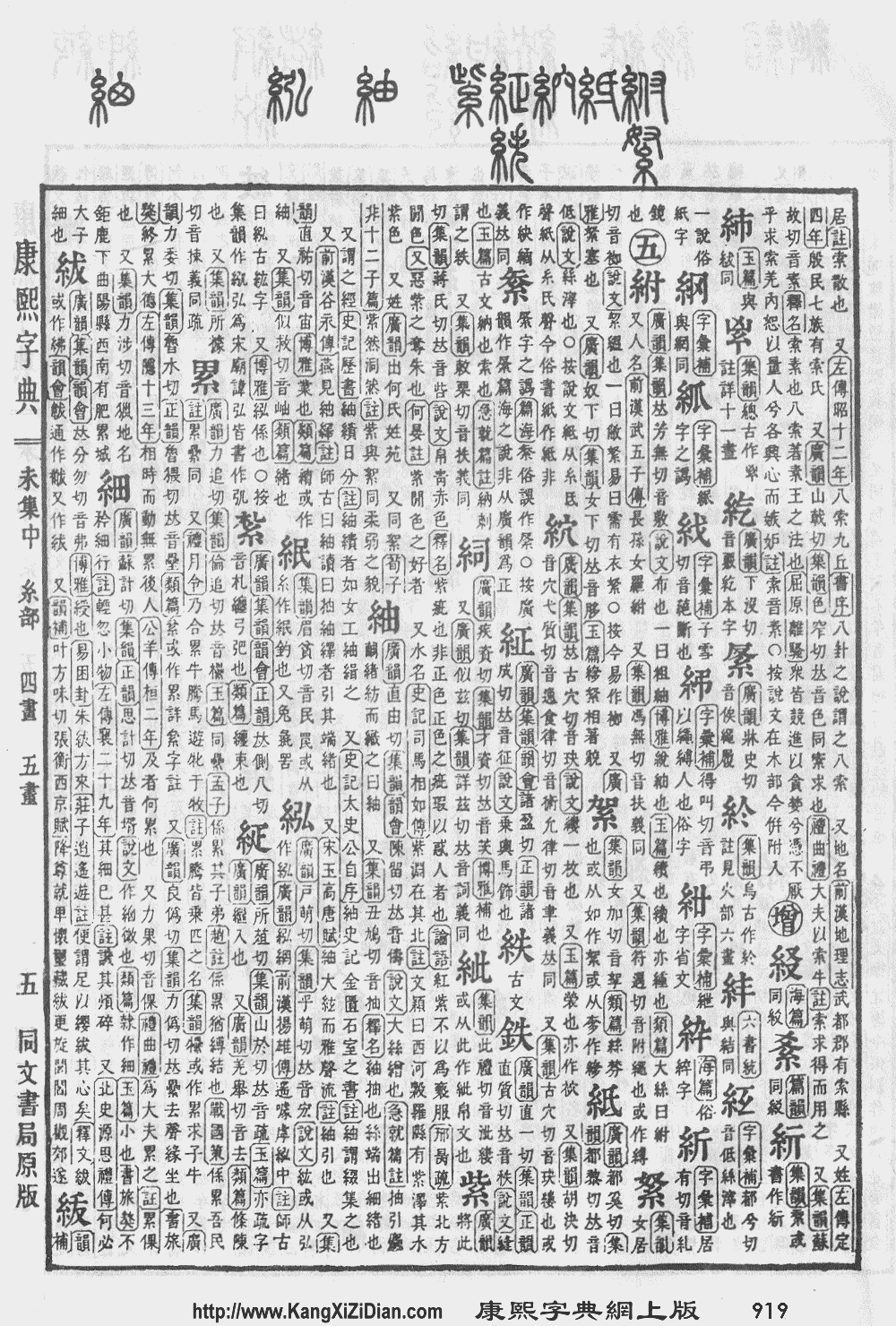
- KangXi: page 919, character 29
- Dai Kanwa Jiten: character 27337
- Dae Jaweon: page 1350, character 12
- Hanyu Da Zidian (first edition): volume 5, page 3392, character 12
- Unihan data for U+7D2B
Chinese
| trad. | 紫 | |
|---|---|---|
| simp. # | 紫 | |
Glyph origin
| Historical forms of the character 紫 | |||
|---|---|---|---|
| Spring and Autumn | Warring States | Shuowen Jiezi (compiled in Han) | Liushutong (compiled in Ming) |
| Bronze inscriptions | Chu slip and silk script | Small seal script | Transcribed ancient scripts |
 |
 |
 |
 |
| Old Chinese | |
|---|---|
| 些 | *saːls, *sjaːl, *seːs |
| 跐 | *ʔsreːʔ, *ʔseʔ, *sʰeʔ, *ʔsreʔ |
| 柴 | *zreː |
| 祡 | *zreː |
| 茈 | *zreː, *ʔseʔ, *ze |
| 眦 | *zreːs |
| 砦 | *zraːds |
| 寨 | *zraːds, *slɯːɡ |
| 啙 | *ʔseː, *zeːʔ, *ʔseʔ |
| 泚 | *sʰeːʔ, *sʰeʔ |
| 玼 | *sʰeːʔ, *sʰeʔ, *ze |
| 皉 | *sʰeːʔ |
| 鮆 | *zeːʔ, *ʔse |
| 眥 | *zeːs, *zes |
| 貲 | *ʔse |
| 髭 | *ʔse |
| 頾 | *ʔse |
| 訾 | *ʔse, *ʔseʔ |
| 鴜 | *ʔse, *ze |
| 鈭 | *ʔse, *sʰe |
| 姕 | *ʔse, *sʰe, *ze |
| 觜 | *ʔse, *ʔse, *ʔseʔ |
| 紫 | *ʔseʔ |
| 訿 | *ʔseʔ |
| 呰 | *ʔseʔ |
| 嘴 | *ʔseʔ |
| 雌 | *sʰe |
| 此 | *sʰeʔ |
| 佌 | *sʰeʔ, *seʔ |
| 庛 | *sʰes |
| 疵 | *ze |
| 骴 | *ze, *zes |
| 胔 | *ze, *zes |
| 飺 | *ze |
| 齜 | *ʔsre |
Phono-semantic compound (形聲/形声, OC *ʔseʔ) : phonetic 此 (OC *sʰeʔ) + semantic 糸.
Pronunciation
Compounds
|
|
|
Japanese
Readings
Compounds
Etymology 1
| Kanji in this term |
|---|
| 紫 |
| むらさき Grade: S |
| kun’yomi |
From Old Japanese.
Possibly a compound of 群 (mura, “gathering, group”) + 咲き (saki, “blooming”, the 連用形 (ren'yōkei, “stem or continuative form”) of verb 咲く (saku), “to bloom”). (Can this(+) etymology be sourced?)
Noun
紫 • (murasaki)
- the purple or red-root gromwell, Lithospermum erythrorhizon
- 905–914, Kokin Wakashū (book 17, poem 867)
- 紫のひともと故に武蔵野の草はみながらあはれとぞ見る
- murasaki no hitomoto yue ni Musashino no kusa wa minagara aware to zo miru
- Because of one shoot of murasaki grass, I feel fondness for all the plants and grasses on the plain of Musashino.[2]
- 紫のひともと故に武蔵野の草はみながらあはれとぞ見る
- Synonym: 紫草 (murasakisō)
- 905–914, Kokin Wakashū (book 17, poem 867)
- the root of the murasaki used as a natural dye
- Short for 紫色 (murasaki-iro): the color purple
- (colloquial, from its purplish color) Synonym of 醤油 (shōyu): soy sauce
- (colloquial) a woman
- (archaic women's speech) Synonym of 鰯 (iwashi): a sardine, especially the Japanese pilchard, Sardinops sagax
- (historical, from being allowed to wear purple clothing) Synonym of 検校 (kengyō): the highest ranked blind court official
Coordinate terms
| 白 (shiro) | 灰色 (haiiro), 鼠色 (nezumiiro) (dated) |
黒 (kuro) |
| 赤 (aka); 深紅 (shinku), クリムゾン (kurimuzon), 紅色 (beniiro), 紅色 (kurenaiiro), 茜色 (akaneiro) |
オレンジ (orenji), 橙色 (daidaiiro); 茶色 (chairo), 褐色 (kasshoku) |
黄色 (kiiro); クリーム色 (kurīmuiro) |
| 黄緑 (kimidori) | 緑 (midori), 青 (ao) (dated) |
若緑 (wakamidori) |
| シアン (shian); 鴨の羽色 (kamo no hane iro) | 水色 (mizuiro) | 青 (ao) |
| 菫色 (sumireiro); 藍色 (aiiro), インジゴ (injigo) |
マゼンタ (mazenta); 紫 (murasaki) | ピンク (pinku), 桃色 (momoiro) |
Derived terms
- 紫の (murasaki no, pillow word)
- 紫色 (murasaki-iro)
- 紫式部 (Murasaki Shikibu)
- 紫草 (murasakisō)
- 紫野 (murasakino)
- 青紫 (aomurasaki)
- 赤紫 (akamurasaki)
- 浅紫 (asamurasaki)
- 今紫 (ima murasaki)
- 薄紫 (usumurasaki)
- 内紫 (uchimurasaki)
- 江戸紫 (Edo murasaki)
- 大紫 (ōmurasaki)
- 京紫 (kyō-murasaki)
- 滅紫 (keshimurasaki)
- 小紫 (komurasaki)
- 濃紫 (komurasaki)
- 古代紫 (kodai murasaki)
- 蔓紫 (tsurumurasaki)
- 深紫 (fukamurasaki)
- 藤紫 (fujimurasaki)
- 藪紫 (yabumurasaki)
- 若紫 (wakamurasaki)
See also
- 茜さす (akane sasu, pillow word that can be an allusion to murasaki)
Proper noun
紫 • (Murasaki)
- (historical, colloquial, from 江戸紫 (Edo murasaki, “royal purple”), where the dye is traditionally made in) Edo, the de facto capital of the Tokugawa shogunate
- (colloquial) Short for 紫式部 (Murasaki Shikibu): Heian-period novelist and lady-in-waiting
- (colloquial, by extension) Synonym of 源氏物語 (Genji Monogatari): The Tale of Genji
- a female given name
- a surname
Etymology 2
| Kanji in this term |
|---|
| 紫 |
| し Grade: S |
| on’yomi |
/si/ → /ɕi/
From Middle Chinese 紫 (MC t͡siᴇX).
Also used in the Man'yōshū (c. 759 CE) as 借音 (shakuon) kana for ⟨si⟩.
Korean
Hanja
紫 • (ja) (hangeul 자, revised ja, McCune–Reischauer cha, Yale ca)
- This term needs a translation to English. Please help out and add a translation, then remove the text
{{rfdef}}.
Okinawan
Old Japanese
Etymology
Possibly a compound of 群 (mura, “gathering, group”) + 咲き (saki1, “blooming”, the 連用形 (ren'yōkei, “stem or continuative form”) of verb 咲く (saku), “to bloom”). (Can this(+) etymology be sourced?)
Noun
紫 (murasaki1) (kana むらさき)
- the purple or red-root gromwell, Lithospermum erythrorhizon
- the color purple
Derived terms
- 紫の (murasaki1 no2, pillow word)
- 紫野 (murasaki1no1)
Descendants
- Japanese: 紫 (むらさき, murasaki)
Vietnamese
Han character
- This term needs a translation to English. Please help out and add a translation, then remove the text
{{rfdef}}.