岳
| ||||||||
Translingual
Han character
岳 (Kangxi radical 46, 山+5, 8 strokes, cangjie input 人一山 (OMU), four-corner 72772, composition ⿱丘山)
Related terms
References
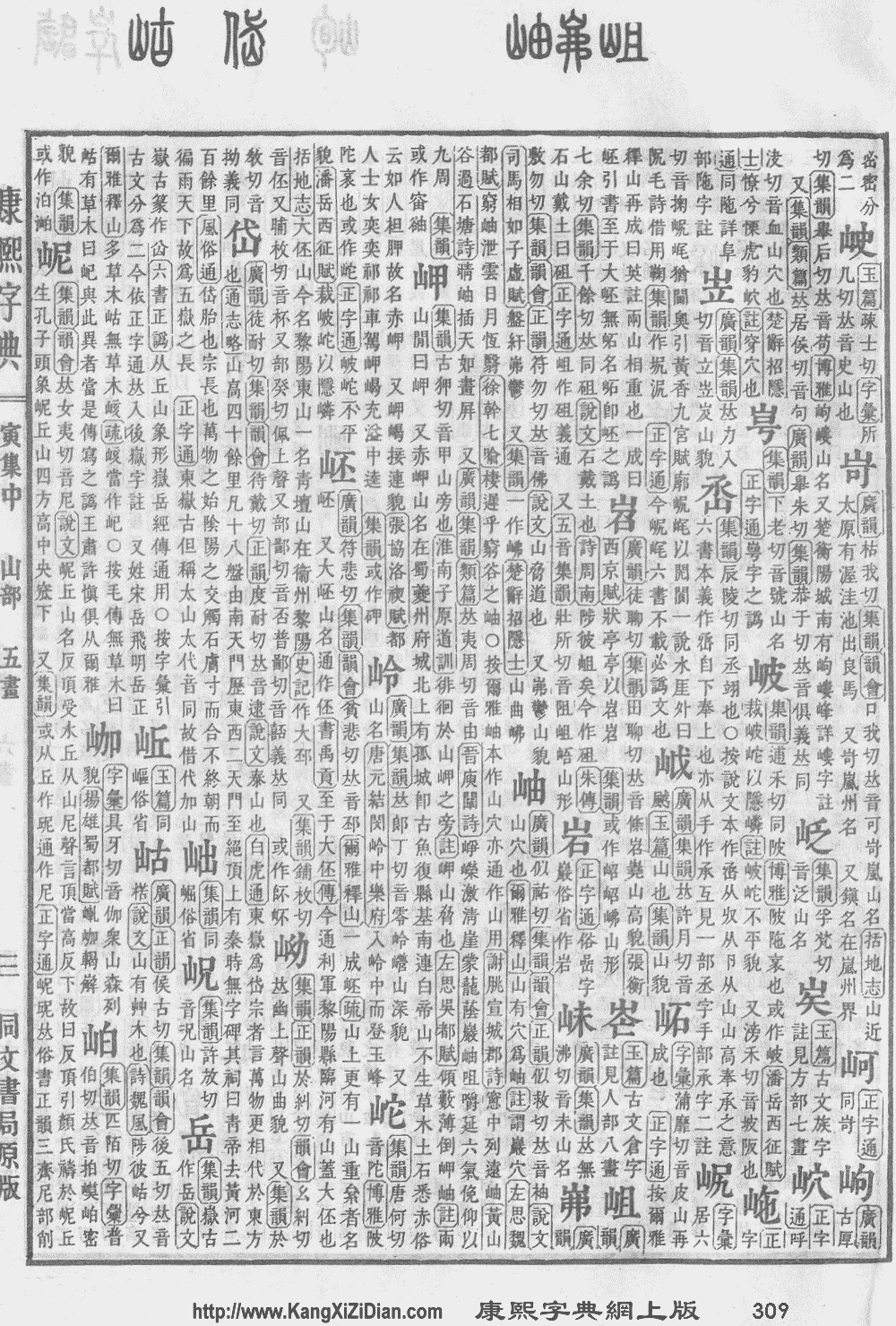
- KangXi: page 309, character 31
- Dai Kanwa Jiten: character 8001
- Dae Jaweon: page 609, character 25
- Hanyu Da Zidian (first edition): volume 1, page 767, character 14
- Unihan data for U+5CB3
Chinese
| simp. and trad. |
岳 | |
|---|---|---|
| alternative forms | 𡵹 𡶓 𡷒 𡶳 | |
Glyph origin
| Historical forms of the character 岳 | |
|---|---|
| Shang | Shuowen Jiezi (compiled in Han) |
| Oracle bone script | Small seal script |
 |
 |
Etymology 1
Unclear. Compare Proto-North Bahnaric *ŋŏk ("mountain") (> Halang ngŏk and Sedang ŋɔ). Note also Proto-Hlai *hŋwʔo³ (“mountain”) and perhaps also Burmese ငေါ (ngau:), [script needed] (ŋok-ŋak, “project, stick up or out”), [script needed] (ŋroŋʼ, “any sharp thing sticking out; sharp stump or thorn”), and Tibetan [script needed] (rŋog, “hump”) (Schuessler, 2007).
STEDT instead derives it from provisional Proto-Sino-Tibetan *kak (“expensive, at its peak”) and considers it cognate to 極 (OC *N‑kək; N‑k(r)ək, “ridge of house; the highest point; extreme limit, utmost”), Proto-Lolo-Burmese *kak (“expensive, intense, at its peak”) (> Lisu [script needed] (phy²¹ kha³⁵, “expensive”)), Ersu phɛ⁵⁵ khuɑ⁵⁵ (“expensive”), and Galo `kog dɨr (“peak”).
Pronunciation
Definitions
岳
- (alt. form 嶽) tall mountain
- 天子祭天下名山大川:五岳視三公,四瀆視諸侯。 [Classical Chinese, trad.]
- From: The Book of Rites, c. 4th – 2nd century BCE, translated based on James Legge's version
- Tiānzǐ jì tiānxià míngshān dàchuān: wǔyuè shì sāngōng, sìdú shì zhūhóu. [Pinyin]
- The Son of Heaven sacrificed to all the famous hills and great streams under the sky: the five mountains receiving (sacrificial) honours like the honours paid (at court) to the three ducal ministers, and the four rivers receiving (sacrificial) honours like those paid to the princes of states.
天子祭天下名山大川:五岳视三公,四渎视诸侯。 [Classical Chinese, simp.]
- (historical) name of a mountain (generally interpreted as 嵩山 (Sōng Shān, “Mount Song”) (Eno, 2009))
- 壬子卜:又于岳。 [Pre-Classical Chinese, trad. and simp.]
- From: Oracle Bone Inscription CZN 147 (1), from collection 殷墟小屯村中村南甲骨 ("Oracle bones from the center and south of Xiaotun village in the Wastes of Yin"). Transliterated and translated in Anderson (2015)
- Rénzǐ bǔ: yòu yú Yuè. [Pinyin]
- Crack-making on rénzǐ (day 49): Make an offering to Yuè.
- parent-in-law
- a surname
Compounds
Etymology 2
| For pronunciation and definitions of 岳 – see 嶽 (“tall mountain; highest peak; etc.”). (This character, 岳, is the simplified and variant form of 嶽.) |
Notes:
|
Japanese
| 岳 | |
| 嶽 |
Readings
Alternative forms
Etymology 1
| Kanji in this term |
|---|
| 岳 |
| たけ Grade: S |
| kun’yomi |
| Alternative spelling |
|---|
| 嶽 (kyūjitai) |
Directly cognate with 丈 (take, “height”). Indirectly cognate with 高 (taka, “height”), 高い (takai, “high”), and 長ける (takeru, “to be high”).
Noun
岳 • (take)
- a tall mountain
- a mountain peak
- 1603–1604, Nippo Jisho (page 612)
- Taqe. (タケ) (嶽・岳) 山脈や山の高い所, あるいは, 頂. これの本来の語はDaqe (だけ)である.
- 1603–1604, Nippo Jisho (page 612)
References
- Doi, Tadao (1603–1604) Hōyaku Nippo Jisho (in Japanese), Tōkyō: Iwanami Shoten, published 1980, →ISBN.
Korean
Hanja
岳 • (ak) (hangeul 악, revised ak, McCune–Reischauer ak)
- This term needs a translation to English. Please help out and add a translation, then remove the text
{{rfdef}}.