陽
See also: 阳
| ||||||||
Translingual
Han character
陽 (Kangxi radical 170, 阜+9, 12 strokes, cangjie input 弓中日一竹 (NLAMH), four-corner 76227, composition ⿰⻖昜)
Derived characters
- 鐊 (𬭏), 𫉤, 𥳜, 𤺹, 𪤝, 𫶖
Related characters
- 阳 (Simplified form of 陽)
References
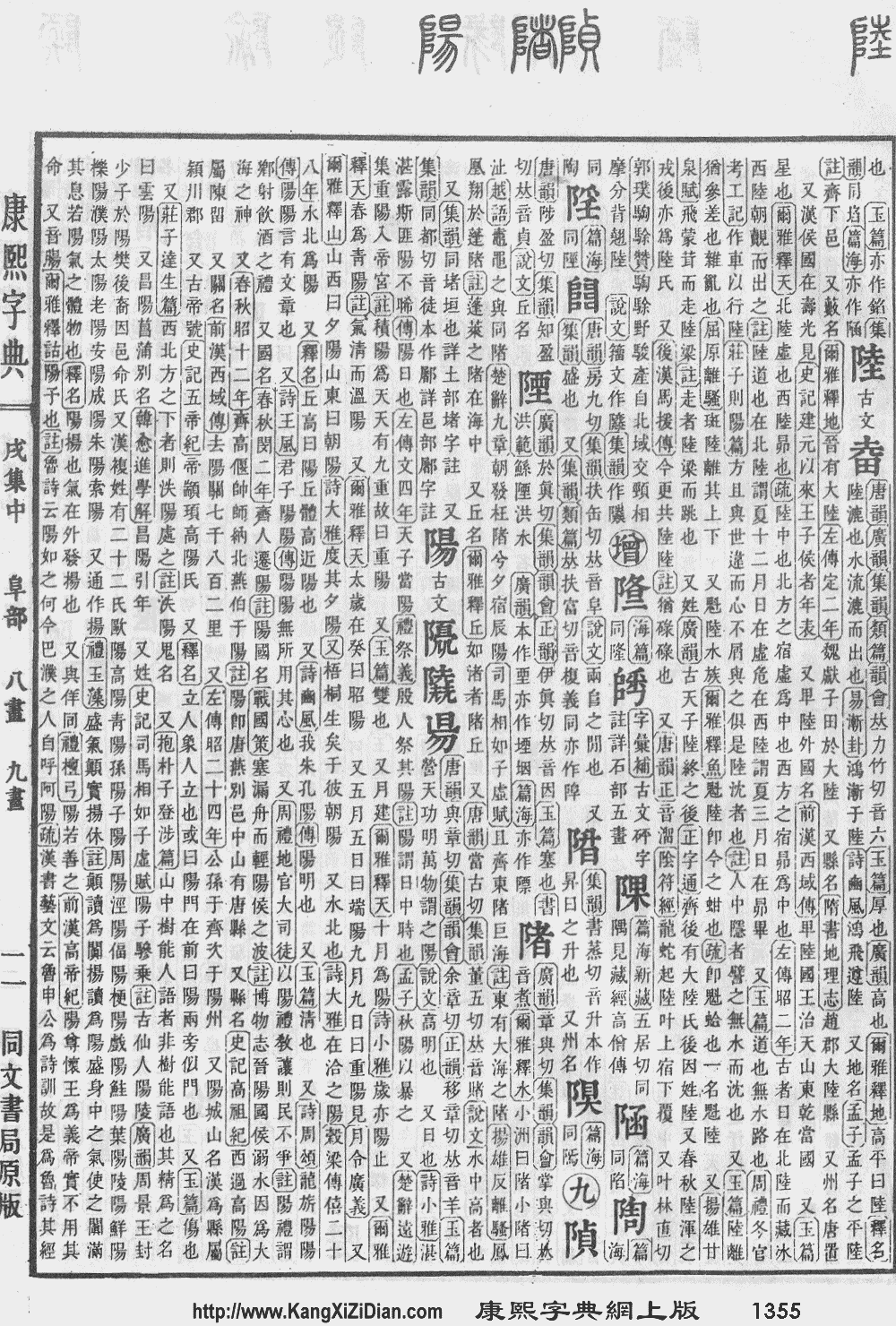
- KangXi: page 1355, character 15
- Dai Kanwa Jiten: character 41725
- Dae Jaweon: page 1859, character 14
- Hanyu Da Zidian (first edition): volume 6, page 4144, character 3
- Unihan data for U+967D
Chinese
| trad. | 陽 | |
|---|---|---|
| simp. | 阳 | |
| alternative forms | ||
Glyph origin
| Historical forms of the character 陽 |
|---|
| Western Zhou |
| Bronze inscriptions |
 |
Characters in the same phonetic series (昜) (Zhengzhang, 2003)
| Old Chinese | |
|---|---|
| 湯 | *l̥ʰaːŋ, *l̥ʰaːŋs, *hljaŋ |
| 踼 | *l̥ʰaːŋ, *l̥ʰaːŋʔ, *l'aːŋ, *l'aːŋs |
| 蝪 | *l̥ʰaːŋ |
| 薚 | *l̥ʰaːŋ |
| 簜 | *l̥ʰaːŋ, *l'aːŋʔ |
| 盪 | *l̥ʰaːŋ, *l̥ʰaːŋs, *l'aːŋʔ |
| 偒 | *l̥ʰaːŋʔ |
| 蕩 | *l̥ʰaːŋs, *l'aːŋʔ |
| 燙 | *l̥ʰaːŋs |
| 啺 | *l'aːŋ |
| 碭 | *l'aːŋ, *l'aːŋs |
| 婸 | *l'aːŋʔ |
| 愓 | *l'aːŋʔ |
| 璗 | *l'aːŋʔ |
| 崵 | *l'aːŋʔ, *laŋ |
| 逿 | *l'aːŋs |
| 暢 | *l̥ʰaŋs |
| 畼 | *l̥ʰaŋs |
| 腸 | *l'aŋ |
| 場 | *l'aŋ |
| 傷 | *hljaŋ, *hljaŋs |
| 殤 | *hljaŋ |
| 觴 | *hljaŋ |
| 慯 | *hljaŋ, *hljaŋs |
| 禓 | *hljaŋ, *laŋ |
| 塲 | *hljaŋ |
| 陽 | *laŋ |
| 楊 | *laŋ |
| 揚 | *laŋ |
| 瘍 | *laŋ |
| 煬 | *laŋ, *laŋs |
| 鍚 | *laŋ |
| 暘 | *laŋ |
| 颺 | *laŋ, *laŋs |
| 昜 | *laŋ |
| 輰 | *laŋ |
| 敭 | *laŋ |
| 鰑 | *laŋ |
| 諹 | *laŋ, *laŋs |
| 瑒 | *laŋ, *rlaːŋʔ |
| 鸉 | *laŋ |
| 餳 | *ljaːŋ |
Phono-semantic compound (形聲/形声, OC *laŋ) and ideogrammic compound (會意/会意) : semantic 阜 (“hill”) + phonetic 昜/𠃓 (OC *laŋ, “sunshine”) – sun shining on a hill.
Etymology
Either Sino-Tibetan or a Mainland Southeast Asian (MSEA) Wanderwort; compare Burmese လင်း (lang:, “bright”), Lepcha [script needed] (a-lóṅ, “reflective light”), Thai ปลั่ง (bplàng, “bright; shiny”) (Schuessler, 2007).
STEDT provisionally sets up Proto-Kuki-Chin *klaaŋ-I, klaan-II (“shine; light; bright”) and compares it to the following:
Pronunciation
Definitions
陽
- (philosophy) “male” principle; yang in yin-yang
- sun
- male genitals
- open; overt
- positive
- convex; in relief
- human world; this world
- (neologism) to be tested positive for COVID-19
- (Chinese phonetics, of a syllable) closed with a nasal consonantal coda
- south side of mountain or north side of river
- a surname
See also
| The tones (of Chinese) in Chinese · 聲調/声调 (layout · text) | ||||||||||
|---|---|---|---|---|---|---|---|---|---|---|
| 平仄 | 平 平聲/平声 |
仄 仄聲/仄声 | ||||||||
| 平上去入 四聲/四声 古四聲/古四声 |
平 平聲/平声 |
上 上聲/上声 |
去 去聲/去声 |
入 入聲/入声 | ||||||
| 標調方法/标调方法 標調法/标调法 |
四角標調法/四角标调法 | ꜀◌ | ꜂◌ | ◌꜄ | ◌꜆ | |||||
| [Term?] | ◌〪 | ◌〫 | ◌〬 | ◌〭 | ||||||
| [Term?] | ∅ | ◌〮 | ◌〯 | ∅ | ||||||
| ∅ | -X | -H | -p -t -k (-ʔ) | |||||||
| 四聲八調/四声八调 | 陰平/阴平 | 陽平/阳平 | 陰上/阴上 | 陽上/阳上 | 陰去/阴去 | 陽去/阳去 | 陰入/阴入 | 陽入/阳入 | ||
| 陰/阴 | 陽/阳 | |||||||||
| 標調方法/标调方法 標調法/标调法 |
四角標調法/四角标调法 | ꜀◌ | ꜁◌ | ꜂◌ | ꜃◌ | ◌꜄ | ◌꜅ | ◌꜆ | ◌꜇ | |
| The tones (of Standard Mandarin) in Chinese · 聲調/声调 (layout · text) | ||||||||||
|---|---|---|---|---|---|---|---|---|---|---|
| 四聲/四声 | 陰平/阴平 第一聲/第一声 |
陽平/阳平 第二聲/第二声 |
上聲/上声 第三聲/第三声 |
去聲/去声 第四聲/第四声 |
輕聲/轻声 | |||||
Compounds
Derived terms from 陽
|
|
|
Korean
Etymology
From Middle Chinese 陽 (MC jɨɐŋ). Recorded as Middle Korean 야ᇰ (yang) (Yale: yang) in Hunmong Jahoe (訓蒙字會 / 훈몽자회), 1527.
Compounds
Vietnamese
Han character
- This term needs a translation to English. Please help out and add a translation, then remove the text
{{rfdef}}.
Compounds
- dương lịch (陽曆)
This article is issued from Wiktionary. The text is licensed under Creative Commons - Attribution - Sharealike. Additional terms may apply for the media files.