薪
| ||||||||
Translingual
Han character
薪 (radical 140, 艸+13, 17 strokes in traditional Chinese and Korean, 16 strokes in mainland China and Japanese, cangjie input 廿卜木中 (TYDL), four-corner 44921, composition ⿱艹新)
Derived characters
- 𬅋
References
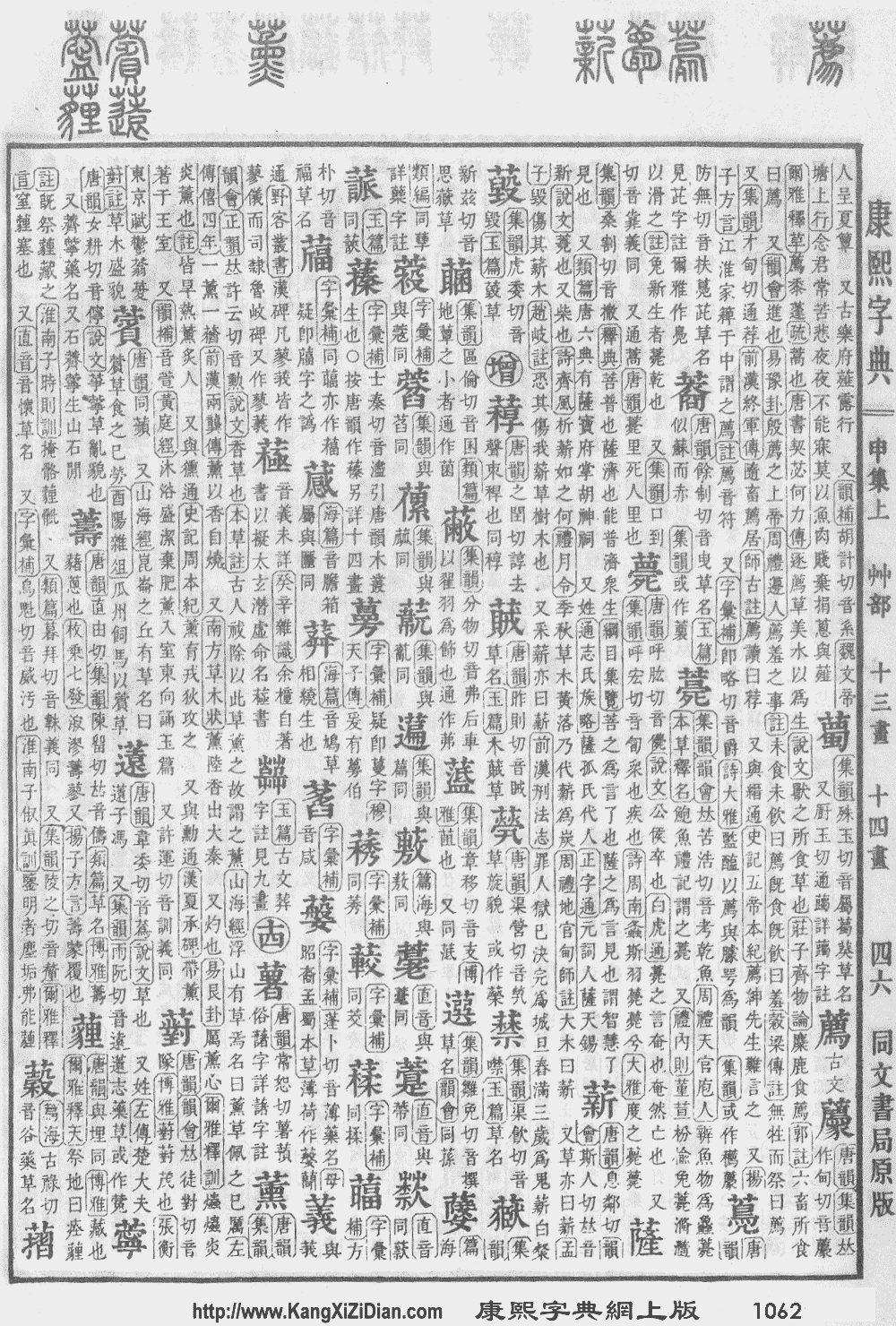
- KangXi: page 1062, character 9
- Dai Kanwa Jiten: character 32149
- Dae Jaweon: page 1526, character 13
- Hanyu Da Zidian: volume 5, page 3306, character 3
- Unihan data for U+85AA
Chinese
| trad. | 薪 | |
|---|---|---|
| simp. # | 薪 | |
Glyph origin
| Characters in the same phonetic series (辛) (Zhengzhang, 2003) | |
|---|---|
| Old Chinese | |
| 親 | *sʰin, *sʰins |
| 寴 | *sʰin, *sʰins |
| 儭 | *sʰins, *sʰrins |
| 瀙 | *sʰins, *ʔsrin, *sʰrins |
| 辛 | *siŋ |
| 新 | *siŋ |
| 薪 | *siŋ |
| 襯 | *sʰrins |
| 櫬 | *sʰrins |
| 嚫 | *t͡sʰrinh |
| 莘 | *sriŋ |
| 騂 | *seŋ |
| 垶 | *seŋ |
| 觪 | *seŋ |
Phono-semantic compound (形聲, OC *siŋ) : semantic 艹 + phonetic 新 (OC *siŋ).
Etymology
From Proto-Sino-Tibetan *siŋ ~ sik (“wood”). Cognate with Tibetan ཤིང (shing, “tree, wood”) and Burmese သစ် (sac, “log, timber, wood”). Compare its phonetic component 新 (OC *siŋ, “new”) and Burmese သစ် (sac, “new”).
Pronunciation
Definitions
薪
Compounds
Derived terms from 薪
Japanese
Korean
Hanja
薪 • (sin) (hangeul 신, revised sin, McCune–Reischauer sin, Yale sin)
- This term needs a translation to English. Please help out and add a translation, then remove the text
{{rfdef}}.
Vietnamese
Han character
薪 (tân)
- This term needs a translation to English. Please help out and add a translation, then remove the text
{{rfdef}}.
This article is issued from Wiktionary. The text is licensed under Creative Commons - Attribution - Sharealike. Additional terms may apply for the media files.