心
| ||||||||
| ||||||||
Translingual
| Stroke order | |||
|---|---|---|---|
 | |||
| Stroke order | |||
|---|---|---|---|
 | |||
Alternative forms
Han character
心 (Kangxi radical 61, 心+0, 4 strokes, cangjie input 心 (P), four-corner 33000, composition ⿲丿⿺乚丶丶 or ⿲丿⿺㇃丶丶)
- Kangxi radical #61, ⼼.
Usage notes
When written as a bottom radical, 心 is similar to 灬 (fire radical) but is distinguished by the second stroke from the left being longer, passing under the third stroke.
Derived characters
Further reading
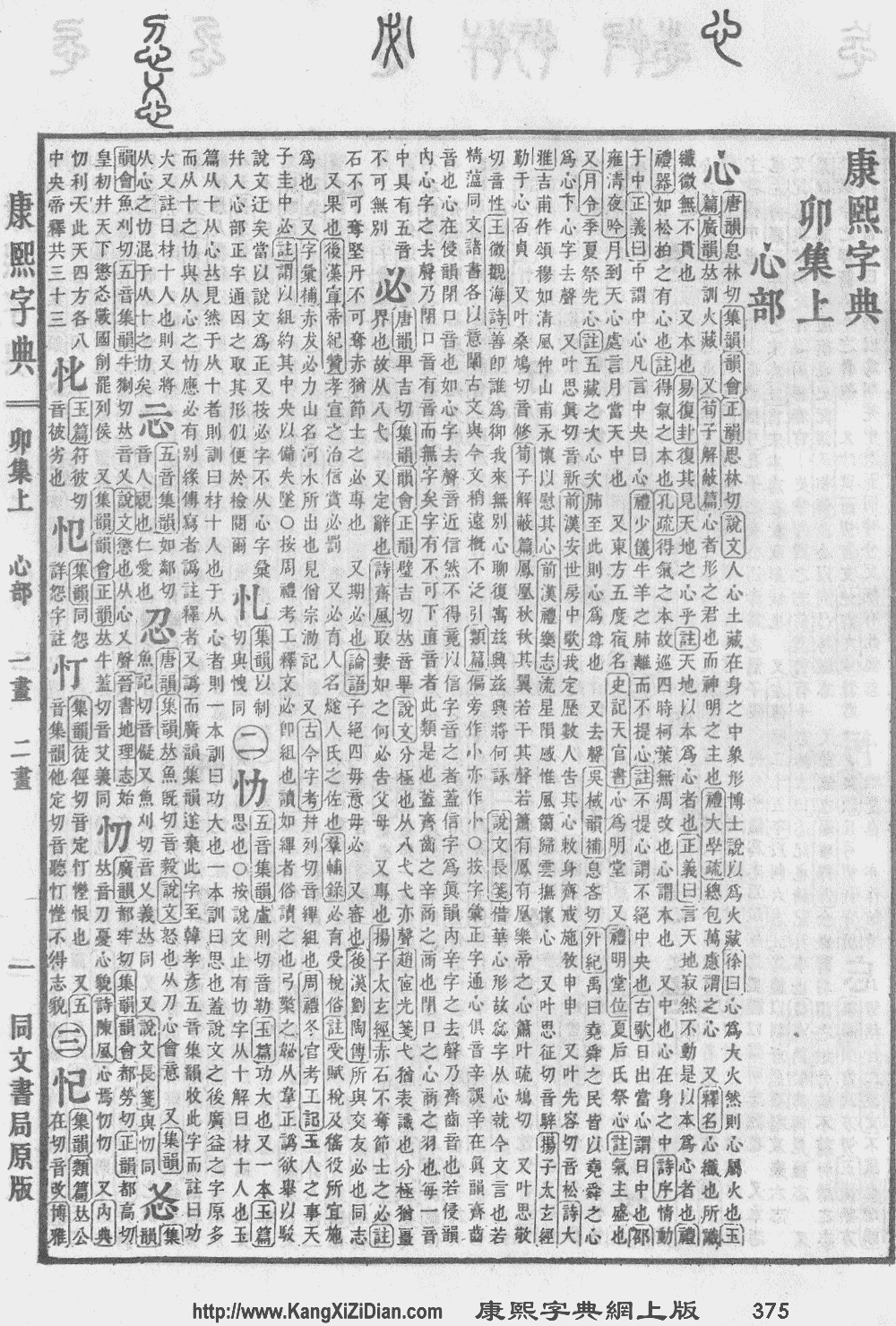
- KangXi: page 375, character 1
- Dai Kanwa Jiten: character 10295
- Dae Jaweon: page 700, character 5
- Hanyu Da Zidian (first edition): volume 4, page 2267, character 1
- Unihan data for U+5FC3
Chinese
| simp. and trad. |
心 | |
|---|---|---|
Glyph origin
| Historical forms of the character 心 | |||||
|---|---|---|---|---|---|
| Shang | Western Zhou | Warring States | Shuowen Jiezi (compiled in Han) | Liushutong (compiled in Ming) | |
| Bronze inscriptions | Oracle bone script | Bronze inscriptions | Chu slip and silk script | Small seal script | Transcribed ancient scripts |
 |
 |
 |
 |
 |
 |
Pictogram (象形) – a heart, now highly stylized.
Etymology
From Proto-Sino-Tibetan *s(j)am-s.
Pronunciation
Definitions
心
Compounds
|
|
|
Japanese
Readings
Compounds
- 心算 (tsumori)
- 稈心 (migo)
Etymology 1
| Kanji in this term |
|---|
| 心 |
| こころ Grade: 2 |
| kun’yomi |
| Alternative spellings |
|---|
| 情 (rare) 意 (rare) |
⟨ko2ko2ro2⟩ → */kəkərə/ → /kokoro/
From Old Japanese 心 (ko2ko2ro2), ultimately from Proto-Japonic *kəkərə. First attested in the Kojiki of 712 CE.[1]
Pronunciation
Noun
心 • (kokoro)
- mind, heart, spirit, soul; thoughts, ideas
- 2007 March 16, CLAMP, “Chapitre.134 唯一の存在 [Chapitre 134: The Only One]”, in ツバサ RESERVoir CHRoNiCLE [Tsubasa: Reservoir Chronicle], volume 18 (fiction), Tokyo: Kodansha, →ISBN, pages 31–32:
- ‥‥それでも行きます 小狼君の心を取り戻す為に
- ‥‥Sore demo ikimasu Shaoran-kun no kokoro o torimodosu tame ni
- …Even so, I will go on, to get back Xiaolang-kun’s heart
- ‥‥それでも行きます 小狼君の心を取り戻す為に
- 心の底から ― kokoro no soko kara ― from the bottom of one's heart
- 人の心を奪う ― hito no kokoro o ubau ― to steal someone's heart → to captivate someone
-
- attention, mind, interest
- 心ここにあらず ― kokoro koko ni arazu ― absent minded
- heart, feelings, emotion, emotional state
- 心温まる風景 ― kokoro atatamaru fūkei ― a heart warming situation
- wholeheartedness, sincerity, true heart
- 心のこもっていない ― kokoro no komotteinai ― not sincere
- 心のこもった ― kokoro no komotta ― sincere
- 心なき仕業 ― kokoro naki shiwaza ― cruel deed
- sympathy, heart, consideration, generous disposition
- 心がない ― kokoro ga nai ― lacking sympathy and consideration
- a meaning, essence
- その心が分かっていない ― sono kokoro ga wakatteinai ― not understanding what it really means
- an answer (to a riddle, etc.)
- その心は ― sono kokoro wa ― the answer is
- the heart as an organ in the body
- Synonym: 心臓 (shinzō)
- the chest
- Synonym: 胸 (mune)
- the title of a book
- Synonym: 書名 (shomei)
Derived terms
- 心心 (kokorogokoro)
- 心する (kokorosuru)
- 心から (kokoro kara)
- 心当たり (kokoroatari)
- 心意気 (kokoroiki)
- 心得る (kokoroeru)
- 心掛ける (kokorogakeru)
- 心構え (kokorogamae)
- 心変わり (kokorogawari)
- 志す (kokorozasu)
- 心遣い (kokorozukai)
- 心尽くし (kokorozukushi)
- 心付け (kokorozuke)
- 心強い (kokorozuyoi)
- 心残り (kokoronokori)
- 心太 (tokoroten)
- 心細い (kokorobosoi)
- 心待ち (kokoromachi)
- 試みる (kokoromiru)
- 心持ち (kokoromochi)
- 心地 (kokochi)
- 心許ない (kokoromotonai)
- 心行く (kokoroyuku)
- 快い (kokoroyoi)
- 漢心 (Kara-gokoro)
- 気心 (kigokoro)
- 恋心 (koigokoro)
- 子供心 (kodomogokoro)
- 静心 (shizugokoro)
- 掌 (tanagokoro)
- 真心 (magokoro)
- 物心 (monogokoro)
- 大和心 (Yamato-gokoro)
Derived terms
- 心寂しい, 心淋しい (urasabishii)
Etymology 3
| Kanji in this term |
|---|
| 心 |
| しん Grade: 2 |
| on’yomi |
| Alternative spelling |
|---|
| 芯 (center) |
/simʉ/ → */ɕimʉ/ → /ɕiɴ/
From Middle Chinese 心 (MC siɪm).
The Buddhist sense is a translation of Pali and Sanskrit चित्त (citta).
Noun
心 • (shin)
- a heart, mind, core
- a spirit, vitality
- inner strength, marrow
- the center of something:
- 心, 芯: a wick
- (Buddhism) citta: the ego or spirit
- (Buddhism) Short for 心王 (shinnō): This term needs a translation to English. Please help out and add a translation, then remove the text
{{rfdef}}. - the heart as an organ in the body
- lead (as of a pencil)
- padding
- a companion, fellow
- the center of focus:
- a basis, foundation
Affix
心 • (shin)
Proper noun
心 • (Shin)
- (Chinese astronomy) the Heart constellation, one of the Twenty-Eight Mansions
- a male or female given name
- a surname
Derived terms
- 心意 (shin'i)
- 心音 (shin'on)
- 心外 (shingai)
- 心肝 (shinkan)
- 心眼 (shingan)
- 心願 (shingan)
- 心機 (shinki)
- 心気 (shinki)
- 心境 (shinkyō)
- 心筋 (shinkin)
- 心中 (shinjū)
- 心情 (shinjō)
- 心身 (shinshin)
- 心酔 (shinsui)
- 心臓 (shinzō)
- 心痛 (shintsū)
- 心配 (shinpai)
- 心理 (shinri)
- 心労 (shinrō)
- 心から (shin kara)
- 安心 (anshin)
- 一心 (isshin)
- 遠心 (enshin)
- 会心 (kaishin)
- 戒心 (kaishin)
- 外心 (gaishin)
- 核心 (kakushin)
- 感心 (kanshin)
- 関心 (kanshin)
- 肝心 (kanjin)
- 求心 (kyūshin)
- 虚心 (kyoshin)
- 疑心 (gishin)
- 苦心 (kushin)
- 決心 (kesshin)
- 孝心 (kōshin)
- 細心 (saishin)
- 初心 (shoshin)
- 小心 (shōshin)
- 焦心 (shōshin)
- 執心 (shūshin)
- 衷心 (shūshin)
- 中心 (shūshin)
- 重心 (jūshin)
- 人心 (jinshin)
- 都心 (toshin)
- 童心 (dōshin)
- 灯心 (tōshin)
- 内心 (naishin)
- 熱心 (nesshin)
- 腹心 (fukushin)
- 腐心 (fushin)
- 本心 (honshin)
- 無心 (mushin)
- 野心 (yashin)
- 用心, 要心 (yōjin)
- 良心 (ryōshin)
- 炉心 (roshin)
- 心電図 (shindenzu)
- 心不全 (shinfuzen)
- 心臓病 (shinsōbyō)
- 狭心症 (kyōshinshō)
- 虚栄心 (kyoeishin)
- 好奇心 (kōkishin)
- 脂肪心 (shibōshin)
- 汎心論 (hanshinron)
- 心神耗弱 (shinshin-mōjaku)
- 以心伝心 (ishin-denshin)
Korean
Etymology
From Middle Chinese 心 (MC siɪm).
| Historical Readings | ||
|---|---|---|
| Dongguk Jeongun Reading | ||
| Dongguk Jeongun, 1448 | 심 (Yale: sìm) | |
| Middle Korean | ||
| Text | Eumhun | |
| Gloss (hun) | Reading | |
| Hunmong Jahoe, 1527 | ᄆᆞᅀᆞᆷ (Yale: mòzòm) | 심 (Yale: sìm) |
Pronunciation
- (SK Standard/Seoul) IPA(key): [ɕʰim]
- Phonetic hangul: [심]
Compounds
- 심경 (心經, simgyeong)
- 심리 (心理, simni)
- 심방 (心房, simbang)
- 심성 (心性, simseong)
- 심실 (心室, simsil)
- 심안 (心眼, siman)
- 심장 (心臟, simjang)
- 심정 (心情, simjeong)
- 심혈 (心血, simhyeol)
- 개심 (改心, gaesim)
- 결심 (決心, gyeolsim)
- 관심 (關心, gwansim)
- 구심 (球心, gusim)
- 내심 (內心, naesim)
- 도심 (都心, dosim)
- 동심 (同心, dongsim)
- 등심 (燈心, deungsim)
- 방심 (傍心, bangsim)
- 방심 (放心, bangsim)
- 성심 (誠心, seongsim)
- 수심 (垂心, susim)
- 안심 (安心, ansim)
- 야심 (野心, yasim)
- 양심 (良心, yangsim)
- 열심 (熱心, yeolsim)
- 외심 (外心, oesim)
- 욕심 (慾心, yoksim)
- 욕심 (欲心, yoksim)
- 의심 (疑心, uisim)
- 이심 (二心, isim)
- 점심 (點心, jeomsim)
- 조심 (操心, josim)
- 중심 (中心, jungsim)
- 진심 (眞心, jinsim)
- 충심 (衷心, chungsim)
- 한심 (寒心, hansim)
- 핵심 (核心, haeksim)
- 심전계 (心電計, simjeon'gye)
- 독심술 (讀心術, doksimsul)
- 원심력 (遠心力, wonsimnyeok)
- 유심론 (唯心論, yusimnon)
- 초심자 (初心者, chosimja)
- 협심증 (狹心症, hyeopsimjeung)
- 동정심 (同情心, dongjeongsim)
- 무관심 (無關心, mugwansim)
- 애국심 (愛國心, aeguksim)
- 자부심 (自負心, jabusim)
- 자존심 (自尊心, jajonsim)
- 허영심 (虛榮心, heoyeongsim)
- 호기심 (好奇心, hogisim)
- 이심전심 (以心傳心, isimjeonsim)
- 일편단심 (一片丹心, ilpyeondansim)
Okinawan
Derived terms
- 心べーさん (kukurubēsan)
- 心当ち (kukuruachi)
- 心入り (kukuruiri)
- 心覚 (kukuruubi)
- 心掛きゆん (kukurugakiyun)
- 心変わい (kukurugawai)
- 志 (kukuruzashi)
- 心付き (kukuruzuki)
- 試み (kukurumi)
- 心持ち (kukurumuchi)
- 心許なさん (kukurumutsunasan)
- 心安さん (kukuruyassan)
- 片心 (katakukuru)
- 下心 (shichagukuru)
- 肝心 (chimukukuru)
- 詰み心 (tsumigukuru)
- 二心 (futagukuru)
- 真心 (magukuru)
Pronunciation
- IPA(key): [fukumāmi]
Old Japanese
Compounds
- 田心姫 (Tago2ri-pi1me1)
Etymology 1
From Proto-Japonic *kəkərə.
Noun
心 (ko2ko2ro2) (kana こころ)
Derived terms
- 吾が心 (aga ko2ko2ro2)
- 二心 (putago2ko2ro2)
Descendants
- Japanese: 心 (kokoro)
Etymology 2
Possibly the eastern dialect form or a misreading of ko2ko2ro2 above.
Noun
心 (ko2ko2ri) (kana ここり)
Usage notes
Given this Eastern reflex, some scholars interpret the 里 as ⟨ro2⟩ rather than ⟨ri⟩, thus giving the impression that the term is the same ko2ko2ro2 used in other attestations. (Can this(+) etymology be sourced?)
Descendants
- Japanese: 心 (ura)
References
- Satake, Akihiro; Hideo Yamada; Rikio Kudō; Masao Ōtani; Yoshiyuki Yamazaki (c. 759) Shin Nihon Koten Bungaku Taikei 3: Man’yōshū 3 (in Japanese), Tōkyō: Iwanami Shoten, published 2002, →ISBN.
Vietnamese
Han character
心: Hán Việt readings: tâm (
心: Nôm readings: tâm[1][2][4][6], tấm[3][7][4][6], tim[1][3], tăm[1]
Compounds
References
- Nguyễn (2014).
- Nguyễn et al. (2009).
- Trần (2004).
- Bonet (1899).
- Génibrel (1898).
- Taberd & Pigneau de Béhaine (1838).
- Hồ (1976).