葵
| ||||||||
Translingual
Han character
葵 (Kangxi radical 140, 艸+9, 13 strokes in traditional Chinese and Korean, 12 strokes in mainland China and Japanese, cangjie input 廿弓人大 (TNOK), four-corner 44804 or 44430, composition ⿱艹癸)
References
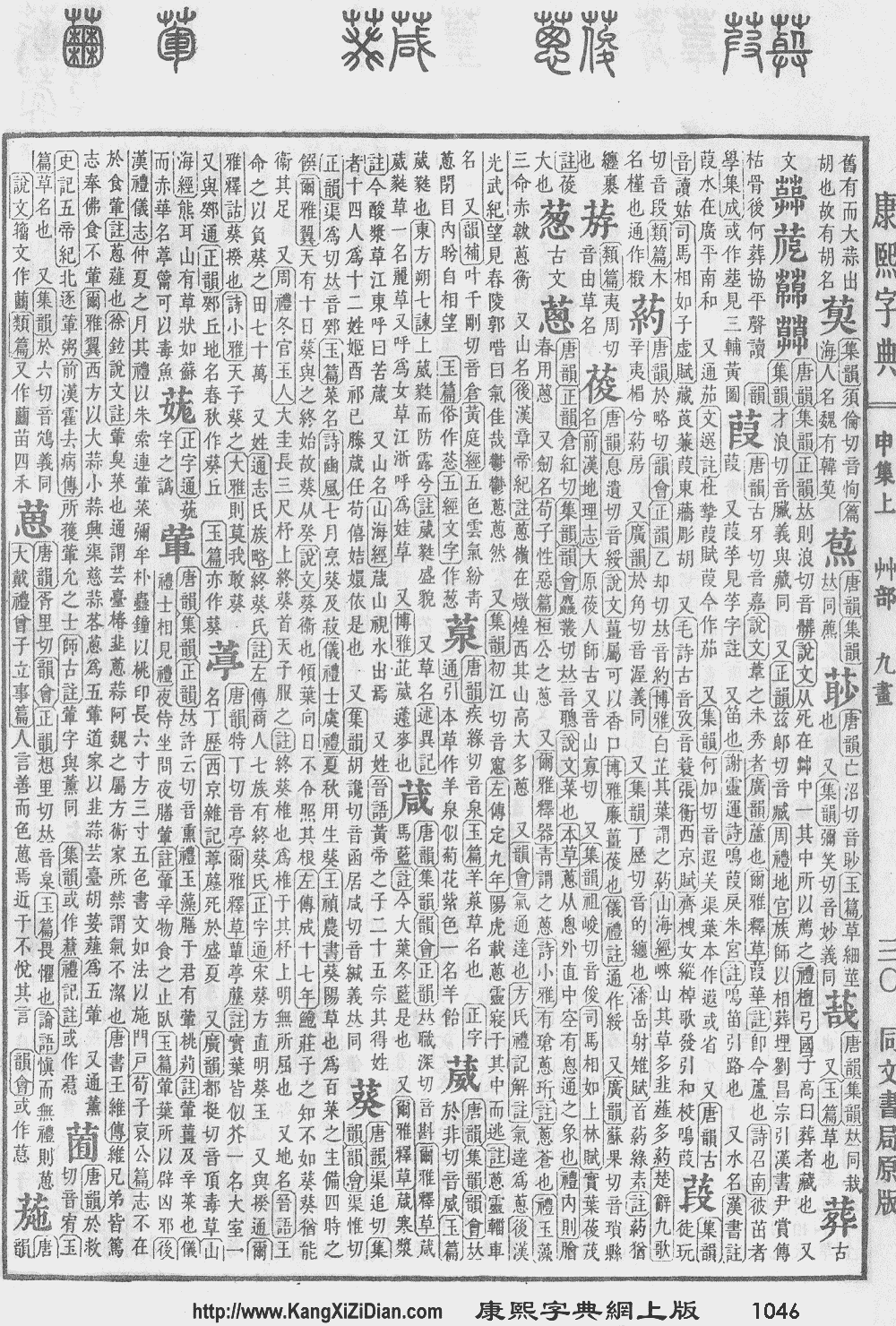
- KangXi: page 1046, character 20
- Dai Kanwa Jiten: character 31458
- Dae Jaweon: page 1507, character 18
- Hanyu Da Zidian (first edition): volume 5, page 3258, character 14
- Unihan data for U+8475
Chinese
| trad. | 葵 | |
|---|---|---|
| simp. # | 葵 | |
| alternative forms | 𦮙 ancient 𦷡 | |
Glyph origin
Characters in the same phonetic series (癸) (Zhengzhang, 2003)
Phono-semantic compound (形聲, OC *ɡʷil) : semantic 艹 (“grass, plant”) + phonetic 癸 (OC *kʷilʔ) – a kind of plant.
Pronunciation
Definitions
葵
- name of several plants
- Short for 冬葵 (“Malva verticillata (syn. Malva crispa)”).
- Short for 蒲葵 (púkuí, “Livistona chinensis”).
- Short for 落葵 (luòkuí, “Basella alba”).
- Short for 向日葵 (xiàngrìkuí, “sunflower”).
- Used in compounds.
- Alternative form of 揆 (kuí).
- a surname
Japanese
Readings
Korean
Hanja
葵 • (gyu) (hangeul 규, revised gyu, McCune–Reischauer kyu, Yale kyu)
- This term needs a translation to English. Please help out and add a translation, then remove the text
{{rfdef}}.
Vietnamese
This article is issued from Wiktionary. The text is licensed under Creative Commons - Attribution - Sharealike. Additional terms may apply for the media files.