炙
| ||||||||
| ||||||||
Translingual
Han character
炙 (Kangxi radical 86, 火+4, 8 strokes, cangjie input 月火 (BF), four-corner 27809, composition ⿱⿴𠂊⺀火(GJK) or ⿱⿴𠂊冫火(HT) or ⿱爫火(V))
References
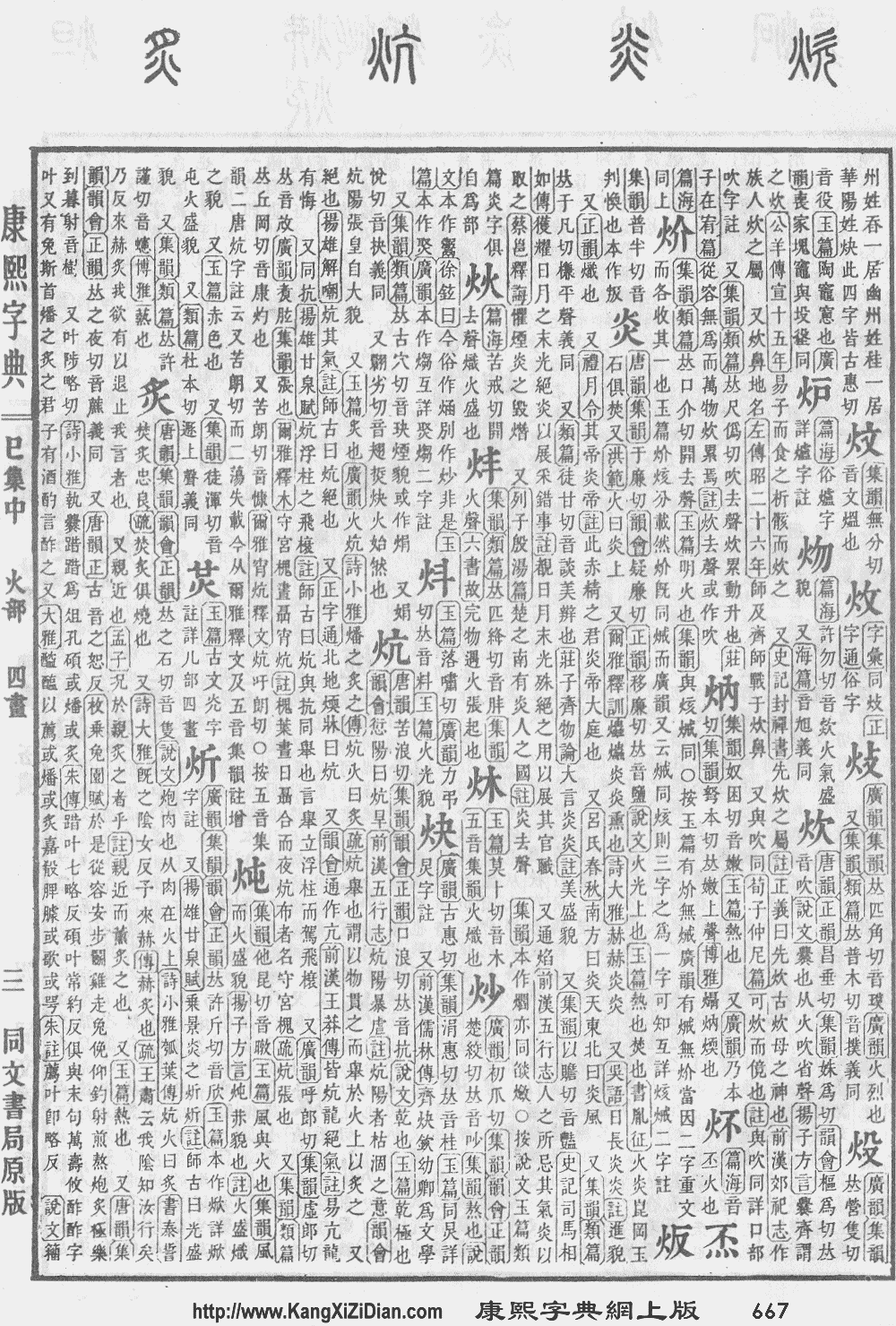
- KangXi: page 667, character 24
- Dai Kanwa Jiten: character 18922
- Dae Jaweon: page 1077, character 3
- Hanyu Da Zidian (first edition): volume 3, page 2192, character 16
- Unihan data for U+7099
- Unihan data for U+F9FB
Chinese
| trad. | 炙 | |
|---|---|---|
| simp. # | 炙 | |
Pronunciation
Definitions
炙
Compounds
References
- “炙”, in 漢語多功能字庫 (Multi-function Chinese Character Database), 香港中文大學 (the Chinese University of Hong Kong), 2014–
Japanese
Korean
Etymology 1
From Middle Chinese 炙 (MC t͡ɕiaH).
| Historical Readings | ||
|---|---|---|
| Dongguk Jeongun Reading | ||
| Dongguk Jeongun, 1448 | 쟝〮 (Yale: cyá) | |
| Middle Korean | ||
| Text | Eumhun | |
| Gloss (hun) | Reading | |
| Hunmong Jahoe, 1527 | 구을〮 (Yale: kwùúl) | 쟈〯 (Yale: cyǎ) |
Pronunciation
- (SK Standard/Seoul) IPA(key): [t͡ɕa̠]
- Phonetic hangul: [자]
Etymology 2
From Middle Chinese 炙 (MC t͡ɕiᴇk̚).
| Historical Readings | ||
|---|---|---|
| Dongguk Jeongun Reading | ||
| Dongguk Jeongun, 1448 | 젹〮 (Yale: cyék) | |
| Middle Korean | ||
| Text | Eumhun | |
| Gloss (hun) | Reading | |
| Hunmong Jahoe, 1527 | 젹〮 (Yale: cyék) | 젹〮 (Yale: cyék) |
Pronunciation
- (SK Standard/Seoul) IPA(key): [t͡ɕʌ̹k̚]
- Phonetic hangul: [적]
Compounds
Compounds
- 산적 (散炙, sanjeok)
- 맥적 (貊炙, maekjeok)
- 적철 (炙鐵, jeokcheol)
Vietnamese
This article is issued from Wiktionary. The text is licensed under Creative Commons - Attribution - Sharealike. Additional terms may apply for the media files.