平
| ||||||||
Translingual
| Stroke order | |||
|---|---|---|---|
 | |||
| Stroke order | |||
|---|---|---|---|
 | |||
Han character
平 (Kangxi radical 51, 干+2, 5 strokes, cangjie input 一火十 (MFJ), four-corner 10409, composition ⿻干丷(GHTJV) or ⿻干八(K))
Derived characters
Further reading
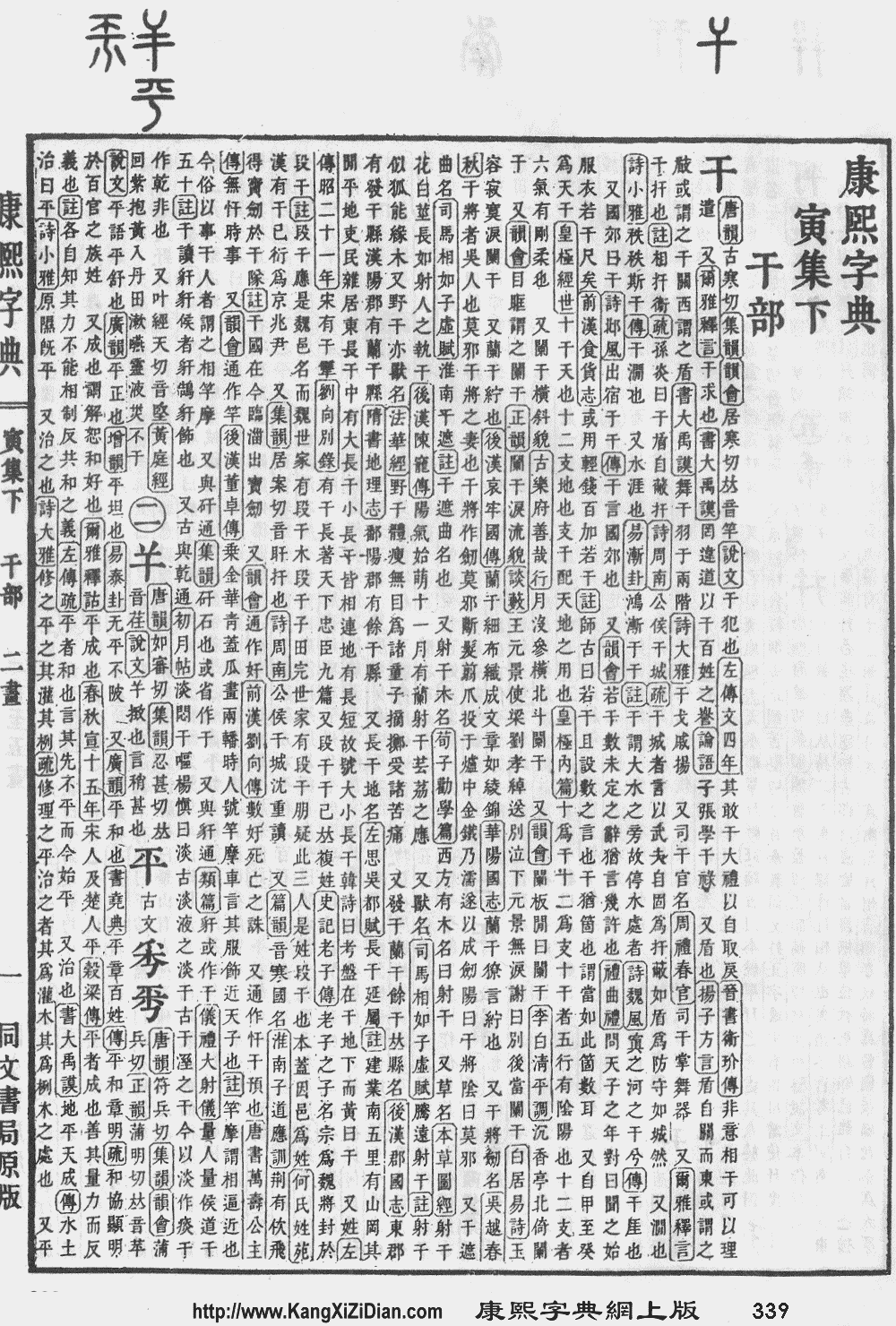
- KangXi: page 339, character 3
- Dai Kanwa Jiten: character 9167
- Dae Jaweon: page 646, character 3
- Hanyu Da Zidian (first edition): volume 1, page 407, character 1
- Unihan data for U+5E73
Chinese
| simp. and trad. |
平 | |
|---|---|---|
| alternative forms | 𠀒 𠀭 𤔁 | |
Glyph origin
| Historical forms of the character 平 | ||
|---|---|---|
| Western Zhou | Shuowen Jiezi (compiled in Han) | Liushutong (compiled in Ming) |
| Bronze inscriptions | Small seal script | Transcribed ancient scripts |
 |
 |
 |
Etymology
From Proto-Sino-Tibetan *(p/b)ljaŋ (“plank; palm; flat surface; wing”), whence Jingpho phun-pyen (phun⁵⁵ pjen³³, “plank”), Burmese ပြန့် (pran., “flat and even”) (STEDT).
Pronunciation 1
Definitions
平
- level; even; flat
- equal; fair
- equal
- to level; to make level
- calm; peaceful
- 太平 ― tàipíng ― peaceful and tranquil
- 風平浪靜/风平浪静 ― fēngpínglàngjìng ― to have no waves
- 心平氣和/心平气和 ― xīnpíngqìhé ― even-tempered and good-humoured
- 國治而後天下平。 [Classical Chinese, trad.]
- From: The Book of Rites, c. 4th – 2nd century BCE
- Guó zhì érhòu tiānxià píng. [Pinyin]
- Their states being rightly governed, the whole kingdom was made tranquil and happy.
国治而后天下平。 [Classical Chinese, simp.]
- to calm down; to make peaceful; to quiet down
- to pacify
- 平叛 ― píngpàn ― to suppress a rebellion
- 喪亂既平,既安且寧。 [Pre-Classical Chinese, trad.]
- From: The Classic of Poetry, c. 11th – 7th centuries BCE, translated based on Bernhard Karlgren's version
- Sāngluàn jì píng, jì ān qiě níng. [Pinyin]
- When death and disorder has been settled, there is calm and peace.
丧乱既平,既安且宁。 [Pre-Classical Chinese, simp.]
- ordinary; common; mediocre; average
- (Chinese phonetics) level tone (one of the four tones in Middle Chinese)
- (Cantonese, Hakka) cheap; inexpensive
- (Min Nan, Hakka) the same
- (historical) Short for 北平 (Běipíng).
- 平津戰役/平津战役 ― Píng Jīn zhànyì ― Pingjin campaign
- Short for 平方米 (píngfāngmǐ, “square metre”). Used with numbers without classifiers.
- a surname, number 95 of the Baijiaxing
Synonyms
See also
See Template:table:Chinese tones/zh for the table of tones in Chinese.
Compounds
|
|
|
Descendants
Others:
- → Iu Mien: baengh (“level”)
- → Proto-Palaungic: *-pre/iŋ (“equal, level”) (Sidwell, 2015)
- → Proto-Tai: *biangᴬ (“flat, even”)
Pronunciation 2
Pronunciation 3
Pronunciation 4
| For pronunciation and definitions of 平 – see 抨 (“to shoot with a catapult; to pat; to beat; etc.”). (This character, 平, is a variant form of 抨.) |
References
- “平”, in 漢語多功能字庫 (Multi-function Chinese Character Database), 香港中文大學/香港中文大学 (the Chinese University of Hong Kong), 2014–
- Dictionary of Chinese Character Variants (教育部異體字字典), A01192
Japanese
| Shinjitai | 平 | |
| Kyūjitai [1][2] |
平󠄁 平+ 󠄁?(Adobe-Japan1) |
 |
| 平󠄃 平+ 󠄃?(Hanyo-Denshi) (Moji_Joho) | ||
| The displayed kanji may be different from the image due to your environment. See here for details. | ||
Readings
From Middle Chinese 平 (MC bˠiæŋ):
- Go-on: びょう (byō, Jōyō)←びやう (byau, historical)
- Kan-on: へい (hei, Jōyō)
- Tō-on: ひん (hin)
- Kan’yō-on: ひょう (hyō)←ひやう (fyau, historical)
From Middle Chinese 平 (MC biᴇn), as an alternative form for 弁:
From native Japanese roots:
- Kun: たいら (taira, 平ら, Jōyō)←たひら (tafira, historical); たいら (taira, 平); たいらか (tairaka, 平らか); たいらぐ (tairagu, 平らぐ); たいらげる (tairageru, 平らげる); ひら (hira, 平, Jōyō); ひらに (hirani, 平に)
- Nanori: おさむ (osamu); さね (sane); たいら (taira); たか (taka); つね (tsune); とし (toshi); なり (nari); なる (naru); はかる (hakaru); ひとし (hitoshi); まさる (masaru); もち (mochi); よし (yoshi)
Compounds
- 平和 (pinfu)
- 難平 (nanpin)
- 半平 (hanpen)
Etymology 1
| Kanji in this term |
|---|
| 平 |
| ひら Grade: 3 |
| kun’yomi |
⟨pi1ra⟩ → /pʲira/ → /ɸira/ → /hira/
Stem of adjective 平たい (hiratai). (Can this(+) etymology be sourced?)
Noun
平 • (hira)
- something flat; flattened
- something ordinary, common, mediocre
- a person of low-ranking status
- the top ridge of a roof parallel to the side of a building (Can we verify(+) this sense?)
- Short for 平織 (hiraori, “plain weave”).
- in bookbinding, the flat part of a cover (Can we verify(+) this sense?)
- Short for 平椀 (hirawan).
Etymology 2
| Kanji in this term |
|---|
| 平 |
| たいら Grade: 3 |
| kun’yomi |
⟨tapi1ra⟩ → /tapʲira/ → /taɸira/ → /tawira/ → /taira/
Proper noun
- a surname, especially of those descended from imperial lineage ineligible for the Chrysanthemum Throne:
- the 桓武平氏 (Kanmu Heishi), from Emperor Kanmu
- the 仁明平氏 (Ninmyō Heishi), from Emperor Ninmyō
- the 文徳平氏 (Montoku Heishi), from Emperor Montoku, and
- the 光孝平氏 (Kōkō Heishi), from Emperor Kōkō
- a placename, especially in Iwaki city, Fukushima Prefecture
- a male given name
Derived terms
- 松平 (Matsudaira)
Etymology 3
| Kanji in this term |
|---|
| 平 |
| へい Grade: 3 |
| kan’on |
From Middle Chinese 平 (MC bˠiæŋ).
The 漢音 (kan'on, literally “Han sound”) reading, so likely a later borrowing from Middle Chinese.
Affix
平 • (hei)
Etymology 4
| Kanji in this term |
|---|
| 平 |
| ひょう Grade: 3 |
| kan’yōon |
/pʲau/ → /ɸʲɔː/ → /hʲoː/
Possibly from Middle Chinese 平 (MC bˠiæŋ).
The 慣用音 (kan'yōon, literally “commonly accepted sound”) reading, a pronunciation in common usage based on a corruption of the Middle Chinese borrowing.
Noun
- Short for 平韻 (hyōin): This term needs a translation to English. Please help out and add a translation, then remove the text
{{rfdef}}. - Short for 平調 (hyōjō): This term needs a translation to English. Please help out and add a translation, then remove the text
{{rfdef}}.
Etymology 5
| Kanji in this term |
|---|
| 平 |
| びょう Grade: 3 |
| goon |
/bʲau/ → /bʲɔː/ → /bʲoː/
From Middle Chinese 平 (MC bˠiæŋ).
The 呉音 (goon, literally “Wu sound”) reading, so likely the earlier borrowing from Middle Chinese.
Etymology 6
| Kanji in this term |
|---|
| 平 |
| Grade: 3 |
| nanori |
Nominalization of classical verb おさむ (osamu), modern おさめる (osameru, multiple definitions in kanji).
Etymology 7
| Kanji in this term |
|---|
| 平 |
| Grade: 3 |
| nanori |
Nominalization of classical adjective 等し (hitoshi), modern 等しい (hitoshii, “equal, same”).
Etymology 8
| Kanji in this term |
|---|
| 平 |
| Grade: 3 |
| nanori |
Nominalization of classical adjective 広し (hiroshi), modern 広い (hiroi, “vast, wide”).
Etymology 9
| Kanji in this term |
|---|
| 平 |
| Grade: 3 |
| nanori |
Nominalization of classical adjective 安し (yasushi), modern 安い (yasui, “peaceful, quiet”).
Korean
Vietnamese
Han character
平: Hán Việt readings: bình[1][2][3][4][5], biền[5]
平: Nôm readings: bình[1][2], bằng[1][2], bừng[1], bường[2]
Compounds
References
- Nguyễn (2014).
- Trần (2004).
- Trần (1999).
- Nguyễn (1974).
- Thiều Chửu (1942).