mei
Aiwoo
References
- Ross, M. & Næss, Å. (2007), “An Oceanic origin for Äiwoo, the language of the Reef Islands?”, in Oceanic Linguistics, volume 46, issue 2. Cited in: "Äiwoo" in Greenhill, S.J., Blust, R., & Gray, R.D. (2008). The Austronesian Basic Vocabulary Database: From Bioinformatics to Lexomics. Evolutionary Bioinformatics, 4:271-283.
Atong (India)
Pronunciation
- IPA(key): /mej/
Synonyms
References
- van Breugel, Seino. 2015. Atong-English dictionary, second edition. Available online: https://www.academia.edu/487044/Atong_English_Dictionary.
Chuukese
East Central German
Declension
Breslauisch:
| Masculine Singular | Feminine Singular | Neuter Singular | Plural of all Genders | |
|---|---|---|---|---|
| Nominative | mei, mei' | meine | mei, mei' | meine |
| Genitive | meines | meines | meiner | |
| Dative | meinem, me'm | meiner | meinem, me'm | meinen |
| Accusative | meinen, me'n | meine | mei, mei' | meine |
Gebirgsschlesisch:
| Masculine Singular | Feminine Singular | Neuter Singular | Plural of all Genders | |
|---|---|---|---|---|
| Nominative | mei | meine | mei | meine |
| Dative | memm mem | menner | memm mem | men'n menn men |
| Accusative | men'n menn men | meine | mei | meine |
Friulian
Italian
Etymology 1
See the etymology of the corresponding lemma form.
Pronunciation
- IPA(key): /ˈmɛ.i/
- Rhymes: -ɛi
- Hyphenation: mè‧i
Etymology 2
See the etymology of the corresponding lemma form.
Pronunciation
- IPA(key): /ˈmɛ.i/
- Rhymes: -ɛi
- Hyphenation: mè‧i
Verb
mei
- inflection of meare:
- second-person singular present indicative
- first/second/third-person singular present subjunctive
- third-person singular imperative
Pronunciation
- IPA(key): /ˈmɛj/[1]
- Rhymes: -ɛj
- Hyphenation: mèi
Pronunciation
- IPA(key): /ˈmɛj/[2]
- Rhymes: -ɛj
- Hyphenation: mèi
References
Latin
Pronunciation
- (Classical) IPA(key): /ˈme.iː/, [ˈmeiː]
- (Ecclesiastical) IPA(key): /ˈme.i/, [ˈmɛːi]
Pronoun
meī
- nominative masculine plural of meus: "my (plural masculine noun or noun phrase)"
- genitive masculine singular of meus: "of my (singular masculine noun or noun phrase)"
- genitive neuter singular of meus: "of my (singular neuter noun or noun phrase)"
- vocative masculine plural of meus: "my (plural masculine noun or noun phrase)"
Ligurian
Limburgish

Mandarin
Romanization
mei
Usage notes
- English transcriptions of Mandarin speech often fail to distinguish between the critical tonal differences employed in the Mandarin language, using words such as this one without the appropriate indication of tone.
Meyah
References
- G. P. Reesink, Languages of the Eastern Bird's Head (2002), page 5: 'water': Meyah mei
Mizo
Etymology 1
From Proto-Kuki-Chin *maj (“fire”), from Proto-Sino-Tibetan *mej (“fire”).
Etymology 2
From Proto-Kuki-Chin *C-maj (“tail”), from Proto-Sino-Tibetan *r-maj ~ m-raj (“tail; penis”).
References
- Lorrain, J. Herbert (1940), “mei”, in Dictionary of the Lushai language, Calcutta: Asiatic Society
North Frisian
Norwegian Bokmål
Norwegian Nynorsk
Alternative forms
Pronunciation
- IPA(key): /mɛɪː/
Noun
mei m (definite singular meien, indefinite plural meiar, definite plural meiane)
References
Old French
Papiamentu
Etymology 1
From Portuguese meio and Kabuverdianu meiu.
Pennsylvania German
Romanian
Pronunciation
- IPA(key): [mej]
- Rhymes: -ej
Etymology 2
From Latin milium, ultimately from Proto-Indo-European *melh₂- (“to grind, crush”).
Pronunciation
- IPA(key): /mej/
Declension
| singular | plural | |||
|---|---|---|---|---|
| indefinite articulation | definite articulation | indefinite articulation | definite articulation | |
| nominative/accusative | (un) mei | meiul | (niște) meiuri | meiurile |
| genitive/dative | (unui) mei | meiului | (unor) meiuri | meiurilor |
| vocative | meiule | meiurilor | ||
Sassarese
Pronunciation
- IPA(key): /ˈmei/
West Frisian
Etymology
From Old Frisian mith, mit, mei, mithi, mithe, methe (“with”), from Proto-Germanic *midi (“with”), from Proto-Indo-European *medʰi-, *meta (“with”).
Zou
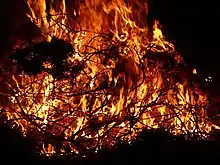
Etymology
From Proto-Kuki-Chin *maj, from Proto-Sino-Tibetan *mej. Cognates include Khumi Chin mai and Tibetan མེ (me).
Pronunciation
- IPA(key): /məi̯˧˩/
References
- Lukram Himmat Singh (2013) A Descriptive Grammar of Zou, Canchipur: Manipur University, page 64