化
| ||||||||
Translingual
| Stroke order | |||
|---|---|---|---|
 | |||
Han character
化 (Kangxi radical 21, 匕+2, 4 strokes, cangjie input 人心 (OP), four-corner 24210, composition ⿰亻𠤎(GV) or ⿰亻匕(HTJK))
Derived characters
References
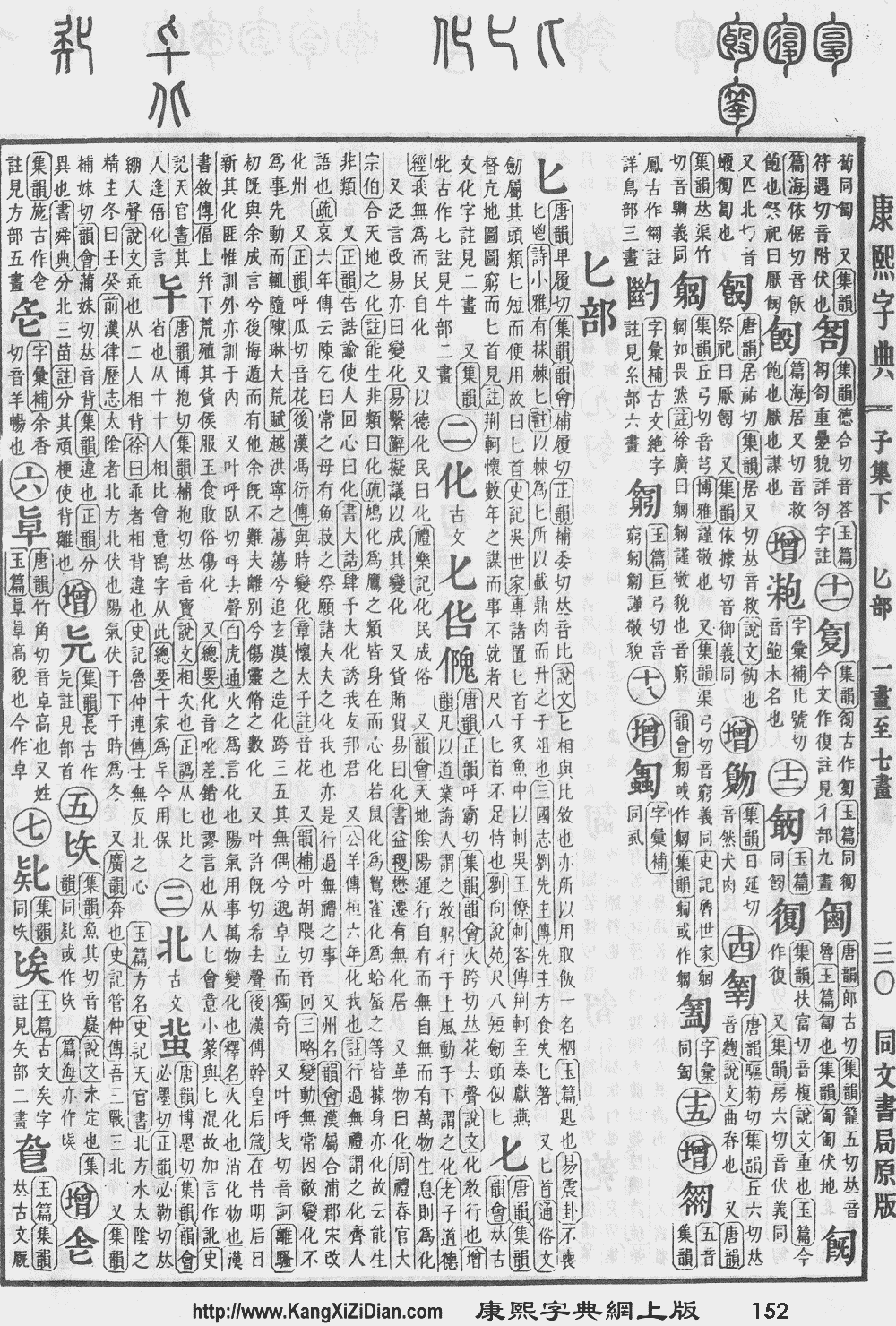
- KangXi: page 152, character 20
- Dai Kanwa Jiten: character 2572
- Dae Jaweon: page 342, character 4
- Hanyu Da Zidian (first edition): volume 1, page 109, character 4
- Unihan data for U+5316
Chinese
| trad. | 化 | |
|---|---|---|
| simp. # | 化 | |
| alternative forms | 㐶 | |
Glyph origin
| Historical forms of the character 化 | ||||
|---|---|---|---|---|
| Shang | Western Zhou | Warring States | Shuowen Jiezi (compiled in Han) | Liushutong (compiled in Ming) |
| Oracle bone script | Bronze inscriptions | Chu slip and silk script | Small seal script | Transcribed ancient scripts |
 |
 |
 |
 |
 |
Characters in the same phonetic series (化) (Zhengzhang, 2003)
Ideogrammic compound (會意) of two 人 (“person”), one upright (亻) and one upside down (𠤎) — reversal; change. Shuowen also considers 𠤎 to be a phonetic component.
Pronunciation
Definitions
化
- to change; to transform
- to become; to turn into
- † to die
- to melt
- to dissolve
- Suffix denoting "change into ...". Akin to English -ize and -ization.
- 民主化 ― mínzhǔhuà ― democratize
- (chemistry) Affix denoting combination.
- Short for 教化 (jiàohuà, “enlightenment; cultivation”).
- (in compounds) Short for 化學/化学 (huàxué, “chemistry”).
Compounds
Derived terms from 化
|
|
|
Japanese
Readings
Compounds
Compounds
- 化ける (bakeru): appear in disguise
- 化け物 (bakemono): goblin, apparition
- 化けもの (bakemono):
- 化かす (bakasu): bewitch, confuse
- 化育 (kaiku): evolution, growth
- 化学 (kagaku): chemistry
- 化合 (kagō): chemical combination
- 化身 (keshin): (Buddhist) incarnation
- 化粧 (keshō): makeup, cosmetics
- 化成 (kasei): change, transformation
- 化生 (kasei): growth, metamorphosis
- 化石 (kaseki): fossil, petrifaction
- 化繊 (kasen): synthetic fiber
- 化膿 (kanō): suppuration, festering
- 悪化 (akka): deterioration, aggravation
- 液化 (ekika): liquefaction
- 塩化 (enka): chloride
- 欧化 (ōka): Europeanization, westernization
- 感化 (kanka): influence, inspiration
- 帰化 (kika): naturalization
- 気化 (kika): vaporization
- 強化 (kyōka): strengthen, intensify
- 教化 (kyōka): culture, education
- 激化 (gekika), 激化 (gekka): intensification, aggravation
- 硬化 (kōka): hardening; sclerosis
- 固化 (koka): solidification
- 権化 (gonge): incarnation, avatar
- 酸化 (sanka): oxidation
- 消化 (shōka): digestion
- 進化 (shinka): evolution, progress
- 浄化 (jōka): purification, cleanup
- 造化 (zōka): the Creator, the Universe
- 電化 (denka): electrification
- 同化 (dōka): assimilation, absorption
- 鈍化 (donka): becoming dull
- 軟化 (nanka): softening, mollification
- 砒化 (hika): arsenication
- 美化 (bika): beautification, glorification
- 文化 (bunka): culture, civilization
- 分化 (bunka): specialization
- 変化 (henka): change, variation
- 変化 (henge): goblin, ghost
- 緑化 (ryokka): tree planting
- 劣化 (rekka): deterioration, degradation
- 老化 (rōka): aging, senile deterioration
- グローバル化 (gurōbaruka): globalization
- コンピュータ化 (konpyūtaka): computerization
- お化け (obake), 御化け (obake): goblin, apparition
- 一元化 (ichigenka): unification, centralization
- 機械化 (kikaika): mechanization, computerization
- 近代化 (kindaika): modernization
- 具体化 (gutaika): embodiment
- 国際化 (kokusaika): internationalization
- 合理化 (gōrika): rationalization
- 深刻化 (shinkokuka): becoming more serious
- 自由化 (jiyūka): liberalization
- 正常化 (seijōka): normalization
- 多様化 (tayōka): diversification
- 本格化 (honkakuka): regularization
- 民営化 (min'eika): privatization
- 明文化 (meibunka): stipulate
- 自動化 (jidōka): automation
- 誤魔化す (gomakasu): deceive, falsify
- 情報化 (jōhōka): informatization
- 硫化 (ryūka): sulfuration
Korean
Etymology
From Middle Chinese 化 (MC hˠuaH).
| Historical Readings | ||
|---|---|---|
| Dongguk Jeongun Reading | ||
| Dongguk Jeongun, 1448 | 황〮 (Yale: hwá) | |
| Middle Korean | ||
| Text | Eumhun | |
| Gloss (hun) | Reading | |
| Hunmong Jahoe, 1527 | 도욀 (Yale: twòwòyl) | 화〯 (Yale: hwǎ) |
Pronunciation
- (SK Standard/Seoul) IPA(key): [ɸwa̠(ː)]
- Phonetic hangul: [화(ː)]
- Though still prescribed in Standard Korean, most speakers in both Koreas no longer distinguish vowel length.
Compounds
Vietnamese
| Hán tự in this term |
|---|
| 化 |
References
- Nguyễn (2014).
- Nguyễn et al. (2009).
- Trần (2004).
This article is issued from Wiktionary. The text is licensed under Creative Commons - Attribution - Sharealike. Additional terms may apply for the media files.