面
| ||||||||
| ||||||||
Translingual
| Traditional | 麵 |
|---|---|
| Shinjitai | 麺 |
| Simplified | 面 |
| Stroke order | |||
|---|---|---|---|
 | |||
Han character
面 (Kangxi radical 176, 面+0, 9 strokes, cangjie input 一田尸中 (MWSL) or 一田卜中 (MWYL), four-corner 10600, composition ⿱丆囬)
- Kangxi radical #176, ⾯.
Derived characters
References
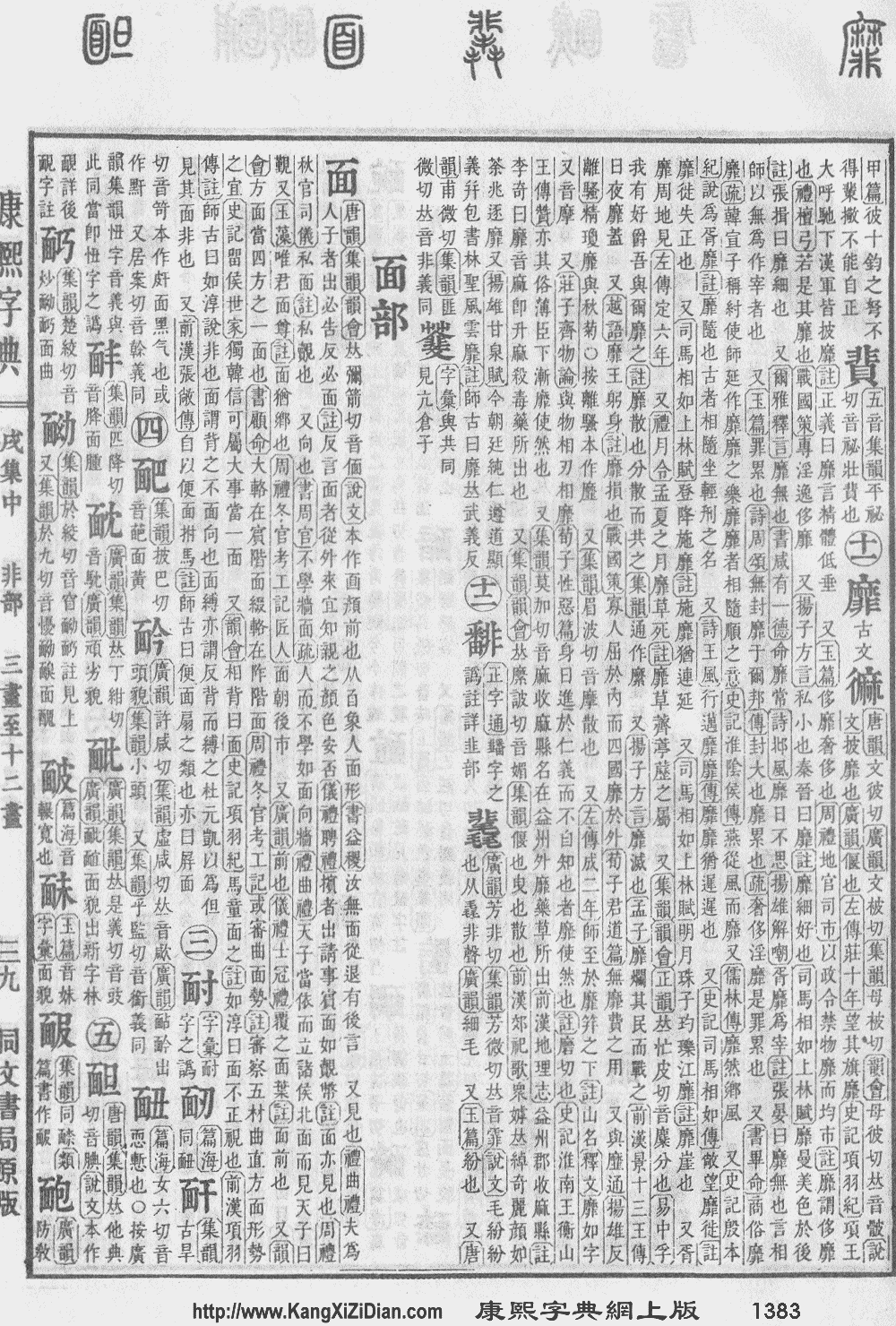
- KangXi: page 1383, character 7
- Dai Kanwa Jiten: character 42618
- Dae Jaweon: page 1896, character 18
- Hanyu Da Zidian (first edition): volume 7, page 4398, character 1
- Unihan data for U+9762
Chinese
| simp. and trad. |
面 | |
|---|---|---|
| 2nd round simp. | 𫩑 | |
Glyph origin
| Historical forms of the character 面 | |
|---|---|
| Shang | Shuowen Jiezi (compiled in Han) |
| Oracle bone script | Small seal script |
 |
 |
Characters in the same phonetic series (面) (Zhengzhang, 2003)
Pictogram (象形) , A man’s face, with an eye exaggerated, derived from 𦣻.
Etymology 1
From Proto-Sino-Tibetan *s-mjal (“face”); cognate with Mizo hmêl (“face”), Jingpho man (“face”). 偭 (OC *menʔ, “to turn; to violate”) is probably cognate (Wang, 1982), perhaps its endoactive (Schuessler, 2007).
Pronunciation
Definitions
面
- (literary or dialectal) face (Classifier: 塊/块 c)
- 人心之不同,如其面焉。 [Classical Chinese, trad. and simp.]
- From: Commentary of Zuo, c. 4th century BCE
- Rénxīn zhī bùtóng, rú qí miàn yān. [Pinyin]
- (please add an English translation of this example)
- surface; top; face
- aspect; side; respect
- 全面 ― quánmiàn ― overall
- right side; cover; outside
- (geometry) face
- (Cantonese, Singapore Hokkien) dignity; reputation; face
- 冇面 [Cantonese] ― mou5 min6-2 [Jyutping] ― to lose face; to be embarrassed
- to meet
- 面世 ― miànshì ― to come out (literally, “to meet the world”)
- 夫為人子者,出必告,反必面。 [Classical Chinese, trad.]
- From: The Book of Rites, c. 4th – 2nd century BCE
- Fū wéi rénzǐ zhě, chū bì gào, fǎn bì miàn. [Pinyin]
- A son, when he is going abroad, must inform (his parents where he is going); when he returns, he must present himself before them.
夫为人子者,出必告,反必面。 [Classical Chinese, simp.]
- face-to-face
- to face
- suffix used to form a noun of locality
- Short for 面試/面试 (miànshì, “interview”).
- HR面 ― HRmiàn ― (please add an English translation of this example)
- Classifier for objects with a flat surface.
- Classifier for numbers of times people meet each other.
Synonyms
- (face):
Synonyms of 面
- (dignity):
Dialectal synonyms of 面目 (“dignity; reputation; face”) [map]
| Variety | Location | Words |
|---|---|---|
| Formal (Written Standard Chinese) | 面目, 面子, 體面/体面, 顏面/颜面, 臉面/脸面 | |
| Mandarin | Taiwan | 面子 |
| Wanrong | 面子 | |
| Malaysia | 臉/脸, 面子 | |
| Singapore | 面子 | |
| Cantonese | Guangzhou | 面 |
| Hong Kong | 面, 面子 | |
| Singapore (Guangfu) | 面 | |
| Min Nan | Xiamen | 面子, 面皮 |
| Quanzhou | 面皮 | |
| Zhangzhou | 面皮 | |
| Penang (Hokkien) | 面, 面皮 | |
| Singapore (Hokkien) | 面, 面皮 | |
| Manila (Hokkien) | 面皮 | |
| Singapore (Teochew) | 面皮 | |
| Wu | Shanghai | 面子 |
Compounds
Derived terms from 面
|
|
|
Descendants
Others:
Etymology 2
| For pronunciation and definitions of 面 – see 麵 (“flour; wheat noodles; etc.”). (This character, 面, is the simplified form of 麵.) |
Notes:
|
References
- “面”, in 漢語多功能字庫 (Multi-function Chinese Character Database), 香港中文大學/香港中文大学 (the Chinese University of Hong Kong), 2014–
Japanese
Readings
Compounds

Pronunciation
Noun
面 • (men)
Etymology 2
| Kanji in this term |
|---|
| 面 |
| おもて Grade: 3 |
| kun’yomi |
Etymology 3
| Kanji in this term |
|---|
| 面 |
| つら Grade: 3 |
| kun’yomi |
Derived terms
Derived terms
- 面魂 (tsuradamashii)
- 面の皮が厚い (tsura no kawa ga atsui)
- 面汚し (tsurayogoshi)
Korean
Etymology
From Middle Chinese 面 (MC miᴇnH).
| Historical Readings | ||
|---|---|---|
| Dongguk Jeongun Reading | ||
| Dongguk Jeongun, 1448 | 면〮 (Yale: myén) | |
| Middle Korean | ||
| Text | Eumhun | |
| Gloss (hun) | Reading | |
| Hunmong Jahoe, 1527 | ᄂᆞᆺ (Yale: nòs) | 면〯 (Yale: myěn) |
Pronunciation
- (SK Standard/Seoul) IPA(key): [mjɘ(ː)n]
- Phonetic hangul: [면(ː)]
- Though still prescribed in Standard Korean, most speakers in both Koreas no longer distinguish vowel length.
Compounds
Compounds
- 가면 (假面, gamyeon)
- 구면 (舊面, gumyeon)
- 단면 (斷面, danmyeon)
- 면적 (面積, myeonjeok)
- 반면 (反面, banmyeon)
- 장면 (場面, jangmyeon)
- 정면 (正面, jeongmyeon)
- 측면 (側面, cheungmyeon)
- 평면 (平面, pyeongmyeon)
- 화면 (畫面, hwamyeon)
- 국면 (局面, gungmyeon)
- 외면 (外面, oemyeon)
- 표면 (表面, pyomyeon)
- 이면 (裏面, imyeon)
- 방면 (方面, bangmyeon)
- 면모 (面貌, myeonmo)
- 안면 (顔面, anmyeon)
- 면상 (面相, myeonsang)
- 체면 (體面, chemyeon)
- 직면 (直面, jingmyeon)
- 면담 (面談, myeondam)
- 액면 (額面, aengmyeon)
- 수면 (水面, sumyeon)
- 진면목 (眞面目, jinmyeonmok)
Vietnamese
Han character
References
- Trần (2004).
This article is issued from Wiktionary. The text is licensed under Creative Commons - Attribution - Sharealike. Additional terms may apply for the media files.