月
 | ||||||||
| ||||||||
 | ||||||||
Translingual
| Stroke order | |||
|---|---|---|---|
 | |||
| Stroke order | |||
|---|---|---|---|
 | |||
Han character
月 (Kangxi radical 74, 月+0, 4 strokes, cangjie input 月 (B), four-corner 77220, composition ⿵⺆𠄠)
- Kangxi radical #74, ⽉.
Usage notes
Do not confuse 月 with ⺼, a form of 肉 (“flesh, meat”) when used as the left-hand radical of a character. ⺼ is used for parts of the body such as 背 (“back”) or 肝 (“liver”). These may be written identically as 月, but in careful use they are distinguished, with the inside of ⺼ being written with unattached diagonal strokes. This is particularly an issue in looking up characters by radical; compare the 月 index and 肉 index.
Older/orthodox forms such as the Kangxi dictionary forms may additionally distinguish components that are related to neither 月 nor 肉, such as e.g. 朋, 前 or 服 where the two horizontal strokes 一 would be written as two unattached dots 丶 instead. Also, the bottom part of 青(靑) components would be written as 円. The orthodox 月 and ⺼ components, while similar, would still be distinguished slightly: they both use horizontal strokes, but ⺼ connects them to the ⺆ shape on both sides, and 月 only connects them on the left side.
Derived characters
References
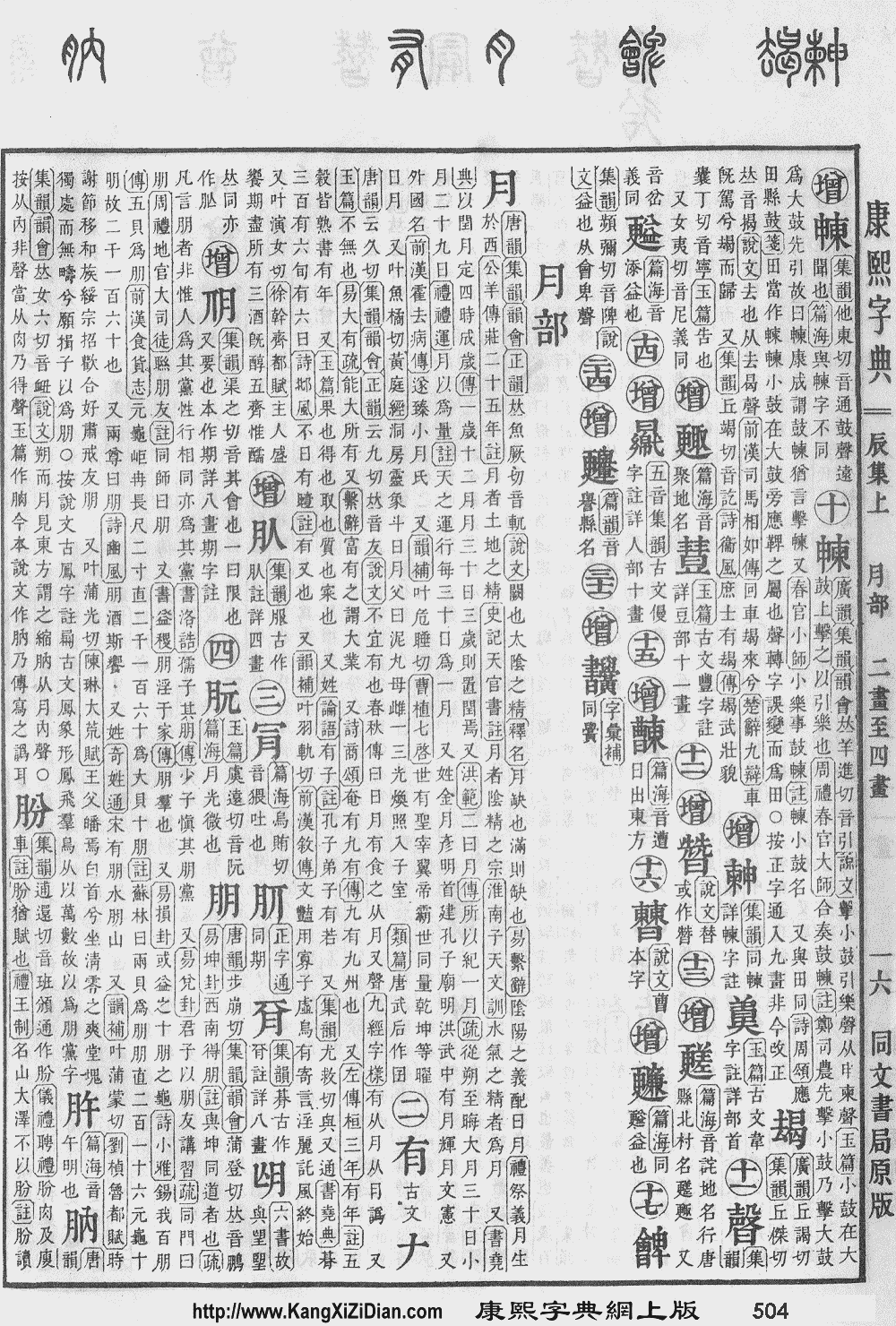
- KangXi: page 504, character 19
- Dai Kanwa Jiten: character 14330
- Dae Jaweon: page 879, character 20
- Hanyu Da Zidian (first edition): volume 3, page 2041, character 1
- Unihan data for U+6708

Chinese
| simp. and trad. |
月 | |
|---|---|---|
| alternative forms | 𡇹 𠥱 | |
Glyph origin
| Historical forms of the character 月 | ||||
|---|---|---|---|---|
| Shang | Western Zhou | Warring States | Shuowen Jiezi (compiled in Han) | Liushutong (compiled in Ming) |
| Oracle bone script | Bronze inscriptions | Chu slip and silk script | Small seal script | Transcribed ancient scripts |
 |
 |
 |
 |
 |
Pictogram (象形) – pictographic representation of a crescent moon. Compare 夕.
Etymology 1
From Proto-Sino-Tibetan *s-ŋʷ(j)a-t (“moon; star”), whence also Magar [Term?] (gya hot, “moon”), Proto-Lolo-Burmese *mwatᴸ (“star; moon”) (whence Lahu məʔ-kə (“star”)), Drung gurmet (“star”) (Matisoff, 1980; LaPolla, 1987; STEDT).
Various alternative etymologies have also been proposed:
- Unger (1992) proposes cognation with Tibetan ངོ (ngo, “waxing and waning moon; half moon”) (as in མར་ངོ (mar ngo, “waning moon”) and ཡར་ངོ (yar ngo, “waxing moon”)), which Schuessler (2007) connects to Proto-Sino-Tibetan *s-ŋow (“white; light colour”). However, Sagart (1999) points out that the Tibetan word may be analyzed as a derivative of Tibetan ངོ (ngo, “face”), which would mean the semantic connection between “moon” and “face” had to occur either independently in Chinese and Tibetan or in Proto-Sino-Tibetan; it also requires positing a suffix -t in Chinese.
- Pulleybank (1995a) proposes another etymology based on the glyph for 名 (reconstructed as *màŋʲ), which he analyses as a phono-semantic compound of phonetic 夕 (“moon”) and semantic 口 (“mouth”). He suggests that the phonetic component represents a lost word *màŋʲ (“moon”), and reconstructs 月 as *mŋʲ (consonantal frame of “moon”) + *-at (suffix) > *ŋʲʷat. However, there are more straightforward ways of explaining the glyph origin of 名 (see there), which would nullify the hypothesis of the lost word.
- Related to 越 (“to pass over; to cross over”) in some way.
- Mei (1979) derives 月 from 越 (OC **gjot > *gwjat): **N-gjot > *ngwjat. Also in this proposed word family is 歲 (OC **s-gjots > *skwjadh, “year”). The semantics of this word family is centred around "to pass; to elapse". While Matisoff (1980) seems supportive of this word family, STEDT reconstructs Proto-Sino-Tibetan *grwat (“to travel; to go through”) for 越 and 歲, separate from the root for 月.
- Ferlus (2012) reconstructs the Old Chinese as *ŋ.wat and puts it in a word family formed from a Chinese root *wat, having a meaning of "circularity" or "circular boundary". This proposed word family includes 越 (OC *wat, “to cross over”), as in "to cross the enclosure of the village", and 外 (OC *ŋ.wat-s, “outside”), as in "out of the enclosure of the village".
Pronunciation
Definitions
月
Quotations
For quotations using this term, see Citations:月.
Synonyms
Compounds
Descendants
See also
Etymology 2
| For pronunciation and definitions of 月 – see 肉 (“meat; flesh; pork; etc.”). (This character, 月, is an ancient form of 肉.) |
Etymology 3
| For pronunciation and definitions of 月 – see 夕 (“night; evening; dusk”). (This character, 月, is an ancient form of 夕.) |
Etymology 4
| For pronunciation and definitions of 月 – see 明 (“bright; light; brilliant; clear; limpid; etc.”). (This character, 月, is an ancient form of 明.) |
References
- “月”, in 漢語多功能字庫 (Multi-function Chinese Character Database), 香港中文大學/香港中文大学 (the Chinese University of Hong Kong), 2014–
- Dictionary of Chinese Character Variants (教育部異體字字典), A01841
- “Entry #812”, in 臺灣閩南語常用詞辭典 [Dictionary of Frequently-Used Taiwan Minnan] (in Chinese and Min Nan), Ministry of Education, R.O.C., 2011.
Japanese
Readings
Compounds
Etymology 1
| Kanji in this term |
|---|
| 月 |
| つき Grade: 1 |
| kun’yomi |
⟨tuki2⟩ → */tukɨ/ → */t͡sukɨ/ → /t͡suki/
From Old Japanese 月 (tuki2), ultimately from Proto-Japonic *tukuy.[1]
Likely a shift from Old Japanese 月 (tuku), derived through a fusion with ancient Japanese emphatic nominal particle い (i). Compare the development of 神 (kami, “Shinto deity”) from older combining form kamu.
Noun
月 • (tsuki)
- the moon
- (astronomy) a natural satellite
- moonlight, moonbeam
- a 家紋 (kamon, “family crest”) with various designs of the moon
- (tarot) the Moon, the eighteenth trump or major arcana card in most traditional Tarot decks
- a month
- Short for 月囲い (tsukigakoi): a mistress on a monthly allowance
- (archaic) a menstrual cycle, menstruation (believed to be caused by the moon)
Quotations
For quotations using this term, see Citations:月.
Derived terms
| Japanese number-counter combinations for 月 (tsuki) | ||||||||||
|---|---|---|---|---|---|---|---|---|---|---|
| 1 | 2 | 3 | 4 | 5 | 6 | 7 | 8 | 9 | 10 | How many? |
| 一月 (hitotsuki) | 二月 (futatsuki) | 三月 (mitsuki) | 四月 (yotsuki) | 五月 (itsutsuki) | 六月 (mutsuki) | 七月 (nanatsuki) | 八月 (yatsuki) | 九月 (kokonotsuki) | 十月 (totsuki) | 何月 (nantsuki) |
Idioms
- 月よ星よ (tsuki yo hoshi yo)
- 月と鼈 (tsuki to suppon)
Etymology 2
| Kanji in this term |
|---|
| 月 |
| がつ Grade: 1 |
| kan’yōon |
/ɡʷatɨ/ → /ɡʷat͡su/ → /ɡat͡su/
From Middle Chinese 月 (ŋʉɐt̚). The 慣用音 (kan'yōon) reading, a pronunciation in common usage based on a corruption of the Middle Chinese borrowing.
Pronunciation
- IPA(key): [ɡa̠t͡sɨᵝ]
Derived terms
- 正月 (shōgatsu)
| Japanese number-counter combinations for 月 (gatsu) | ||||||||||||
|---|---|---|---|---|---|---|---|---|---|---|---|---|
| 1st | 2nd | 3rd | 4th | 5th | 6th | 7th | 8th | 9th | 10th | 11th | 12th | Which month? |
| 一月 (ichigatsu) | 二月 (nigatsu) | 三月 (sangatsu) | 四月 (shigatsu) | 五月 (gogatsu) | 六月 (rokugatsu) | 七月 (shichigatsu) 七月 (nanagatsu) |
八月 (hachigatsu) | 九月 (kugatsu) | 十月 (jūgatsu) | 十一月 (jūichigatsu) | 十二月 (jūnigatsu) | 何月 (nangatsu) |
Usage notes
When used in most compounds or when counting a number of months with ヶ (ka), 月 is pronounced げつ (getsu). When used in compounds for modern months of the year, it is pronounced がつ (gatsu). When used for poetic or lunar months, it is pronounced つき (tsuki).
Derived terms
Etymology 3
| Kanji in this term |
|---|
| 月 |
| げつ Grade: 1 |
| kan’on |
/ɡʷetu/ → /ɡet͡su/
From Middle Chinese 月 (ŋʉɐt̚).
The 漢音 (kan'on) reading, so likely a later borrowing. Compare modern Hakka 月 (ngie̍t), Min Nan 月 (ge̍h).
Counter
月 • (-getsu) ←ぐゑつ (gwetu)?
Usage notes
When used in most compounds or when counting a number of months with ヶ (ka), 月 is pronounced げつ (getsu). When used in compounds for modern months of the year, it is pronounced がつ (gatsu). When used for poetic or lunar months, it is pronounced つき (tsuki).
Derived terms
- ヶ月 (-kagetsu)
Derived terms
Etymology 4
| Kanji in this term |
|---|
| 月 |
| がち Grade: 1 |
| goon |
/ɡʷat͡ɕi/ → /ɡat͡ɕi/
First attested in the Edo period.
Appears to be a poetic use of the 呉音 (goon) reading, in reference to a rank of 端女郎 (hashi jorō, “low-end prostitute”) in the Kansai region. According to a popular song, a 月 (gachi, “moon”) prostitute cost one 匁 (monme, old unit of currency, worth roughly 3.75 grams of silver), a 影 (kage, “shadow”) prostitute cost two monme, and a 汐 (shio, “tide; loveliness”) prostitute cost three monme.[2][4]
Pronunciation
- IPA(key): [ɡa̠t͡ɕi]
Noun
- (Kansai, historical) during the Edo period, a low rank of low-end prostitute
Derived terms
- 月の女郎 (gachi no jorō)
Etymology 5
| Kanji in this term |
|---|
| 月 |
| がち Grade: 1 |
| goon |
Either a shift in sense from the low-ranking prostitute meaning above, or a shift in pronunciation from 頑痴 (ganchi, “stubborn and stupid”).[2][4]
Alternative forms
- 瓦智 (ateji)
Pronunciation
- IPA(key): [ɡa̠t͡ɕi]
Adjective
Inflection
| Stem forms | ||||
|---|---|---|---|---|
| Irrealis (未然形) | 月なら | がちなら | gatinara | |
| Continuative (連用形) | 月に[1] 月なり[2] | がちに がちなり | gatini gatinari | |
| Terminal (終止形) | 月なり | がちなり | gatinari | |
| Attributive (連体形) | 月なる | がちなる | gatinaru | |
| Realis (已然形) | 月なれ | がちなれ | gatinare | |
| Imperative (命令形) | 月なれ | がちなれ | gatinare | |
| Key constructions | ||||
| Negative | 月ならず | がちならず | gatinarazu | |
| Contrasting conjunction | 月なれど | がちなれど | gatinaredo | |
| Causal conjunction | 月なれば | がちなれば | gatinareba | |
| Conditional conjunction | 月ならば | がちならば | gatinaraba | |
| Past tense (firsthand knowledge) | 月なりき | がちなりき | gatinariki | |
| Past tense (secondhand knowledge) | 月なりけり | がちなりけり | gatinarikeri | |
| Adverbial | 月に | がちに | gatini | |
| [1]Without auxiliary verb. [2]With auxiliary verb. | ||||
Noun
- (archaic, possibly obsolete) something or someone that/who is crude, unrefined, hickish
- Synonym: 野暮 (yabo)
References
- Pellard, Thomas (2012), “日琉祖語の分岐年代”, in 琉球諸語と古代日本語に関する比較言語学的研究」ワークショップ, page 6
- 2006, 大辞林 (Daijirin), Third Edition (in Japanese), Tōkyō: Sanseidō, →ISBN
- 1998, NHK日本語発音アクセント辞典 (NHK Japanese Pronunciation Accent Dictionary) (in Japanese), Tōkyō: NHK, →ISBN
- 1988, 国語大辞典(新装版) (Kokugo Dai Jiten, Revised Edition) (in Japanese), Tōkyō: Shogakukan
Korean
Etymology
From Middle Chinese 月 (MC ŋʉɐt̚).
| Historical Readings | ||
|---|---|---|
| Dongguk Jeongun Reading | ||
| Dongguk Jeongun, 1448 | ᅌᅯᇙ〮 (Yale: ngwélq) | |
| Middle Korean | ||
| Text | Eumhun | |
| Gloss (hun) | Reading | |
| Hunmong Jahoe, 1527 | ᄃᆞᆯ〮 (Yale: tól) | 월〮 (Yale: wél) |
Pronunciation
- (SK Standard/Seoul) IPA(key): [wʌ̹ɭ]
- Phonetic hangul: [월]
Compounds
Miyako
Etymology
From Proto-Ryukyuan *tuki.
Okinawan
Readings
- On: ぐゎち (gwachi)←ぐゎつぃ (gwatsi, historical)
- Kun: ちち (chichi)←つぃち (tsichi, historical)
Compounds
Alternative forms
- (topicalized) 月ぇ (chichē)
Etymology 1
| Kanji in this term |
|---|
| 月 |
| ちち Grade: 1 |
| kun’yomi |
From Proto-Ryukyuan *tuki, from Proto-Japonic *tukuy.
Derived terms
Pronunciation
- IPA(key): [ɡʷat͡ɕi]
Further reading
- “ぐゎち・ぐぁち【月】” in JLect - Japonic Languages and Dialects Database Dictionary, 2019.
- “ちち【月】” in JLect - Japonic Languages and Dialects Database Dictionary, 2019.
References
Old Japanese
Etymology 1
From Proto-Japonic *tukuy.
Likely a shift from tuku below, derived through a fusion with い (i2, emphatic nominal particle). Compare the development of 神 (kamu → kami2, “Shinto deity”).
Noun
月 (tuki2) (kana つき)
- the moon
- a month
- a menstrual cycle, menstruation (believed to be caused by the moon)
Quotations
For quotations using this term, see Citations:月.
Etymology 2
Possibly from Proto-Japonic *tuku.
Noun
月 (tuku) (kana つく)
- (regional, Eastern Old Japanese) the moon
- (regional, Eastern Old Japanese) a month
- Combining form of ツキ乙 (tuki2) above
Quotations
For quotations using this term, see Citations:月.
Vietnamese
Han character
月: Hán Việt readings: nguyệt (
月: Nôm readings: nguyệt[1][2][4][6], ngoạt[4][6], nhục[2][4]
Compounds
References
- Nguyễn (2014).
- Nguyễn et al. (2009).
- Trần (2004).
- Bonet (1899).
- Génibrel (1898).
- Taberd & Pigneau de Béhaine (1838).