赦
| ||||||||
Translingual
Han character
赦 (radical 155, 赤+4, 11 strokes, cangjie input 土金人大 (GCOK), four-corner 48340, composition ⿰赤攵)
References
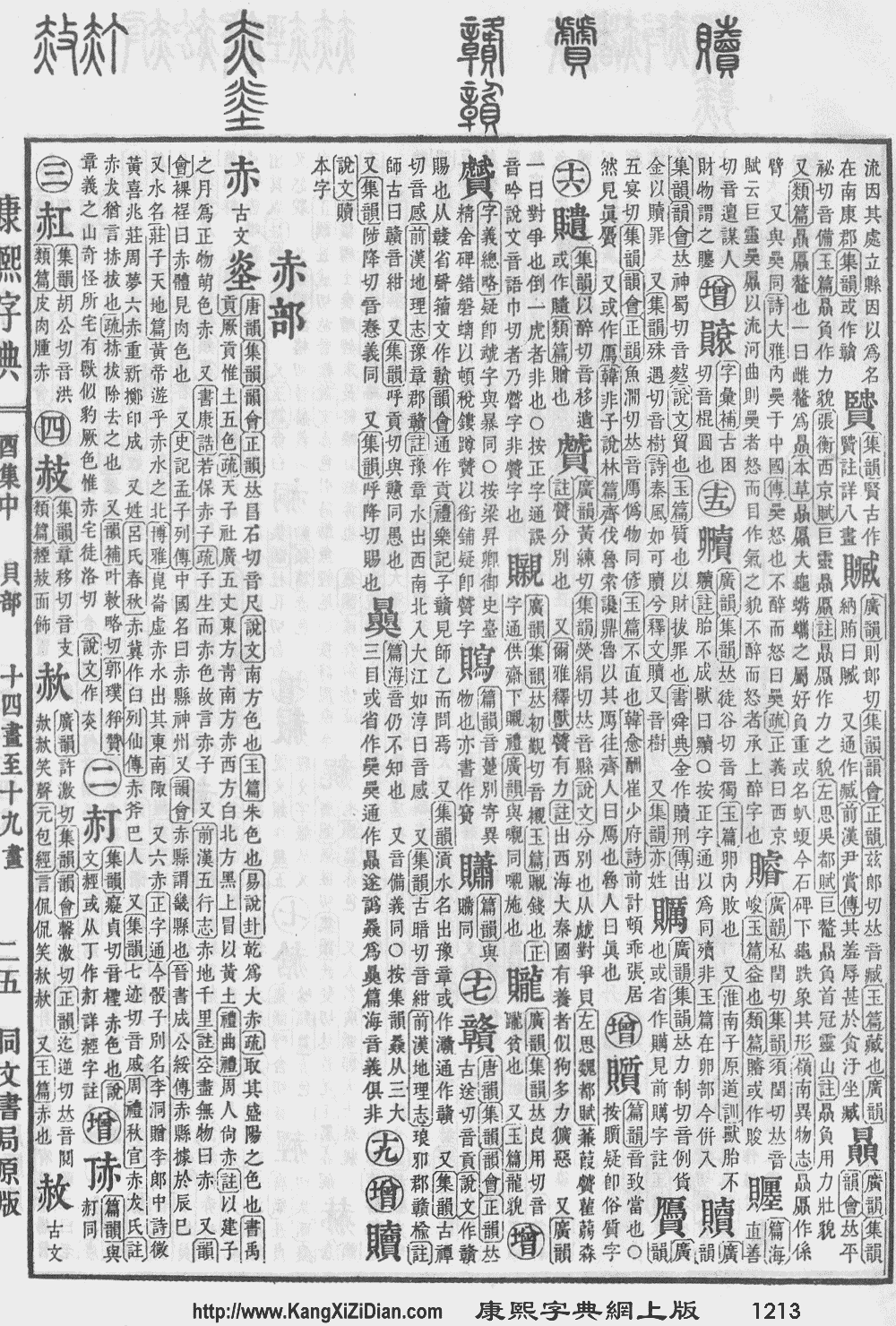
- KangXi: page 1213, character 29
- Dai Kanwa Jiten: character 36999
- Dae Jaweon: page 1681, character 6
- Hanyu Da Zidian: volume 5, page 3507, character 6
- Unihan data for U+8D66
Chinese
| simp. and trad. |
赦 | |
|---|---|---|
| variant forms | 𢼜 𢽀 | |
Glyph origin
| Characters in the same phonetic series (赤) (Zhengzhang, 2003) | |
|---|---|
| Old Chinese | |
| 浾 | *sqraː |
| 嚇 | *qʰraːɡs, *qʰraːɡ |
| 赦 | *hljaɡs |
| 郝 | *qʰljaɡ, *kʰljaɡ, *hljaɡ |
| 赫 | *qʰraːɡ |
| 爀 | *qʰraːɡ |
| 赤 | *kʰljaɡ |
| 烾 | *kʰljaɡ |
| 螫 | *qʰjaːɡ |
| 赥 | *qʰleːɡ |
| 捇 | *qʰʷreːɡ |
| 焃 | *qʰʷreːɡ |
In the bronze script, it was written as 𢼜, a phono-semantic compound (形聲, OC *hljaɡs) : phonetic 亦 (OC *laːɡ) + semantic 攴 (“hand holding a stick”). In later scripts, the phonetic component was replaced with 赤 (OC *kʰljaɡ).
Etymology
Exoactive (causative) of 釋 (OC *hljaɡ, “to unloose; to release”) (Schuessler, 2007). Also related to 舍 (OC *hljaːʔ, “to let off”) (Wang, 1982), of which there exists a derived reading 舍 (OC *hljaːs, “to let off; to liberate”) that formed a variant relationship with 赦 (OC *hljaɡs), despite not having the same pronunciation in Old Chinese (*-aːs vs *-ags).
Pronunciation
Japanese
Kanji
- This term needs a translation to English. Please help out and add a translation, then remove the text
{{rfdef}}.
Korean
Hanja
赦 • (sa) (hangeul 사, revised sa, McCune–Reischauer sa, Yale sa)
- This term needs a translation to English. Please help out and add a translation, then remove the text
{{rfdef}}.
Vietnamese
Han character
赦: Hán Việt readings: xá[1][2][3]
赦: Nôm readings: tha[1][2][3][4], xá[1][2], xóa/xoá[3][4]
Compounds
- 赦恕 (tha thứ)
References
- Nguyễn (2014).
- Nguyễn et al. (2009).
- Trần (2004).
- Hồ (1976).