茶
| ||||||||
 | ||||||||
Translingual
| Stroke order | |||
|---|---|---|---|
 | |||
Han character
茶 (Kangxi radical 140, 艸+6, 9 strokes, cangjie input 廿人木 (TOD), four-corner 44904, composition ⿳艹𠆢朩(GV) or ⿳艹𠆢木(HTJK))
Derived characters
References
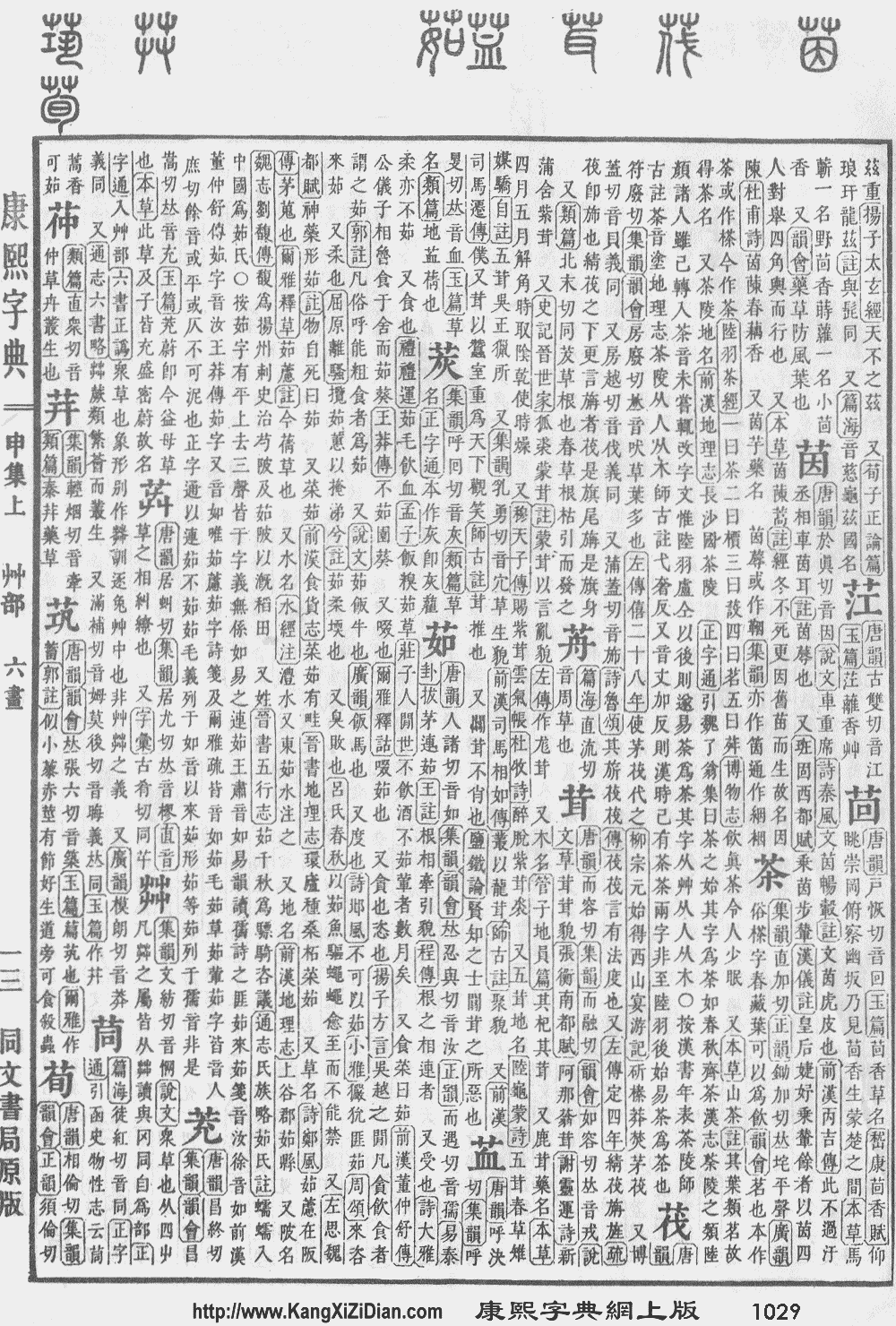
- KangXi: page 1029, character 4
- Dai Kanwa Jiten: character 30915
- Dae Jaweon: page 1488, character 1
- Hanyu Da Zidian (first edition): volume 5, page 3207, character 2
- Unihan data for U+8336
- Unihan data for U+F9FE
Chinese
| trad. | 茶 | |
|---|---|---|
| simp. # | 茶 | |
| alternative forms | 𣘻 𦯬 荼 | |
Glyph origin
| Old Chinese | |
|---|---|
| 斜 | *lja, *laː |
| 茶 | *rlaː |
| 荼 | *rlaː, *ɦlja, *l'aː |
| 梌 | *rlaː, *l̥ʰaː, *l'aː |
| 搽 | *rlaː |
| 塗 | *rlaː, *l'aː |
| 佘 | *ɦlja |
| 賒 | *hljaː |
| 畬 | *hljaː, *la |
| 舍 | *hljaːʔ, *hljaːs |
| 捨 | *hljaːʔ |
| 騇 | *hljaːʔ, *hljaːs |
| 涻 | *hljaːs |
| 稌 | *l̥ʰaː, *l̥ʰaːʔ |
| 悇 | *l̥ʰaː, *l̥ʰas, *las |
| 庩 | *l̥ʰaː |
| 捈 | *l̥ʰaː, *l'aː |
| 途 | *l'aː |
| 酴 | *l'aː |
| 駼 | *l'aː |
| 鵌 | *l'aː, *la |
| 涂 | *l'aː, *l'a |
| 嵞 | *l'aː |
| 峹 | *l'aː |
| 筡 | *l'aː, *l̥ʰa |
| 蒤 | *l'aː |
| 徐 | *lja |
| 俆 | *lja |
| 敘 | *ljaʔ |
| 漵 | *ljaʔ |
| 除 | *l'a, *l'as |
| 篨 | *rla |
| 滁 | *rla |
| 蒢 | *rla |
| 蜍 | *ɦlja, *la |
| 鵨 | *hljaː |
| 瑹 | *hlja |
| 余 | *la |
| 餘 | *la |
| 艅 | *la |
| 狳 | *la |
| 雓 | *la |
| 悆 | *las |
Phono-semantic compound (形聲/形声, OC *rlaː) : semantic 艹 + phonetic 余 (OC *la).
茶 originates as a graphical modification of archaic 荼 (OC *rlaː, *ɦlja, *l'aː, “bitter plant”), used for “tea” in classical sources.
Etymology
As tea may have originated from Sichuan, where the native Yi people speak Loloish languages, Sagart (1999) suggests that the Old Chinese item was possibly originally borrowed from Proto-Loloish *la¹ (“tea”), from Proto-Sino-Tibetan *s-la (“leaf; tea”). Schuessler (2007) traces its ultimate origin to Proto-Austroasiatic *sla (“leaf”) (compare Proto-Mon-Khmer *slaʔ).
Alternatively, Qiu (1988) suggests that it might be a semantic extension of 荼 (OC *l'aː, “bitter plant”).
Pronunciation
Definitions
茶
- tea (plant, leaves)
- tea (beverage made by infusing tea leaves in hot water)
- certain kinds of beverage or liquid food
- 涼茶/凉茶 ― liángchá ― Chinese herb tea
- 冬瓜茶 ― dōngguāchá ― winter melon punch
- 杏仁茶 ― xìngrénchá ― almond tea
- Chinese medicine
- 午時茶/午时茶 ― wǔshíchá ― Afternoon Tea
- yum cha
- (obsolete) a moment (the time it takes to drink a cup of tea)
- (dialectal Mandarin, Cantonese, Gan, Xiang, Wu) boiled or boiling water
- a surname
Synonyms
Compounds
|
|
|
Descendants
References
- “茶”, in 漢語多功能字庫 (Multi-function Chinese Character Database), 香港中文大學/香港中文大学 (the Chinese University of Hong Kong), 2014–
- Dictionary of Chinese Character Variants (教育部異體字字典), A03475
Japanese
Readings
Compounds
- お茶 (ocha): tea
- 烏竜茶 (ūroncha): oolong tea
- 喫茶店 (kissaten): tearoom; café
- 紅茶 (kōcha): black tea
- 古茶 (kocha): tea from last year
- 粉茶 (konacha): dust tea
- 新茶 (shincha): new tea of the year
- 茶色 (chairo): brown
- 茶園 (chaen): tea plantation
- 茶会 (chakai): tea party
- 茶器 (chaki): teaware
- 茶匙 (chasaji): teaspoon
- 茶の湯 (chanoyu): tea ceremony
- 茶畑 (chabatake): tea plantation
- 品茶 (hincha): tea evaluation; a game of drinking varieties of tea and guessing them correctly
- 焙じ茶 (hōjicha): roasted green tea
- 抹茶 (matcha): maccha, matcha
- 無茶 (mucha): reckless
- 緑茶 (ryokucha): green tea
Etymology

| Kanji in this term |
|---|
| 茶 |
| ちゃ Grade: 2 |
| kan’yōon |
From various dialects of Middle Chinese 茶 (MC ɖˠa). Compare modern Mandarin reading chá, Hakka chhà, Cantonese caa4.
Usage notes
This term is not used on its own in modern Japanese. For the tea sense, this is used either with the honorific prefix お (o-), or in a compound such as 茎茶 (kukicha, literally “stem tea”) or 緑茶 (ryokucha, “green tea”).
- お茶はいかがですか。
- Ocha wa ikaga desuka.
- How about some tea? (Would you like some tea?)
For the brown sense, this is used with the color suffix 色 (iro), as in 茶色 (chairo, “brown”, literally “tea color”).
Synonyms
- 茗 (mei) (rare)
Korean
Etymology 1
From Early Mandarin 茶 (EM *tʂʰaᴸᴸ). Compare modern Mandarin reading chá, Hakka chhà, Cantonese caa4.
Pronunciation
- (SK Standard/Seoul) IPA(key): [t͡ɕʰa̠]
- Phonetic hangul: [차]
Usage notes
This reading is used as a standalone word to mean "tea."
Compounds
Etymology 2
From Middle Chinese 茶 (MC ɖˠa).
| Historical Readings | ||
|---|---|---|
| Dongguk Jeongun Reading | ||
| Dongguk Jeongun, 1448 | 땅 (Yale: ttà) | |
| Middle Korean | ||
| Text | Eumhun | |
| Gloss (hun) | Reading | |
| Hunmong Jahoe, 1527 | 차 (Yale: chà) | 다 (Yale: tà) |
Pronunciation
- (SK Standard/Seoul) IPA(key): [ta̠]
- Phonetic hangul: [다]
Hanja
Compounds
Vietnamese
Han character
茶: Hán Việt readings: trà[1][2][3][4][5][6]
茶: Nôm readings: trà[1][2][3], chè[1][2][3], chà[1], sà[1], già[1][2], chòe/choè[1][2]
References
- Nguyễn (2014).
- Nguyễn et al. (2009).
- Trần (2004).
- Trần (1999).
- Nguyễn (1974).
- Thiều Chửu (1942).