縋
See also: 缒
| ||||||||
Translingual
Han character
縋 (radical 120, 糸+10, 16 strokes, cangjie input 女火卜竹口 (VFYHR), four-corner 27937, composition ⿰糹追)
References
- KangXi: page 933, character 16
- Dai Kanwa Jiten: character 27740
- Dae Jaweon: page 1372, character 9
- Hanyu Da Zidian: volume 5, page 3429, character 2
- Unihan data for U+7E0B
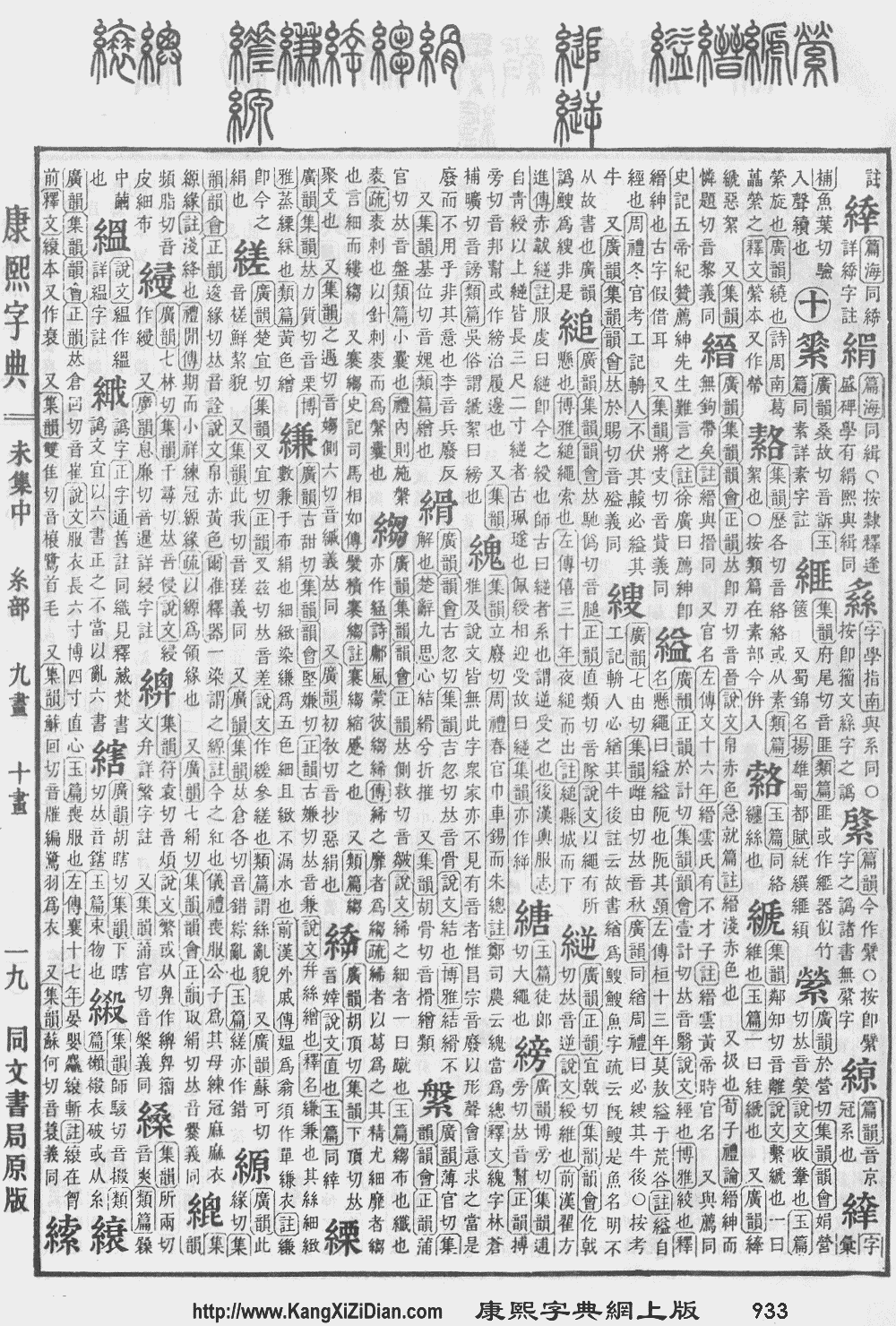
Chinese
| trad. | 縋 | |
|---|---|---|
| simp. | 缒 | |
Glyph origin
| Characters in the same phonetic series (追) (Zhengzhang, 2003) | |
|---|---|
| Old Chinese | |
| 蘬 | *kʰlul, *kʰrul, *kʰrulʔ |
| 磓 | *tuːl |
| 塠 | *tuːl |
| 頧 | *tuːl, *tuːlʔ |
| 鴭 | *tuːl |
| 鎚 | *tuːl, *dul, *duls |
| 搥 | *tuːl |
| 縋 | *dols |
| 膇 | *dols |
| 槌 | *dols, *dul |
| 追 | *tul |
| 桘 | *dul |
| 巋 | *kʰrul, *kʰrulʔ |
| 歸 | *klul |
Pronunciation
Definitions
縋
- This term needs a translation to English. Please help out and add a translation, then remove the text
{{rfdef}}.
Japanese
Kanji
縋
- This term needs a translation to English. Please help out and add a translation, then remove the text
{{rfdef}}.
Korean
Hanja
縋 • (chu) (hangeul 추, revised chu, McCune–Reischauer ch'u, Yale chwu)
- This term needs a translation to English. Please help out and add a translation, then remove the text
{{rfdef}}.
This article is issued from Wiktionary. The text is licensed under Creative Commons - Attribution - Sharealike. Additional terms may apply for the media files.