硾
| ||||||||
Translingual
Han character
硾 (radical 112, 石+9, 14 strokes, cangjie input 一口竹十一 (MRHJM), four-corner 12614, composition ⿰石垂)
References
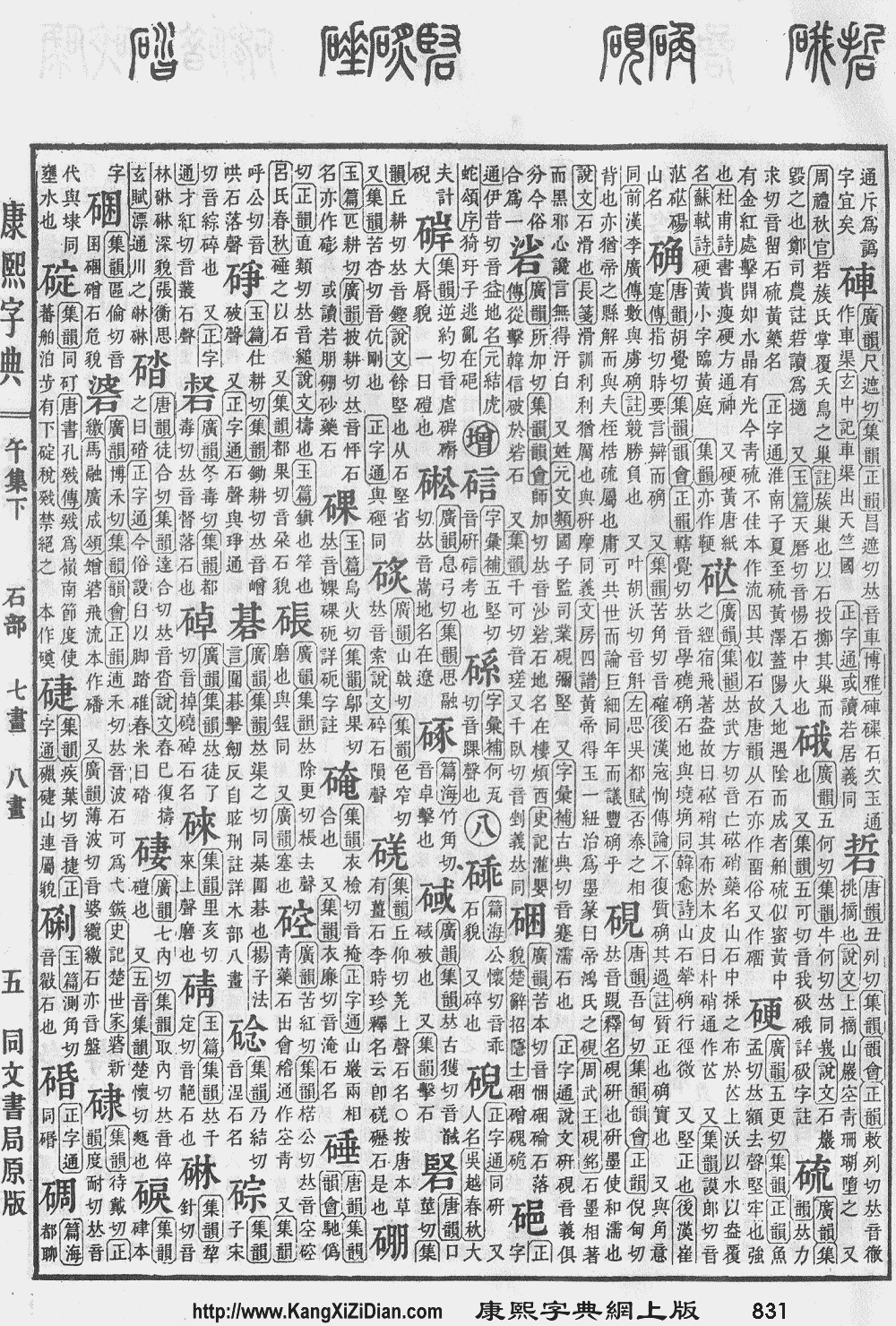
- KangXi: page 831, character 26
- Dai Kanwa Jiten: character 24257
- Dae Jaweon: page 1248, character 1
- Hanyu Da Zidian: volume 4, page 2437, character 16
- Unihan data for U+787E
Chinese
| simp. and trad. |
硾 | |
|---|---|---|
Glyph origin
| Historical forms of the character 硾 |
|---|
| Liushutong (compiled in Ming) |
| Transcribed ancient scripts |
 |
| Characters in the same phonetic series (垂) (Zhengzhang, 2003) | |
|---|---|
| Old Chinese | |
| 埵 | *toːlʔ |
| 綞 | *toːlʔ |
| 涶 | *tʰoːl, *tʰoːls |
| 唾 | *tʰoːls |
| 厜 | *stol |
| 腄 | *tol, *dols, *ɢʷɯ |
| 箠 | *tol, *tjolʔ |
| 娷 | *tols |
| 諈 | *tols |
| 錘 | *dol, *dols, *du |
| 甀 | *dol, *dols |
| 硾 | *dols |
| 捶 | *tjolʔ |
| 垂 | *djol |
| 陲 | *djol |
| 倕 | *djol |
| 菙 | *djolʔ |
| 睡 | *djols |
Pronunciation
Definitions
硾
- This term needs a translation to English. Please help out and add a translation, then remove the text
{{rfdef}}.
Japanese
Readings
- Go-on: ずい (zui)←づい (dui, historical)←づゐ (duwi, ancient)
- Kan-on: つい (tsui)←つい (tui, historical)←つゐ (tuwi, ancient)
- Kun: つく (tsuku, 硾く)
This article is issued from Wiktionary. The text is licensed under Creative Commons - Attribution - Sharealike. Additional terms may apply for the media files.