歪
| ||||||||
Translingual
Han character
歪 (Kangxi radical 77, 止+5, 9 strokes, cangjie input 一火一卜一 (MFMYM), four-corner 10101, composition ⿱不正)
Derived characters
References
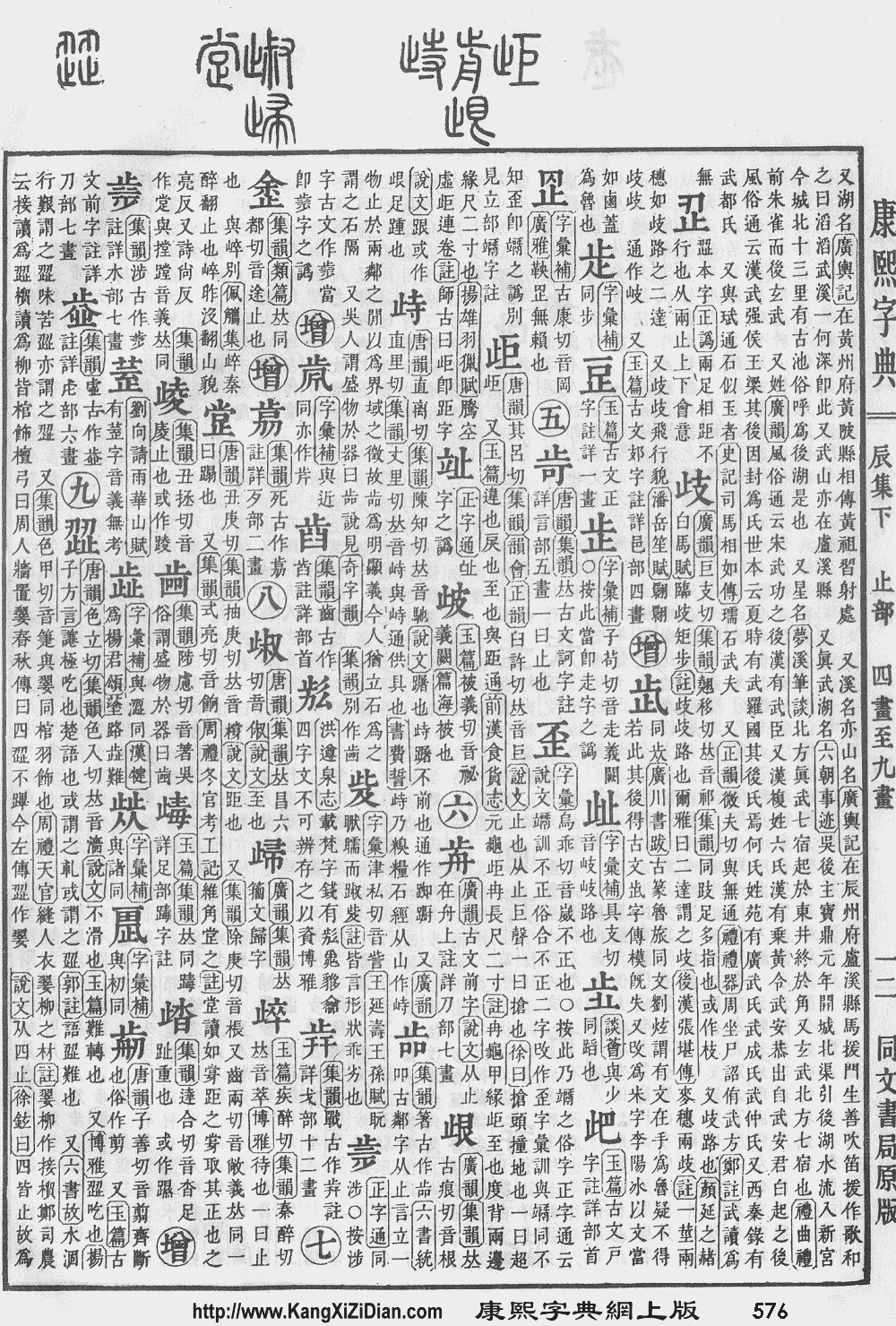
- KangXi: page 576, character 12
- Dai Kanwa Jiten: character 16286
- Dae Jaweon: page 966, character 15
- Hanyu Da Zidian (first edition): volume 2, page 1441, character 13
- Unihan data for U+6B6A
Chinese
Etymology 1
| simp. and trad. |
歪 | |
|---|---|---|
| alternative forms | 竵 | |
(This etymology is missing or incomplete. Please add to it, or discuss it at the Etymology scriptorium.)
Pronunciation
Definitions
歪
Synonyms
- (stingy):
Dialectal synonyms of 吝嗇 (“stingy; miserly”) [map]
Compounds
Etymology 2
| simp. and trad. |
歪 | |
|---|---|---|
(This etymology is missing or incomplete. Please add to it, or discuss it at the Etymology scriptorium.)
Pronunciation
Definitions
歪
- (Shanxi, Sichuanese, dialectal Hakka) inferior; bad; fake
- (Sichuanese) unreliable; deceiving
Compounds
|
|
|
Etymology 3
| simp. and trad. |
歪 | |
|---|---|---|
| alternative forms | 乜 | |
Mai (2017) considers 佊 (MC pˠiᴇX) to be a possible etymon, noting other (rare) instances in Cantonese where /m/ is a reflex of the historical 幫 (MC pɑŋ) initial, and where /ɛ/ is a reflex of the 支 (MC t͡ɕiᴇ) final.
Pronunciation
Etymology 4
| simp. and trad. |
歪 | |
|---|---|---|
(This etymology is missing or incomplete. Please add to it, or discuss it at the Etymology scriptorium.)
Pronunciation
Japanese
Readings
Etymology
| Kanji in this term |
|---|
| 歪 |
| いびつ Hyōgaiji |
| kun’yomi |
| For pronunciation and definitions of 歪 – see the following entry. | ||
| ||
| (This term, 歪, is an alternative spelling of the above term.) |
Korean
Vietnamese
This article is issued from Wiktionary. The text is licensed under Creative Commons - Attribution - Sharealike. Additional terms may apply for the media files.