擔
See also: 担
| ||||||||
Translingual
| Japanese | 担 |
|---|---|
| Simplified | 担 |
| Traditional | 擔 |
Han character
擔 (Kangxi radical 64, 手+13, 16 strokes, cangjie input 手弓金口 (QNCR), four-corner 57061, composition ⿰扌詹)
Descendants
References
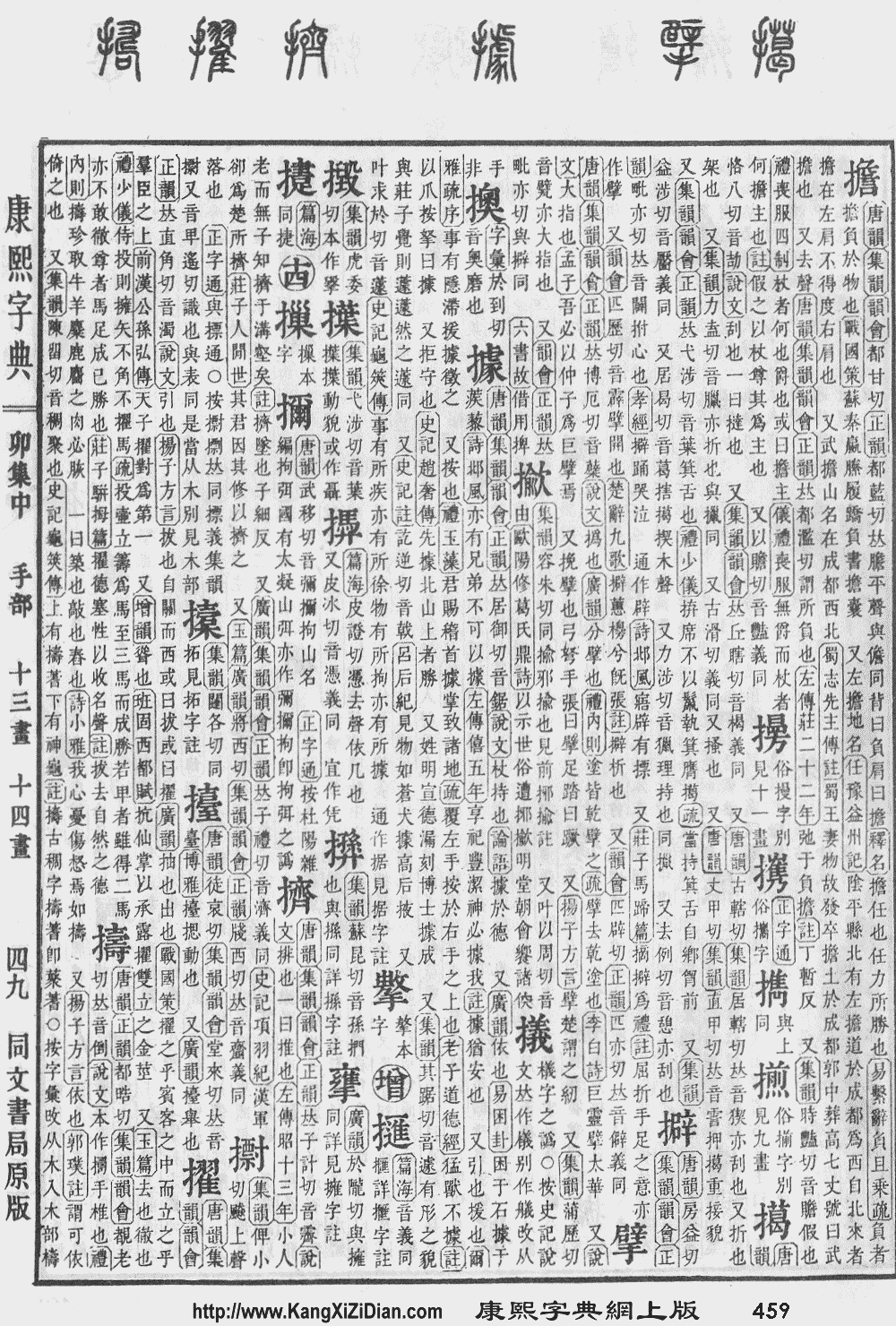
- KangXi: page 459, character 1
- Dai Kanwa Jiten: character 12828
- Dae Jaweon: page 807, character 23
- Hanyu Da Zidian (first edition): volume 3, page 1971, character 3
- Unihan data for U+64D4
Chinese
| trad. | 擔 | |
|---|---|---|
| simp. | 担* | |
| alternative forms | 儋 担 𧭃 𥣲 | |
Glyph origin
Characters in the same phonetic series (詹) (Zhengzhang, 2003)
Phono-semantic compound (形聲, OC *taːm, *taːms) : semantic 扌 (“hand”) + phonetic 詹 (OC *tjam) – to carry by hand.
Pronunciation 1
Definitions
擔
Compounds
Derived terms from 擔
Pronunciation 2
Definitions
擔
- carrying pole with loads on both ends
- burden; load; responsibilities
- picul, a traditional Chinese unit of weight previously around 60 kg and now standardized to 50 kg
- Classifier for things carried on a shoulder pole: load
Compounds
Derived terms from 擔
Japanese
| 担 | |
| 擔 |
Kanji
擔
(uncommon “Hyōgai” kanji, kyūjitai kanji, shinjitai form 担)
- A traditional unit of measurement equivalent to 60kg or approximately 132.3lb
- shouldering
- carry
- raise
- bear
Korean
Hanja
Vietnamese
This article is issued from Wiktionary. The text is licensed under Creative Commons - Attribution - Sharealike. Additional terms may apply for the media files.