奠
| ||||||||
Translingual
Han character
奠 (Kangxi radical 37, 大+9, 12 strokes, cangjie input 廿田大 (TWK), four-corner 80430, composition ⿱酋大)
References
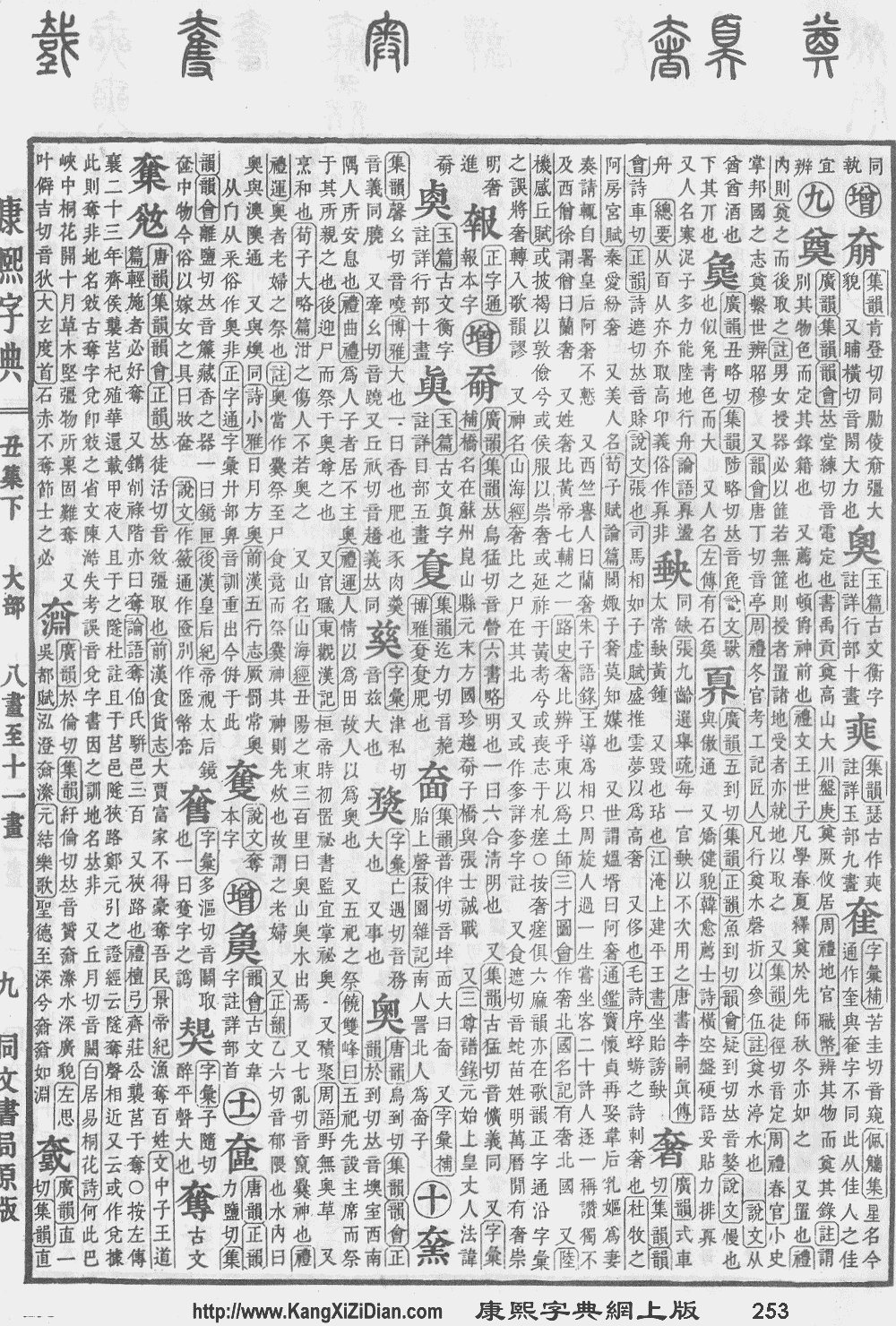
- KangXi: page 253, character 5
- Dai Kanwa Jiten: character 5960
- Dae Jaweon: page 514, character 30
- Hanyu Da Zidian (first edition): volume 1, page 546, character 6
- Unihan data for U+5960
Chinese
| trad. | 奠 | |
|---|---|---|
| simp. # | 奠 | |
| alternative forms | ⿱酉丌 𠪝 | |
Glyph origin
| Historical forms of the character 奠 | |||
|---|---|---|---|
| Shang | Western Zhou | Shuowen Jiezi (compiled in Han) | Liushutong (compiled in Ming) |
| Oracle bone script | Bronze inscriptions | Small seal script | Transcribed ancient scripts |
 |
 |
 |
 |
Oracle bone script: Pictogram (象形) – an alcohol vessel (酉) placed on a mat (一).
In the bronze inscriptions, two strokes (八) were sometimes added above the alcohol vessel, representing overflowing alcohol; this is inherited in the small seal script as 酋. In some bronze inscriptions, two horizontal strokes were sometimes also added below the line representing a mat; the strokes sometimes were changed to something like 八. These two strokes then fused with the mat to give 丌 (a table with two legs) in the small seal script. 丌 later evolved into 大 by process of libian (隸變).
Pronunciation 1
Definitions
奠
Compounds
Pronunciation 2
Pronunciation 3
| For pronunciation and definitions of 奠 – see 鄭 (“proper noun sense”). (This character, 奠, is an ancient form of 鄭.) |
Usage notes
Usage seen in oracle bone and bronze inscriptions.
Japanese
Kanji
- This term needs a translation to English. Please help out and add a translation, then remove the text
{{rfdef}}.
Korean
Hanja
奠 • (jeon) (hangeul 전, revised jeon, McCune–Reischauer chŏn)
- This term needs a translation to English. Please help out and add a translation, then remove the text
{{rfdef}}.