髮
| ||||||||
Translingual
| Traditional | 髮 |
|---|---|
| Shinjitai | 髪 |
| Simplified | 发 |
Han character
髮 (Kangxi radical 190, 髟+5, 15 strokes, cangjie input 尸竹戈大水 (SHIKE) or 尸竹戈大大 (SHIKK), four-corner 72447, composition ⿱髟犮)
Derived characters
- 𧸻
References
- KangXi: page 1453, character 21
- Dai Kanwa Jiten: character 45400
- Dae Jaweon: page 1984, character 4
- Hanyu Da Zidian (first edition): volume 7, page 4521, character 12
- Unihan data for U+9AEE
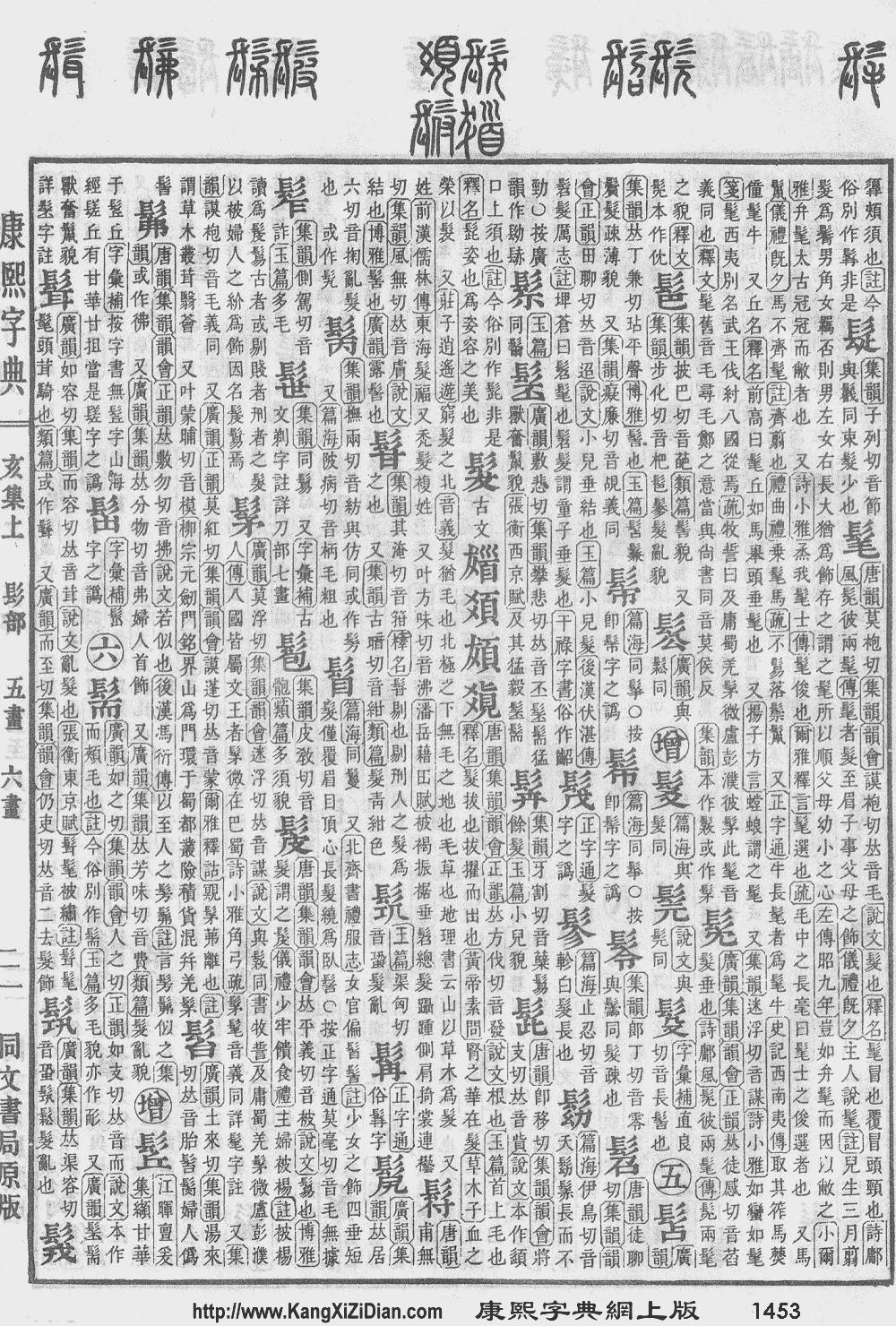
Chinese
| trad. | 髮 | |
|---|---|---|
| simp. | 发* | |
| alternative forms | 髪/发 𩠖 ancient 𩑛 ancient 𩑱 ancient 𤕥 ancient | |
Glyph origin
Characters in the same phonetic series (犮) (Zhengzhang, 2003)
Phono-semantic compound (形聲, OC *pod) : semantic 髟 (“long hair”) + phonetic 犮 (OC *boːd).
Etymology
From Proto-Sino-Tibetan *s-pu. Alternatively, it may be derived from 發 (OC *pad, “to sprout”) (Schuessler, 2007).
Pronunciation
Definitions
髮
Synonyms
Dialectal synonyms of 頭髮 (“hair (on the head)”) [map]
Compounds
Derived terms from 髮
|
|
|
References
- “髮”, in 漢語多功能字庫 (Multi-function Chinese Character Database), 香港中文大學 (the Chinese University of Hong Kong), 2014–
Japanese
| 髪 | |
| 髮 |
Kanji
髮
(“Jinmeiyō” kanji used for names, kyūjitai kanji, shinjitai form 髪)
- hair (specifically on one's head; does not indicate body hair)
Korean
Etymology
From Middle Chinese 髮 (MC pʉɐt̚).
Recorded as Middle Korean 버ᇙ〮 (Yale: pelq) in Dongguk Jeongun (東國正韻 / 동국정운), 1448.
Recorded as Middle Korean 발〮 (pál) (Yale: pal) in Hunmong Jahoe (訓蒙字會 / 훈몽자회), 1527.
Compounds
Vietnamese
This article is issued from Wiktionary. The text is licensed under Creative Commons - Attribution - Sharealike. Additional terms may apply for the media files.