雷
| ||||||||
| ||||||||
Translingual
Han character
雷 (Kangxi radical 173, 雨+5, 13 strokes, cangjie input 一月田 (MBW), four-corner 10603, composition ⿱⻗田)
References
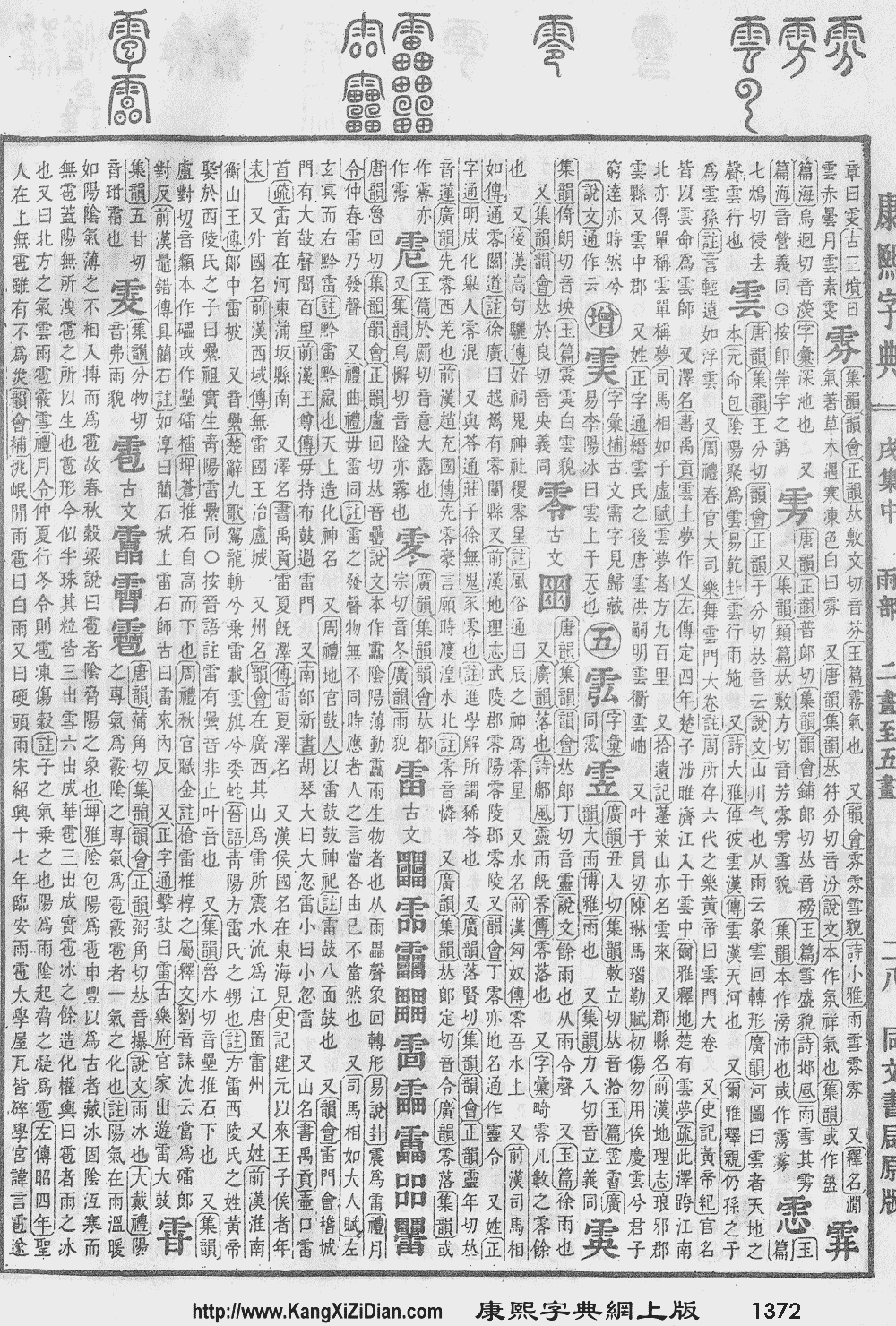
- KangXi: page 1372, character 14
- Dai Kanwa Jiten: character 42245
- Dae Jaweon: page 1881, character 3
- Hanyu Da Zidian (first edition): volume 6, page 4060, character 2
- Unihan data for U+96F7
- Unihan data for U+F949
Chinese
| trad. | 雷 | |
|---|---|---|
| simp. # | 雷 | |
| alternative forms | ||
Glyph origin
| Old Chinese | |
|---|---|
| 摞 | *roːl, *roːls |
| 騾 | *roːl |
| 螺 | *roːl |
| 蔂 | *roːl, *rul |
| 虆 | *roːl, *rul |
| 瘰 | *roːlʔ |
| 礌 | *ruːl, *ruːls |
| 雷 | *ruːl |
| 擂 | *ruːl, *ruːls |
| 攂 | *ruːl, *ruːls |
| 礧 | *ruːll, *ruːlʔ, *ruːls |
| 儡 | *ruːl, *ruːlʔ, *ruːls |
| 瓃 | *ruːl, *rul, *ruls |
| 櫑 | *ruːl, *ruːlʔ |
| 鑘 | *ruːl, *ruːlʔ |
| 鐳 | *ruːl |
| 畾 | *ruːl |
| 轠 | *ruːl, *rulʔ |
| 罍 | *ruːl |
| 蕾 | *ruːlʔ |
| 癗 | *ruːlʔ |
| 磥 | *ruːlʔ |
| 累 | *ruːls, *rolʔ, *rols |
| 儽 | *ruːls, *rul |
| 樏 | *rolʔ, *rul |
| 鸓 | *rul, *rulʔ |
| 嫘 | *rul |
| 纍 | *rul, *ruls |
| 欙 | *rul |
| 纝 | *rul |
| 壘 | *rulʔ |
| 櫐 | *rulʔ |
| 蘽 | *rulʔ |
| 藟 | *rulʔ |
| 讄 | *rulʔ |
Ancient simplification of 靁, which was a phono-semantic compound (形聲, OC *ruːl) : semantic 雨 (“rain”) + phonetic 畾 (OC *ruːl).
Etymology
The Min Bei initial s- may be due to the loss of a pre-initial which might have been a velar considering dialect forms in Henan, Hebei and Shanxi, e.g. Taiyuan Jin 忽雷 (hueh4 lui1) (Schuessler, 2007).
Perhaps from Sino-Tibetan. Compare Mizo râwl (“voice; cry (of an animal); sound”), Tibetan ཁྲོལ (khrol).
Pronunciation
Definitions
雷
Synonyms
Usage notes
Compounds
|
|
|
References
- “雷”, in 漢語多功能字庫 (Multi-function Chinese Character Database), 香港中文大學 (the Chinese University of Hong Kong), 2014–
- “Entry #10313”, in 臺灣閩南語常用詞辭典 [Dictionary of Frequently-Used Taiwan Minnan] (in Chinese and Min Nan), Ministry of Education, R.O.C., 2011.
Japanese
Readings
Compounds
- 雷雨 (raiu)
- 雷雲 (raiun)
- 雷管 (raikan)
- 雷撃 (raigeki)
- 雷公 (raikō)
- 雷光 (raikō)
- 雷獣 (raijū, “thunder beast”)
- 雷神 (raijin)
- 雷声 (raisei)
- 雷鳥 (raichō, “rock ptarmigan, snow grouse”)
- 雷電 (raiden)
- 雷同 (raidō)
- 雷名 (raimei)
- 雷鳴 (raimei)
- 遠雷 (enrai)
- 魚雷 (gyorai)
- 地雷 (jirai)
- 春雷 (shunrai)
- 迅雷 (jinrai)
- 地雷 (chirai)
- 爆雷 (bakurai)
- 避雷 (hirai)
- 避雷針 (hiraishin)
- 蚊雷 (bunrai)
- 落雷 (rakurai)
Etymology 1

| Kanji in this term |
|---|
| 雷 |
| かみなり Grade: S |
| kun’yomi |
Originally a compound of 神 (kami, “god, spirit”) + 鳴り (nari, “the 連用形 (ren'yōkei, “continuative or stem form”) of verb 鳴る (naru), “to cry out, to call””).[1][2][3]
Pronunciation
Noun
雷 • (kaminari)
- thunder (loud sound caused by expansion of rapidly heated air)
- Synonym: 雷鳴 (raimei)
- lightning, thunderbolt
- 1999 February 4, “サンダー・キッズ [Thunder Kid]”, in Vol.1, Konami:
- 雷をからだの中に蓄電させている。泣かせたときは危険。
- Kaminari o karada no naka ni chikuden saseteiru. Nakaseta toki wa kiken.
- He stores lightning inside his body. He’s very dangerous when he cries.
- 雷をからだの中に蓄電させている。泣かせたときは危険。
- 1999 March 1, “エレキッズ [Elekid]”, in BOOSTER 1, Konami:
- 雷攻撃は意外と強い。甘く見ると感電するぞ。
- Kaminarikōgeki wa igai to tsuyoi. Amaku miru to kanden suru zo.
- It has a surprisingly powerful lightning attack. However, its electrocution tends to be underestimated.
- 雷攻撃は意外と強い。甘く見ると感電するぞ。
-
- thunder god
Usage notes
This kaminari reading is the most common reading when used as a standalone noun.
Derived terms
- 神鳴 (Kaminari)
- 雷烏賊 (kaminari ika)
- 雷親父 (kaminari oyaji)
- 雷雲 (kaminarigumo)
- 雷声 (kaminarigoe)
- 雷豆腐 (kaminaridōfu)
- 雷の陣 (kaminari no jin)
- 雷鳴の壺 (Kaminari no Tsubo)
- 雷の間 (kaminari no ma)
- 雷林 (Kaminaribayashi)
- 雷干し, 雷乾し (kaminariboshi)
- 雷門 (Kaminarimon)
- 雷除け (kaminariyoke)
- 地雷 (jigaminari)
- 虫出し雷 (mushidashi kaminari)
Idioms
Alternative forms
- 雷鳴り, 雷鳴
Pronunciation
- (Irregular reading)
- IPA(key): [kã̠nːa̠ɾʲi]
Noun
雷 • (kannari)
- (rare, archaic) Same as かみなり (kaminari) above
Derived terms
- 雷の陣 (kannari no jin)
Proper noun
雷 • (Kannari)
Etymology 3
| Kanji in this term |
|---|
| 雷 |
| いかずち Grade: S |
| kun’yomi |
⟨ika tu ti⟩ → ⟨ikaduti⟩ → /ikad͡ʑut͡ɕi/ → /ikaʑut͡ɕi/
From Old Japanese.
Originally a compound of 厳 (ika, “sternness, terribleness, imposingness”) + つ (tsu, Old Japanese possessive particle) + 霊 (chi, “spirit, force, essence”).[1][2][3]
Noun
Etymology 4
| Kanji in this term |
|---|
| 雷 |
| なるかみ Grade: S |
| irregular |
Compound of 鳴る (naru, “to cry out, to call”) + 神 (kami, “god, spirit”).[1][3]
Alternative forms
- 鳴る神, 鳴神
Proper noun
雷 • (Narukami)
- one of the eighteen styles of kabuki
- This sense is more commonly spelled as 鳴神.
Usage notes
Used more in compounds than on its own. As a standalone noun, the kaminari reading is the most common.
Derived terms
- 雷の間 (rai no ma)
- 雷斧 (raifu)
- 機雷 (kirai)
References
- 1988, 国語大辞典(新装版) (Kokugo Dai Jiten, Revised Edition) (in Japanese), Tōkyō: Shogakukan
- 1995, 大辞泉 (Daijisen) (in Japanese), Tōkyō: Shogakukan, →ISBN
- 2006, 大辞林 (Daijirin), Third Edition (in Japanese), Tōkyō: Sanseidō, →ISBN
- 1998, NHK日本語発音アクセント辞典 (NHK Japanese Pronunciation Accent Dictionary) (in Japanese), Tōkyō: NHK, →ISBN
Korean
Etymology
From Middle Chinese 雷 (MC luʌi). Recorded as Middle Korean 뢰 (lwoy) (Yale: lwoy) in Hunmong Jahoe (訓蒙字會 / 훈몽자회), 1527.
Compounds
- 뇌성 (雷聲, noeseong)
- 뇌관 (雷管, noegwan, “detonator”)
- 지뢰 (地雷, jiroe, “land mine”)
- 어뢰 (魚雷, eoroe, “torpedo”)
- 낙뢰 (落雷, nangnoe, “thunderbolt”)
- 뇌우 (雷雨, noe'u, “thunderstorm”)
- 폭뢰 (爆雷, pongnoe, “depth charge”)
- 피뢰침 (避雷針, piroechim, “lightning rod”)
Okinawan
Old Japanese
Etymology
Originally a compound of 嚴 (ika, “sternness, terribleness, imposingness”) + つ (tu, possessive particle) + 靈 (ti, “spirit, force, essence”).[1][2][3]
Noun
雷 (ikaduti) (kana いかづち)
Descendants
- Japanese: 雷 (ikazuchi)
See also
- 鳴神 (narukami2)
References
- 1988, 国語大辞典(新装版) (Kokugo Dai Jiten, Revised Edition) (in Japanese), Tōkyō: Shogakukan
- 1995, 大辞泉 (Daijisen) (in Japanese), Tōkyō: Shogakukan, →ISBN
- 2006, 大辞林 (Daijirin), Third Edition (in Japanese), Tōkyō: Sanseidō, →ISBN
- Motoori Norinaga (2007), Michael F. Marra, editor, The Poetics of Motoori Norinaga: A Hermeneutical Journey, University of Hawaii Press, →ISBN, page 230