辻
| ||||||||
Translingual
| Stroke order | |||
5-stroke version | |||
Han character
辻 (Kangxi radical 162, 辵+2, 6 strokes, cangjie input X卜十 (XYJ) or 卜十 (YJ), composition ⿺辶十)
References
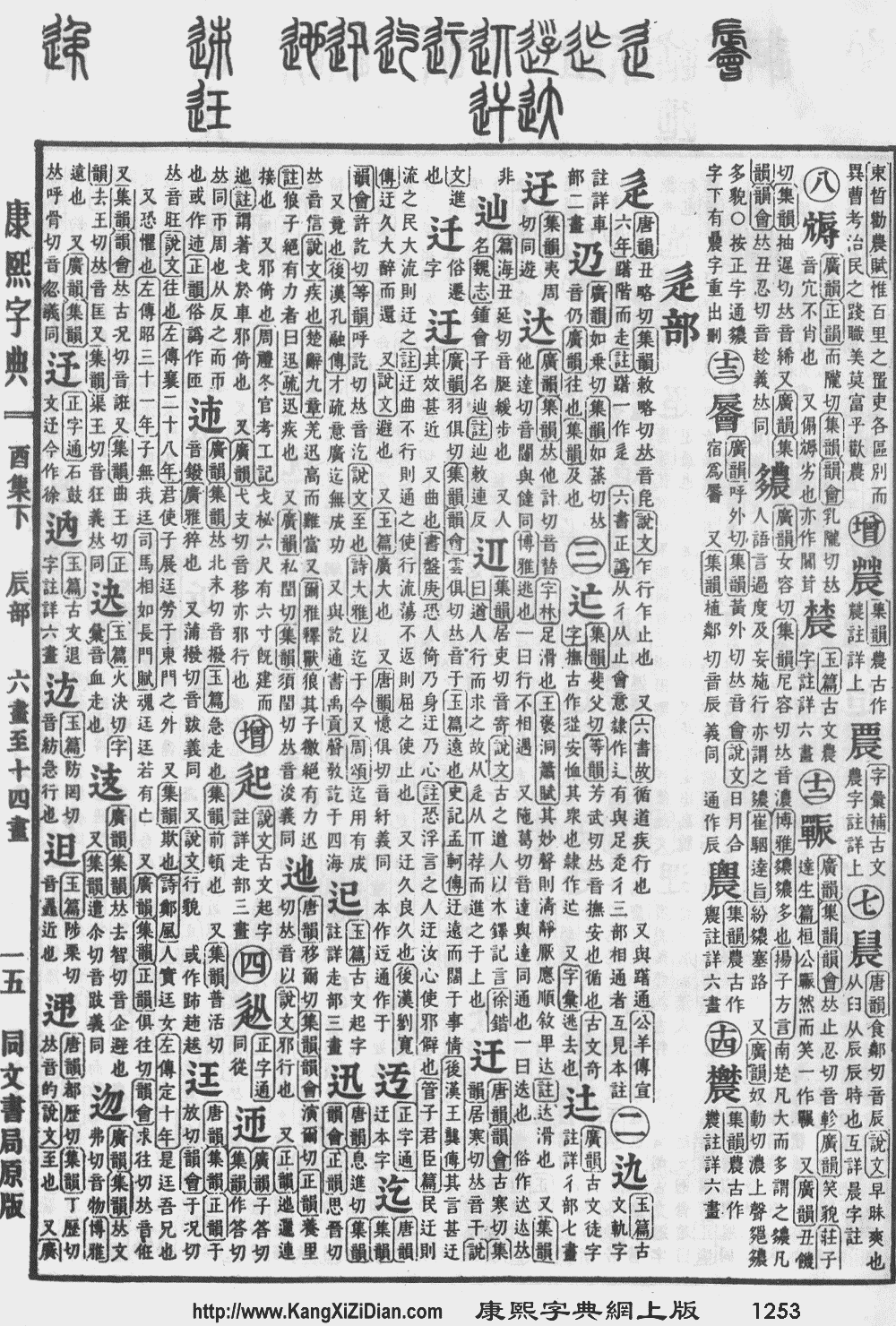
- KangXi: not present, would follow page 1253, character 13
- Dai Kanwa Jiten: character 38711
- Dae Jaweon: page 1735, character 11
- Hanyu Da Zidian (first edition): not present, would follow volume 6, page 3815, character 1
- Unihan data for U+8FBB
Chinese
| trad. | 辻 | |
|---|---|---|
| simp. # | 辻 | |
Etymology
Spelling pronunciation, as 十 (shí).
Pronunciation
Definitions
辻
- A Japanese kanji meaning “crossroads”. Usually used in Japanese names.
- 綾辻行人/绫辻行人 ― Língshí Xíngrén ― Yukito Ayatsuji (Japanese writer)
Japanese
Glyph origin
A 国字 (kokuji, “Japanese-coined character”). Ideogrammic compound (會意/会意) : 辶 (“road, way”) + 十 (“shape of a cross”). The original pictogram for a crossroad or a intersection in Chinese characters is 行.
Usage notes
- This kanji is said to be used by crypto-Christians in the Meiji period.
Noun
辻 • (tsuji)
- a crossroad, intersection
- Synonyms: 十字路 (jūjiro), 四辻 (yotsuji, yotsutsuji)
- (by extension) a road, street, way
- Short for 辻番 (tsujiban): a type of town-watching guard most commonly found in the Edo period
- Short for 辻総 (tsujibusa): (dated, equestrianism) a decoration attached to the martingale
- Alternative spelling of 旋毛 (tsuji): a hair whorl
Derived terms
Derived terms
- 辻辻, 辻々 (tsujitsuji, “every streetcorner, every crossing”)
- 辻商い (tsujiakinai)
- 辻行灯 (tsuji andon)
- 辻井 (Tsujii)
- 辻謡 (tsujiutai), 辻諷 (tsujiutai)
- 辻占 (tsujiura)
- 辻売り (tsujiuri)
- 辻踊 (tsujiodori), 辻踊り (tsujiodori)
- 辻駕籠 (tsuji kago)
- 辻風 (tsujikaze)
- 辻固め (tsujigatame)
- 辻が花 (tsuji ga hana)
- 辻髪 (tsujikami)
- 辻冠者 (tsuji kanja)
- 辻勧進 (tsuji kanjin)
- 辻君 (tsujigimi)
- 辻斬り (tsuji-giri)
- 辻車 (tsujiguruma)
- 辻芸 (tsujigei)
- 辻芸人 (tsuji geinin)
- 辻講釈 (tsuji gōshaku)
- 辻強盗 (tsuji gōtō)
- 辻酒宴 (tsuji sakamori)
- 辻山道 (tsujisandō)
- 辻地蔵 (tsuji jizō)
- 辻自動車 (tsuji-jidōsha)
- 辻芝居 (tsuji shibai)
- 辻相撲 (tsuji-zumō)
- 辻説法 (tsuji seppō)
- 辻立ち (tsujidachi)
- 辻談義 (tsuji dangi)
- 辻褄 (tsujitsuma)
- 辻堂 (tsujidō)
- 辻捕り, 辻取り (tsujitori)
- 辻能 (tsujinō)
- 辻馬車 (tsuji basha)
- 辻噺 (tsujibanashi)
- 辻原 (Tsujihara)
- 辻番 (tsujiban), 辻番所 (tsuji bansho)
- 辻番付 (tsujibanzuke)
- 辻総 (tsujibusa)
- 辻札 (tsujifuda)
- 辻風呂 (tsuji furo)
- 辻便所 (tsuji benjo)
- 辻法印 (tsuji hōin)
- 辻放下 (tsuji hōka), 辻放下 (tsuji hōge)
- 辻宝引き (tsuji hōbiki)
- 辻仏 (tsujibotoke)
- 辻待, 辻待ち (tsujimachi)
- 辻祭, 辻祭り (tsujimatsuri)
- 辻店 (tsujimise)
- 辻村 (Tsujimura)
- 辻本 (Tsujimoto)
- 辻飯 (tsujimeshi)
- 辻社 (tsuji yashiro)
- 梅辻 (Umetsuji)
- 大辻 (Ōtsuji)
- 高辻 (takatsuji)
- 茶屋辻 (chayatsuji)
- 札の辻 (fuda no tsuji)
- 道辻 (michitsuji)
- 四辻, 四つ辻 (yotsutsuji), 四辻 (yotsuji)
- 六道の辻 (rokudō no tsuji)
- 和辻 (Watsuji)
Etymology 2
| Kanji in this term |
|---|
| 辻 |
| つむじ Jinmeiyō |
| kun’yomi |
/tumuzi/ → /t͡sumuʑi/
Likely from Old Japanese, attested in the Wamyō Ruijushō (938 CE) and the Ruiju Myōgishō (c. 11th century).
Possibly cognate with 旋毛 (tsumuji, “hair whorl”). (Can this(+) etymology be sourced?)
Noun
辻 • (tsumuji)
- Same as つじ (tsuji) above
This article is issued from Wiktionary. The text is licensed under Creative Commons - Attribution - Sharealike. Additional terms may apply for the media files.