萎
See also: 荽
| ||||||||
Translingual
Han character
萎 (Kangxi radical 140, 艸+8, 12 strokes in traditional Chinese and Korean, 11 strokes in mainland China and Japanese, cangjie input 廿竹木女 (THDV), four-corner 44404, composition ⿱艹委)
Derived characters
- 𠾭, 𮟋
References
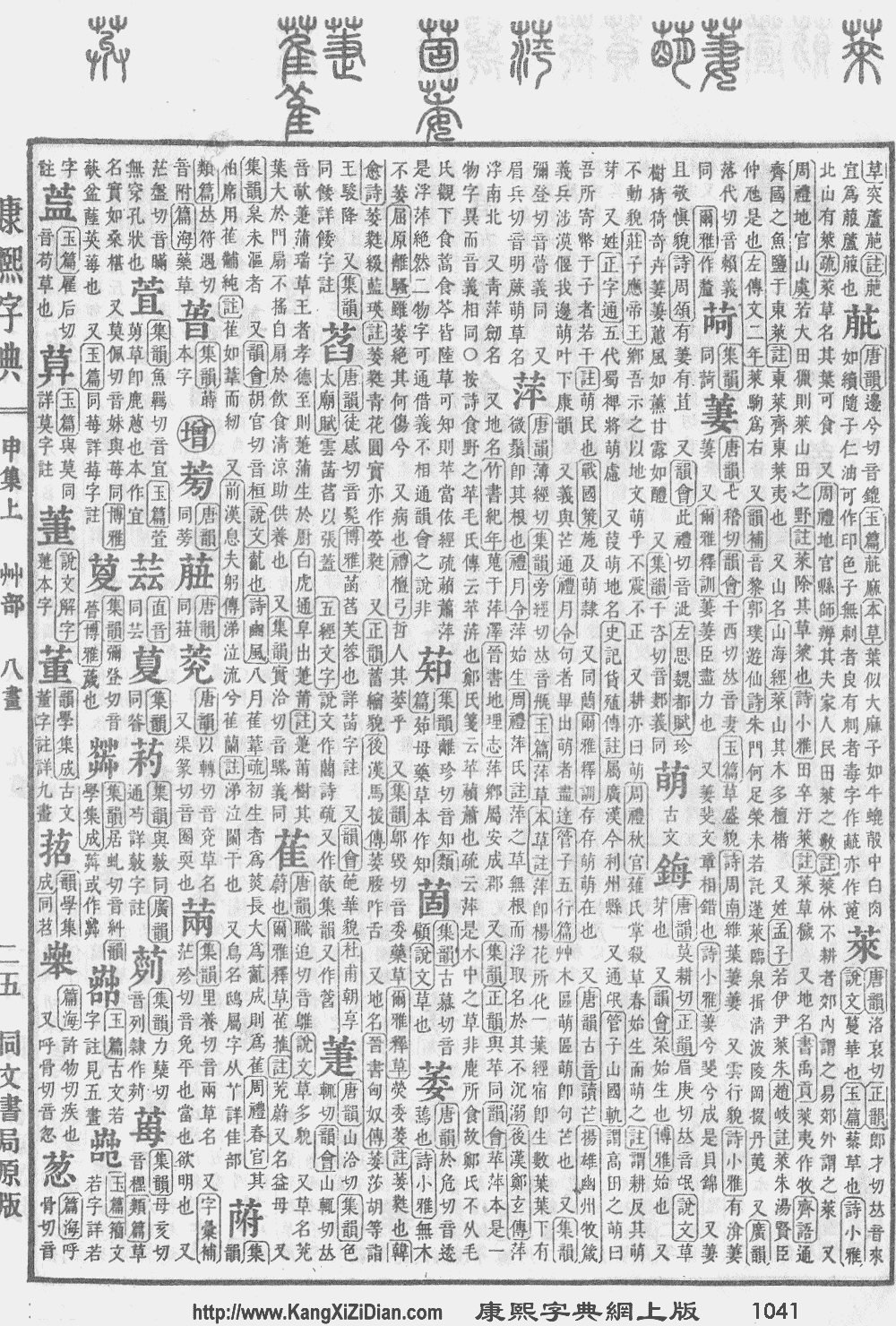
- KangXi: page 1041, character 10
- Dai Kanwa Jiten: character 31269
- Dae Jaweon: page 1500, character 4
- Hanyu Da Zidian (first edition): volume 5, page 3235, character 5
- Unihan data for U+840E
Japanese
Readings
- Go-on: い (i, Jōyō)←ゐ (wi, historical)
- Kan-on: い (i, Jōyō)←ゐ (wi, historical)
- Kun: なえる (naeru, 萎える, Jōyō)←なふ (nafu, historical); なえる (naeru, 萎える, Jōyō)←なゆ (nayu, historical); しぼむ (shibomu, 萎む); しおれる (shioreru, 萎れる)←しをる (siworu, historical)
Vietnamese
Han character
萎: Hán Nôm readings: nuy, ùy/uỳ
- This term needs a translation to English. Please help out and add a translation, then remove the text
{{rfdef}}.
References
This article is issued from Wiktionary. The text is licensed under Creative Commons - Attribution - Sharealike. Additional terms may apply for the media files.