离
See also: 離
| ||||||||
Translingual
| Stroke order | |||
|---|---|---|---|
 | |||
Han character
离 (radical 114, 禸+6, 11 strokes, cangjie input 卜山大月 (YUKB), four-corner 00227, composition ⿱㐫禸)
Derived characters
References
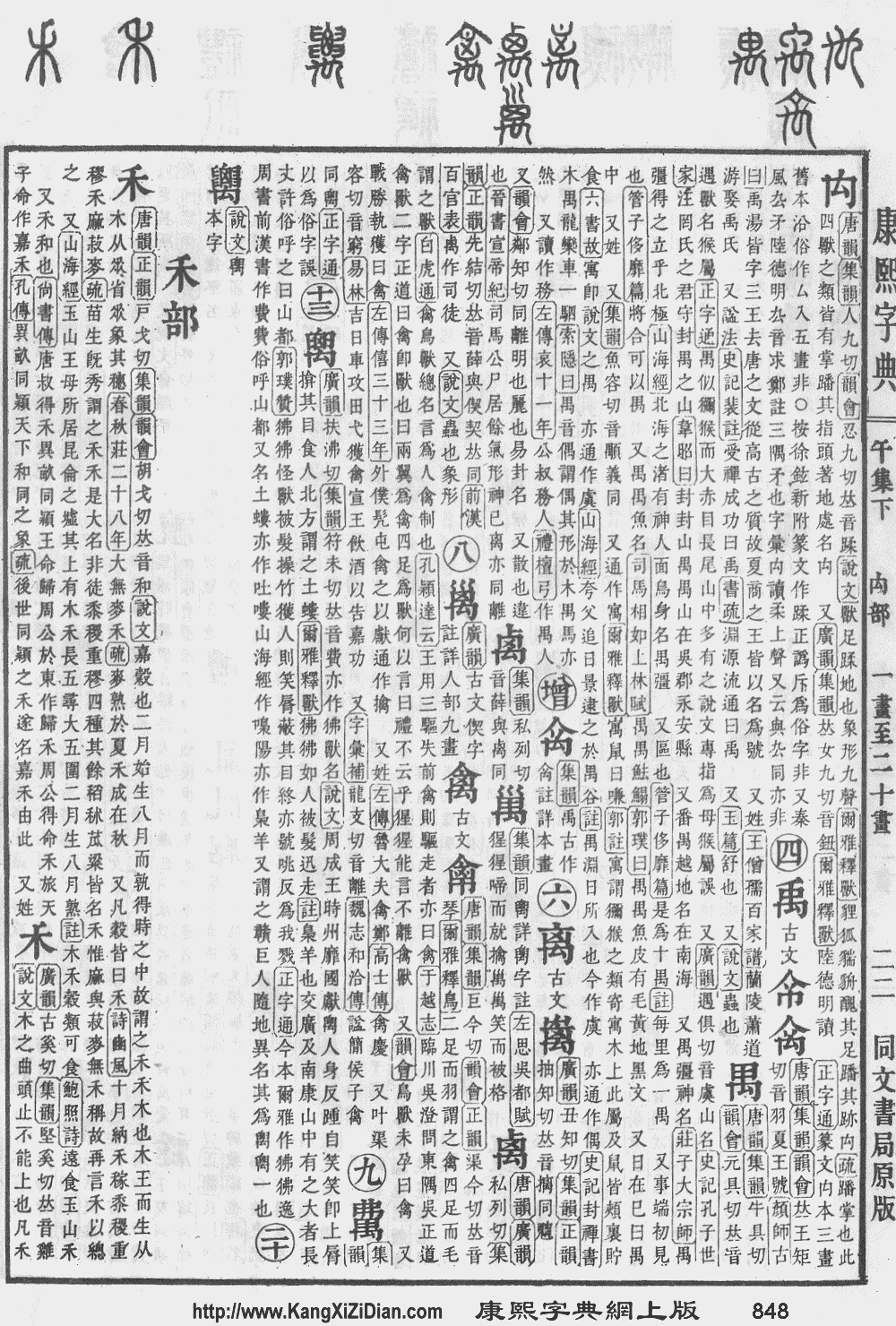
- KangXi: page 848, character 7
- Dai Kanwa Jiten: character 24888
- Dae Jaweon: page 1270, character 2
- Hanyu Da Zidian: volume 1, page 287, character 11
- Unihan data for U+79BB
Chinese
Glyph origin
| Historical forms of the character 离 | |
|---|---|
| Shuowen Jiezi (compiled in Han) | Liushutong (compiled in Ming) |
| Small seal script | Transcribed ancient scripts |
 |
 |
| Characters in the same phonetic series (离) (Zhengzhang, 2003) | |
|---|---|
| Old Chinese | |
| 謧 | *reːl, *rel |
| 璃 | *reːl, *rel |
| 離 | *reːls, *rel, *rels |
| 縭 | *rel |
| 离 | *rel, *r̥ʰel |
| 醨 | *rel |
| 樆 | *rel |
| 褵 | *rel |
| 漓 | *rel |
| 黐 | *rel, *r̥ʰel |
| 籬 | *rel |
| 灕 | *rel |
| 蘺 | *rel |
| 攡 | *rel |
| 魑 | *r̥ʰel |
| 螭 | *r̥ʰel |
| 摛 | *r̥ʰel |
Pictogram (象形) – an animal, with head at top and butt and tail (厶) at bottom; compare tail in 鬼.
Exists as traditional character, but also simplified from 離, in sense “depart”.
Etymology 1
| For pronunciation and definitions of 离 – see 離 (“to leave, to depart; to go away; etc.”). (This character, 离, is the simplified form of 離.) |
Notes:
|
Pronunciation
Pronunciation
Japanese
Korean
This article is issued from Wiktionary. The text is licensed under Creative Commons - Attribution - Sharealike. Additional terms may apply for the media files.