泥
| ||||||||
| ||||||||
Translingual
Han character
泥 (Kangxi radical 85, 水+5, 8 strokes, cangjie input 水尸心 (ESP), four-corner 37111, composition ⿰氵尼)
References
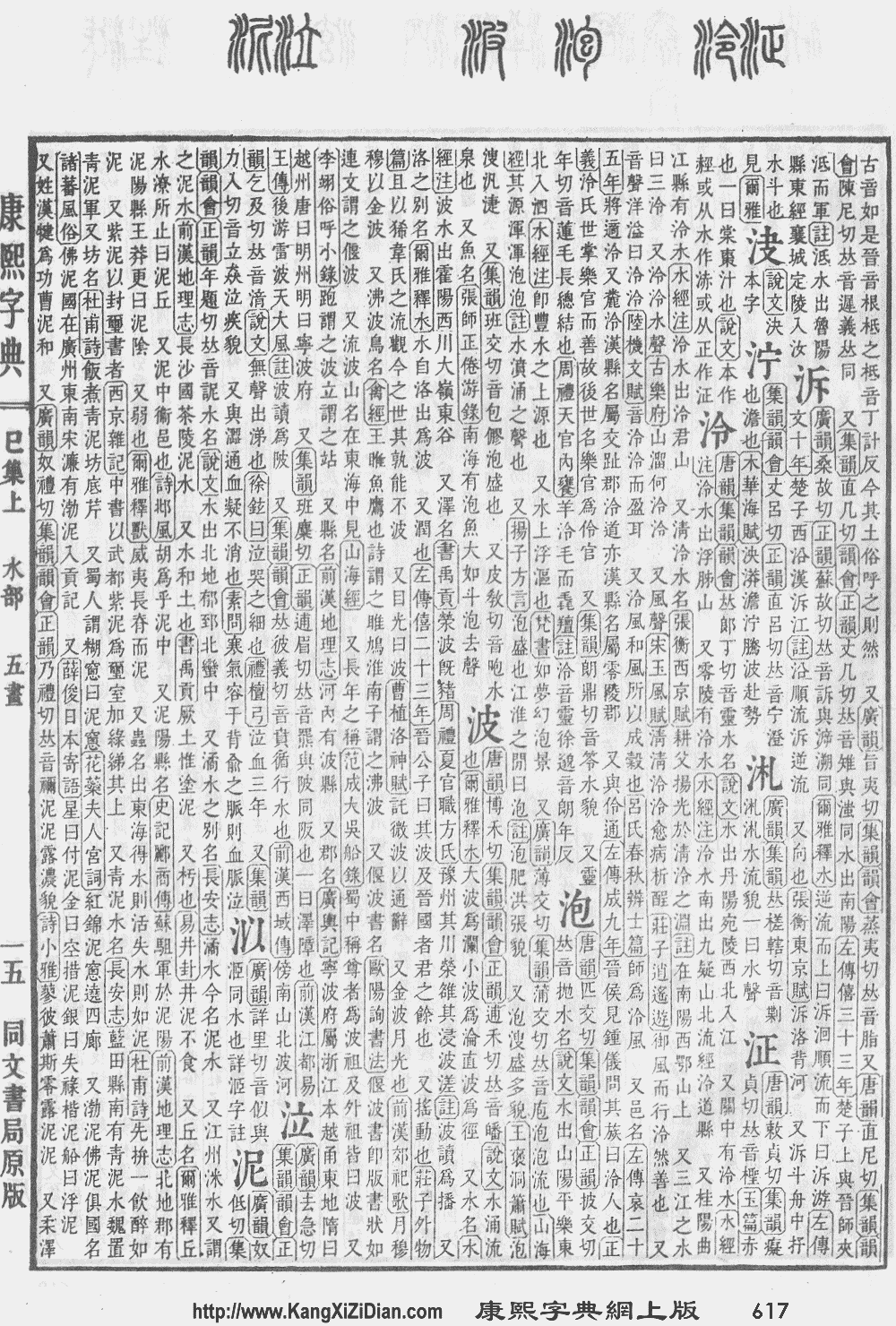
- KangXi: page 617, character 11
- Dai Kanwa Jiten: character 17311
- Dae Jaweon: page 1012, character 8
- Hanyu Da Zidian (first edition): volume 3, page 1595, character 8
- Unihan data for U+6CE5
- Unihan data for U+F9E3
Chinese
| trad. | 泥 | |
|---|---|---|
| simp. # | 泥 | |
| alternative forms | ||
Glyph origin
| Historical forms of the character 泥 |
|---|
| Shuowen Jiezi (compiled in Han) |
| Small seal script |
 |
Characters in the same phonetic series (尼) (Zhengzhang, 2003)
Phono-semantic compound (形聲/形声, OC *niːl, *niːls) : semantic 氵 (“water”) + phonetic 尼 (OC *nil).
Etymology
Pronunciation 1: In many dialects, the word means ‘earth’, e.g. K-Méixiàn nɐi¹¹ ‘soil, earth’, [E] ST: KN-Lai noj ‘muddy’ (of water); a ST medial rounded (semi-) vowel regularly disappears in CH after accute initials.
Pronunciation 2 is exopassive of niè 敜 (niep) or niè4 涅 (niet).
Pronunciation 1
Definitions
泥
- mud (Classifier: 嚿 c; 坺 c)
- (dialectal) soil; earth
- any mush-like substance
- (obsolete) paint (used on walls)
- An ancient river in modern Hunan
- An ancient river in modern Gansu
- (obsolete) weak
- (Chinese mythology) a kind of animal that lived in sea
- a surname
- (~母) (Chinese linguistics) the Middle Chinese initial of 泥 (MC nei)
Synonyms
Dialectal synonyms of 泥 (“mud”) [map]
Dialectal synonyms of 土 (“earth; soil (dry)”) [map]
Compounds
Derived terms from 泥
|
|
|
Pronunciation 2
Definitions
泥
- to hold up; to bog down
- 雖小道,必有可觀者焉,致遠恐泥,是以君子不為也。 [Classical Chinese, trad.]
- From: The Analects of Confucius, c. 475 – 221 BCE, translated based on James Legge's version
- Suī xiǎodào, bì yǒu kěguān zhě yān, zhì yuǎn kǒng nì, shìyǐ jūnzǐ bù wéi yě. [Pinyin]
- (please add an English translation of this example)
虽小道,必有可观者焉,致远恐泥,是以君子不为也。 [Classical Chinese, simp.]
- to plaster; to cover with plaster
- stubborn; obstinate
- 拘泥 ― jūní ― to rigidly adhere to
- to pester using soft words
- to be obsessed with and be reluctant to let go of
Pronunciation 3
Definitions
泥
- Only used in 泥泥.
Pronunciation 4
Definitions
泥
- Only used in 泥母.
Pronunciation 5
| For pronunciation and definitions of 泥 – see 涅 (“black mud; melanterite; etc.”). (This character, 泥, is a variant form of 涅.) |
Pronunciation 6
| For pronunciation and definitions of 泥 – see 屔. (This character, 泥, is a variant form of 屔.) |
References
- “泥”, in 漢語多功能字庫 (Multi-function Chinese Character Database), 香港中文大學/香港中文大学 (the Chinese University of Hong Kong), 2014–
- Dictionary of Chinese Character Variants (教育部異體字字典), A02161
- Dictionary of Chinese Character Variants (教育部異體字字典), B00771-003-1
- (Hakka) Lau, Chun-fat. Hakka Pinyin Dictionary (Chinese). Hong Kong: The Chinese University Press, 1997 (Chinese IME supplement) →ISBN.
- (Min Nan) Taiwan Min Nan Common Words Dictionary (臺灣閩南語常用詞辭典)
Korean
Etymology
From Middle Chinese 泥 (MC nei, neiH). Recorded as Middle Korean 니 (ni) (Yale: ni) in Hunmong Jahoe (訓蒙字會 / 훈몽자회), 1527.
Vietnamese
Han character
泥: Hán Nôm readings: nề, nê, nệ, nè, nể, nễ, nơi
- This term needs a translation to English. Please help out and add a translation, then remove the text
{{rfdef}}.
References
- Nom Foundation
- Lê Sơn Thanh, "Nom-Viet.dat", WinVNKey (details)
This article is issued from Wiktionary. The text is licensed under Creative Commons - Attribution - Sharealike. Additional terms may apply for the media files.