棌
| ||||||||
Translingual
Han character
棌 (radical 75, 木+8, 12 strokes, cangjie input 木月木 (DBD), four-corner 52994, composition ⿰木采)
Usage notes
棌 椽不斲 (cǎi chuán bù zhuó)is an old idiom, which means using 棌木-caimu(oak) for making a rafter without carving figure and other decoration. And this idiom is for eulogizing that the great emperors 尧-yao and舜-shun are frugality. Because at the period of Yaoshun, they lived in the house that used undecorated oak wood for rafters.
References
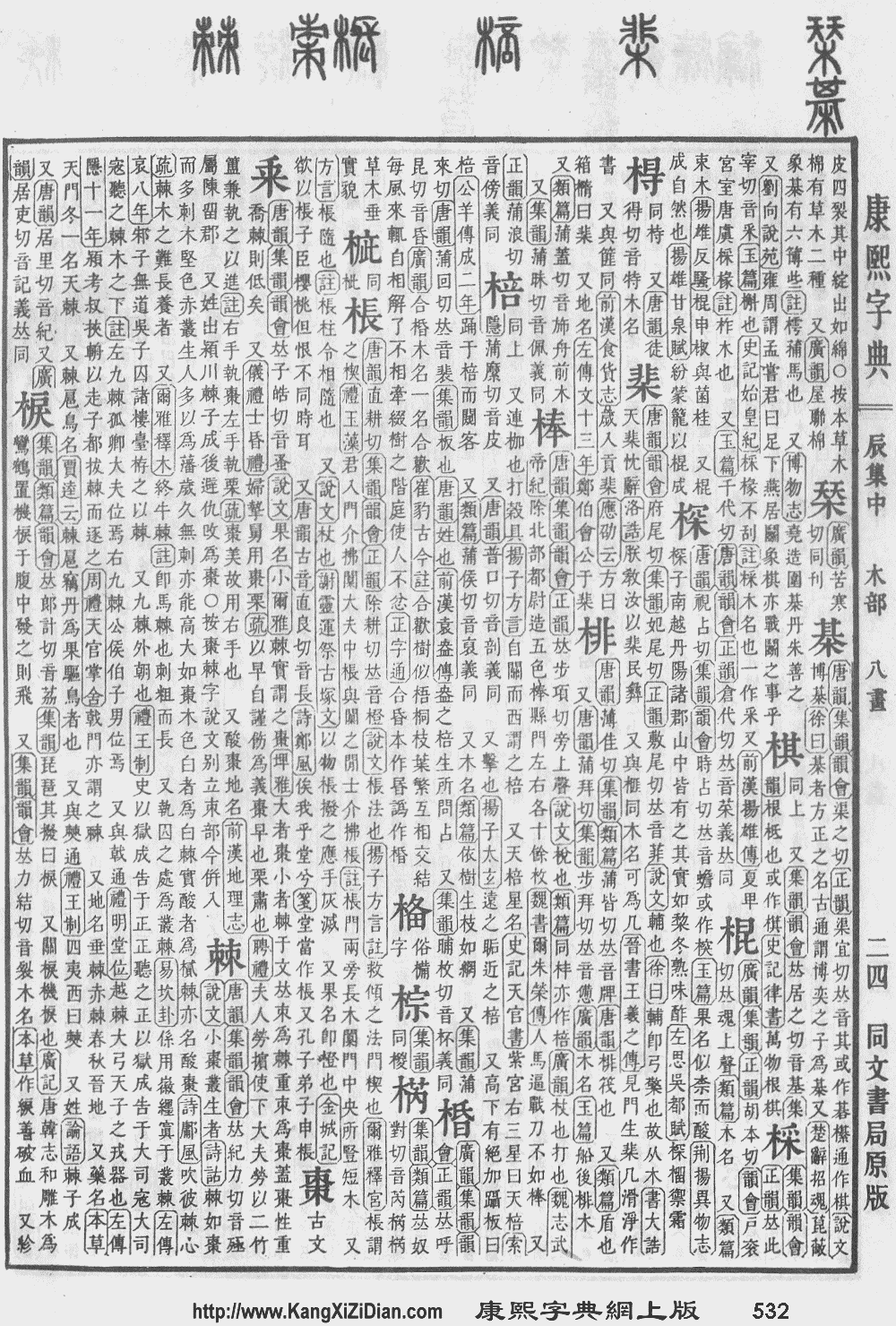
- KangXi: page 532, character 4
- Dai Kanwa Jiten: character 14923
- Dae Jaweon: page 920, character 12
- Hanyu Da Zidian: volume 2, page 1234, character 9
- Unihan data for U+68CC
Chinese
| simp. and trad. |
棌 | |
|---|---|---|
Glyph origin
| Characters in the same phonetic series (采) (Zhengzhang, 2003) | |
|---|---|
| Old Chinese | |
| 采 | *sʰɯːʔ |
| 睬 | *sʰɯːʔ |
| 彩 | *sʰɯːʔ |
| 採 | *sʰɯːʔ |
| 綵 | *sʰɯːʔ |
| 寀 | *sʰɯːʔ |
| 菜 | *sʰɯːs |
| 埰 | *sʰɯːs |
| 棌 | *sʰɯːs |
Pronunciation
Definitions
棌
- This term needs a translation to English. Please help out and add a translation, then remove the text
{{rfdef}}.
Japanese
Kanji
棌
- This term needs a translation to English. Please help out and add a translation, then remove the text
{{rfdef}}.
Korean
Hanja
棌 • (chae) (hangeul 채, revised chae, McCune–Reischauer ch'ae, Yale chay)
- This term needs a translation to English. Please help out and add a translation, then remove the text
{{rfdef}}.
This article is issued from Wiktionary. The text is licensed under Creative Commons - Attribution - Sharealike. Additional terms may apply for the media files.