智
| ||||||||
Translingual
Han character
智 (radical 72, 日+8, 12 strokes, cangjie input 人口日 (ORA), four-corner 86600, composition ⿱知日)
References
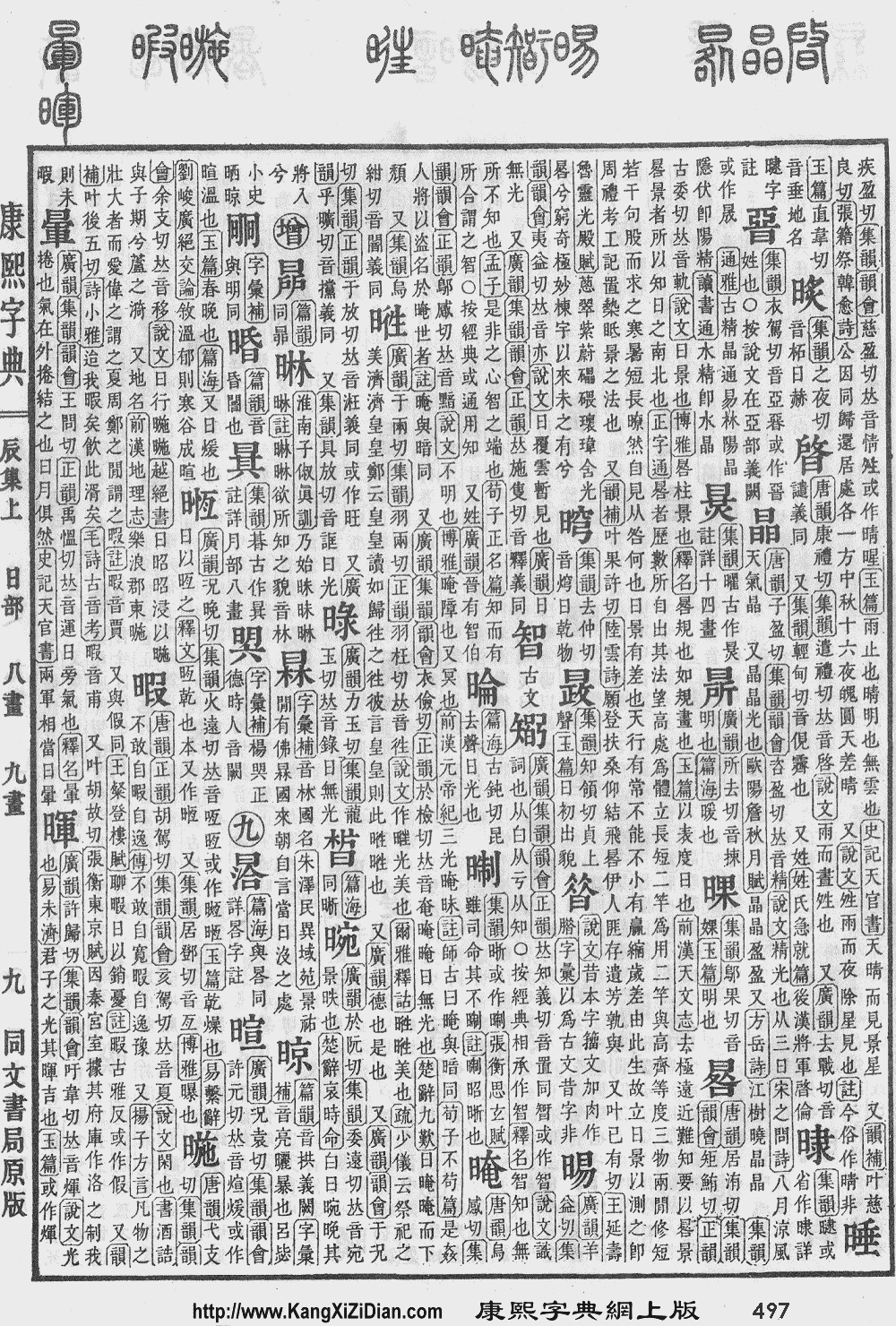
- KangXi: page 497, character 15
- Dai Kanwa Jiten: character 14010
- Dae Jaweon: page 863, character 23
- Hanyu Da Zidian: volume 2, page 1518, character 15
- Unihan data for U+667A
Chinese
| simp. and trad. |
智 | |
|---|---|---|
| variant forms | 知 𥏼 | |
Glyph origin
| Characters in the same phonetic series (矢) (Zhengzhang, 2003) | |
|---|---|
| Old Chinese | |
| 彘 | *l'eds |
| 璏 | *l'eds, *ɢʷleds, *ɢʷled |
| 薙 | *l̥ʰiːs, *ljiʔ, *l'iʔ |
| 知 | *ʔl'e |
| 蜘 | *te |
| 智 | *ʔl'es |
| 鼅 | *te |
| 潪 | *teɡs, *deɡ |
| 踟 | *de |
| 雉 | *l'iʔ |
| 矢 | *hliʔ |
| 痴 | *l̥ʰɯ |
Phono-semantic compound (形聲, OC *ʔl'es) : phonetic 知 (OC *ʔl'e) + semantic 日.
Etymology
Exopassive of 知 (OC *ʔl'e, “to know”), literally “what is known > knowledge”.
Pronunciation
Compounds
Derived terms from 智
|
|
|
Japanese
Readings
Korean
Vietnamese
Han character
智 (trí)
- This term needs a translation to English. Please help out and add a translation, then remove the text
{{rfdef}}.
This article is issued from Wiktionary. The text is licensed under Creative Commons - Attribution - Sharealike. Additional terms may apply for the media files.