刃
| ||||||||
 | ||||||||
Translingual
| Japanese | 刃 |
|---|---|
| Simplified | 刃 |
| Traditional | 刃 |
Alternative forms
Note the compositional differences between traditional, simplified, and Japanese shinjitai in the placement of the additional stroke.
Han character
| Stroke order | |||
|---|---|---|---|
 | |||
刃 (Kangxi radical 18, 刀+1, 3 strokes, cangjie input 尸竹戈 (SHI), four-corner 17420, composition ⿹刀丿(G) or ⿹刀丶(HTKV) or ⿻刀丶(J))
References
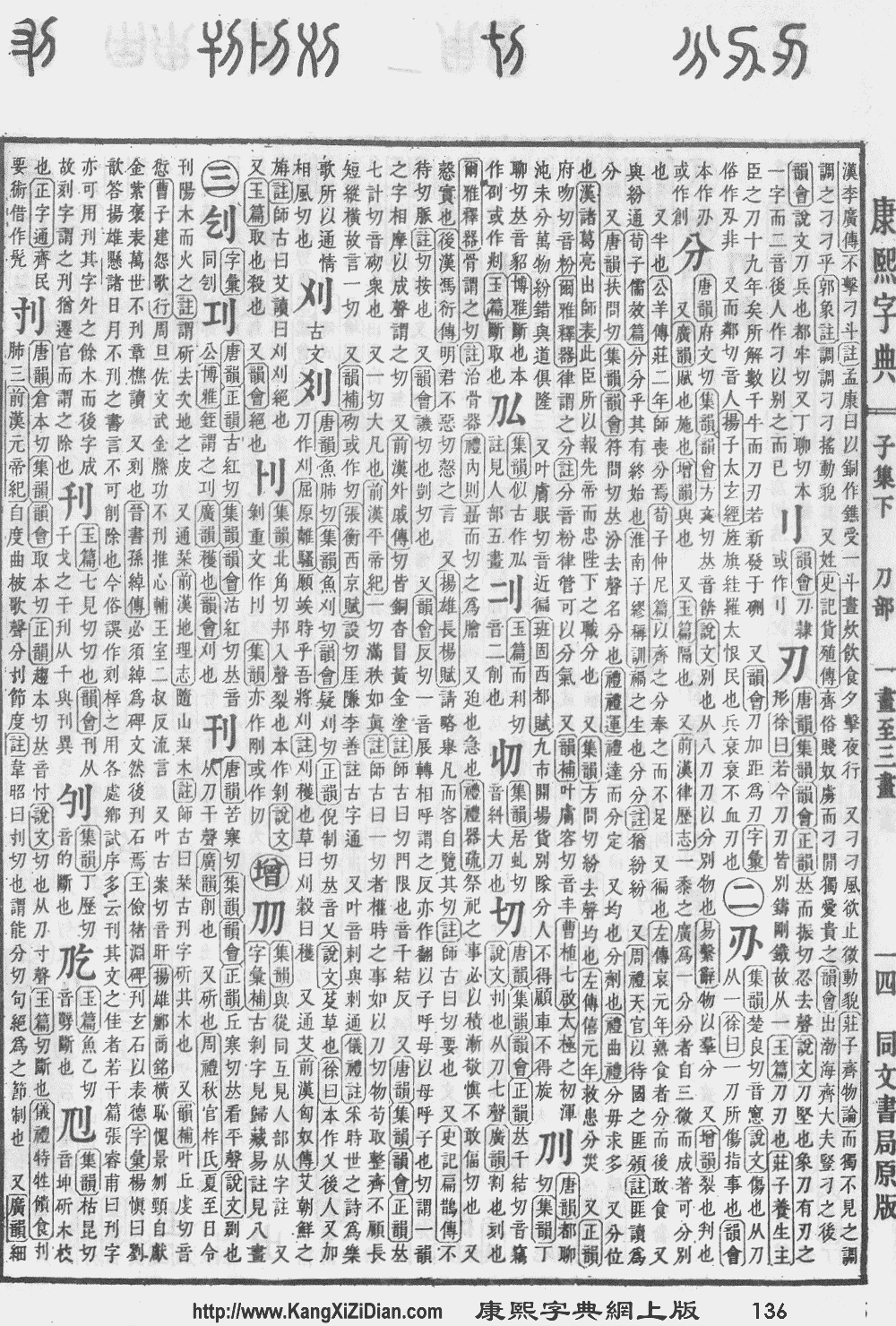
- KangXi: page 136, character 2
- Dai Kanwa Jiten: character 1850
- Dae Jaweon: page 304, character 7
- Hanyu Da Zidian (first edition): volume 1, page 320, character 3
- Unihan data for U+5203
- Unihan data for U+2F81E
Chinese
| trad. | 刃 | |
|---|---|---|
| simp. # | 刃 | |
Glyph origin
| Historical forms of the character 刃 | |||
|---|---|---|---|
| Shang | Warring States | Shuowen Jiezi (compiled in Han) | Liushutong (compiled in Ming) |
| Oracle bone script | Chu slip and silk script | Small seal script | Transcribed ancient scripts |
 |
 |
 |
 |
Pronunciation
Descendants
Japanese
| Shinjitai | 刃 | |
| Kyūjitai [1] |
刃󠄁 刃+ 󠄁?(Adobe-Japan1) |
 |
| 刃󠄃 刃+ 󠄃?(Hanyo-Denshi) (Moji_Joho) | ||
| The displayed kanji may be different from the image due to your environment. See here for details. | ||
Readings
Compounds
- 刃傷 (ninjō)
Etymology 1
/pa/ → /ɸa/ → /ha/
From Old Japanese.
Cognate with 歯 (ha, “tooth”).[2][3] Possibly also related to 葉 (ha, “leaf”), but the pitch accents do not match. Compare English blade.
Derived terms
Idioms
- 剣の刃を渡る (tsurugi no ha o wataru)
Etymology 2
| Kanji in this term |
|---|
| 刃 |
| やいば Grade: S |
| kun’yomi |
/jaki ɸa/ → /jakiba/ → /jaĩba/ → /jaiba/
Shift from 焼き刃 (yakiba), a compound of 焼き (yaki, “burned, fired”) + 刃 (ha, “edge, blade”, see above).[2][3] The ha changes to ba as an instance of rendaku (連濁).
Pronunciation
Noun
刃 • (yaiba)
Derived terms
- 刃の験者 (yaiba no genja)
- 氷の刃 (kōri no yaiba)
- 心の刃 (kokoro no yaiba)
- 邪見の刃 (jaken no yaiba)
- 情けに刃向かう刃なし (nasake ni hamukau yaiba nashi)
Idioms
- 笑中に刃を研ぐ (shōchū ni yaiba o togu)
- 刃に掛かる (yaiba ni kakaru)
- 刃に血塗らず (yaiba ni chi nurazu)
- 刃に伏す (yaiba ni fusu)
Proverbs
- 刃は切れるが重宝 (yaiba wa kireru ga chōhō, “for a blade, cutting [sharpness] is precious” → the highest value of a tool is its ability to do what it is designed for)
Idioms
Affix
刃 • (jin)
Derived terms
References
- 1914, 漢和大辭書 (Kanwa Dai Jisho, “The Great Kanji-Japanese Dictionary”) (in Japanese), page 281 (paper), page 190 (digital), Tōkyō: 興文社 (Kōbunsha)
- 1988, 国語大辞典(新装版) (Kokugo Dai Jiten, Revised Edition) (in Japanese), Tōkyō: Shogakukan
- 2006, 大辞林 (Daijirin), Third Edition (in Japanese), Tōkyō: Sanseidō, →ISBN
Korean
Hanja
刃 (eum 인 (in))
- This term needs a translation to English. Please help out and add a translation, then remove the text
{{rfdef}}.
Old Japanese
Etymology
Cognate with 歯 (pa, “tooth”).[1][2] Possibly also related to 葉 (pa, “leaf”). Compare English blade.
Descendants
- Japanese: 刃 (ha, yaiba)
References
- 1988, 国語大辞典(新装版) (Kokugo Dai Jiten, Revised Edition) (in Japanese), Tōkyō: Shogakukan
- 2006, 大辞林 (Daijirin), Third Edition (in Japanese), Tōkyō: Sanseidō, →ISBN