Portal:Taiwan

Main   Geography   Recognized content

Introduction

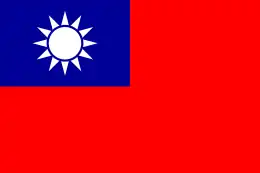
Taiwan, officially the Republic of China (ROC), is a country in East Asia. It is located at the junction of the East and South China Seas in the northwestern Pacific Ocean, with the People's Republic of China (PRC) to the northwest, Japan to the northeast, and the Philippines to the south. The territories controlled by the ROC consist of 168 islands with a combined area of 36,193 square kilometers (13,974 square miles). The main island of Taiwan, also known as Formosa, has an area of 35,808 square kilometers (13,826 square miles), with mountain ranges dominating the eastern two-thirds and plains in the western third, where its highly urbanised population is concentrated. The capital, Taipei, forms along with New Taipei City and Keelung, the largest metropolitan area in Taiwan. Other major cities include Taoyuan, Taichung, Tainan, and Kaohsiung. With around 23.9 million inhabitants, Taiwan is among the most densely populated countries in the world.

Taiwan has been settled for at least 25,000 years. Ancestors of Taiwanese indigenous peoples settled the island around 6,000 years ago. In the 17th century, large-scale Han Chinese (specifically the Hakkas and Hoklos) immigration to western Taiwan began under a Dutch colony and continued under the Kingdom of Tungning, the first predominantly Han Chinese state in Taiwanese history. The island was annexed in 1683 by the Qing dynasty of China and ceded to the Empire of Japan in 1895. The Republic of China, which had overthrown the Qing in 1911, took control of Taiwan following the surrender of Japan in 1945. Japan would renounce sovereignty over Taiwan in 1952. The immediate resumption of the Chinese Civil War resulted in the loss of the Chinese mainland to Communist forces, who established the People's Republic of China and the flight of the ROC central government to Taiwan in 1949. The effective jurisdiction of the ROC has since been limited to Taiwan, Penghu, and smaller islands.

In the early 1960s, Taiwan entered a period of rapid economic growth and industrialisation called the "Taiwan Miracle". In the late 1980s and early 1990s, the ROC transitioned from a one-party state under martial law to a multi-party democracy, with democratically elected presidents since 1996. Taiwan's export-oriented industrial economy is the 21st-largest in the world by nominal GDP and the 19th-largest by PPP measures, with a focus on steel, machinery, electronics, and chemicals manufacturing. Taiwan is a developed country, ranking 20th on GDP per capita. It is ranked highly in terms of civil liberties, healthcare, and human development.

The political status of Taiwan is contentious. The ROC no longer represents China as a member of the United Nations after UN members voted in 1971 to recognize the PRC instead. The ROC maintained its claim of being the sole legitimate representative of China and its territory, although this has been downplayed since its democratization in the 1990s. Taiwan is claimed by the PRC, which refuses to establish diplomatic relations with countries that recognise the ROC. Taiwan maintains official diplomatic relations with 12 out of 193 UN member states and the Holy See, which governs Vatican City. Many others maintain unofficial diplomatic ties through representative offices and institutions that function as de facto embassies and consulates. International organisations in which the PRC participates either refuse to grant membership to Taiwan or allow it to participate only on a non-state basis under various names. Domestically, the major political contention is between parties favouring eventual Chinese unification and promoting a pan-Chinese identity, contrasted with those aspiring to formal international recognition and promoting a Taiwanese identity; into the 21st century, both sides have moderated their positions to broaden their appeal. (Full article...)

Selected article -

Palamal, the Ceremony of Fire

The Sakizaya (native name: Sakuzaya, literally "real man"; Chinese: 撒奇萊雅族; pinyin: Sāqíláiyǎ; occasionally Sakiraya or Sakidaya) are Taiwanese indigenous peoples with a population of approximately 1,000. They primarily live in Hualien (formerly known as Kiray), where their culture is centered.

The Sakizaya are an Austronesian people, mostly related to other Taiwanese indigenous peoples and have cultural, linguistic, and genetic ties to other Austronesian ethnic groups, such as those from the Philippines, Malaysia, Indonesia, Madagascar, and Oceania. (Full article...)

Selected biography

S.H.E in 2010.
L-R: Hebe Tien, Selina Jen, and Ella Chen.

S.H.E is a Taiwanese girl group whose members are Selina Jen, Hebe Tien, and Ella Chen. They formed in 2001 and are managed by HIM International Music but decided not to renew their contract in 2019 due to having their own management company.

Since releasing their debut album Girls Dorm (2001), S.H.E has recorded 13 albums with sales totaling more than 10 million, and set ticketing records in each of their two concert tours. Widely regarded as the most successful and enduring Mandopop group, S.H.E has also acted in seven drama series, hosted two variety shows, and contributed ten songs to six drama soundtracks. (Full article...)

Selected picture -

Totem pole
Totem pole
The Formosan Aboriginal Culture Village in Yuchi, Nantou is a theme park opened in 1986 that has the tallest free-fall ride, largest European garden and bell tower in Taiwan.

Photo credit: Bernard Gagnon

Good article -

This is a Good article, an article that meets a core set of high editorial standards.

A THSR 700T train in September 2013

Taiwan High Speed Rail (THSR) is the high-speed railway of Taiwan consisting of one line that runs approximately 350 km (220 mi) along the west coast, from the capital Taipei to the southern city of Kaohsiung. With construction and operations managed by a private company, Taiwan High Speed Rail Corporation (THSRC; TWSE: 2633), which also operates the line, the total cost of the project was NT$513.3 billion in 1998. At the time it was built, this was one of the world's largest privately funded rail construction schemes. The system is based primarily on Japan's Shinkansen.

The railway opened for service on 5 January 2007, with trains running at a top speed of 300 km/h (186 mph), currently running from Nangang to Zuoying in as little as 1 hour and 45 minutes, reaching almost 90% of Taiwan's population. Most intermediate stations on the line lie outside the cities served; however, a variety of transfer options, such as free shuttle buses, conventional rail, and metros have been constructed to facilitate transport connections. (Full article...)

Did you know -

Food court in Shilin night market.

General images

The following are images from various Taiwan-related articles on Wikipedia.

On this day...

In the news

5 April 2023 – Taiwan–United States relations
President of Taiwan Tsai Ing-wen meets with Speaker of the United States House of Representatives Kevin McCarthy at the Ronald Reagan Presidential Library in Simi Valley, California, despite Chinese diplomatic pressure in response to the meeting. (AP)
27 March 2023 – Foreign relations of Taiwan
Cross-Strait relations
Former Taiwanese President Ma Ying-jeou becomes the first Taiwanese leader to visit mainland China since the end of the Chinese Civil War in 1949, meeting with China's Taiwan Affairs Office deputy chair Chen Yuanfeng in Shanghai. Taiwan's ruling Democratic Progressive Party criticized this visit as "endorsing" China's position on Taiwan. (Al Jazeera)
Honduran President Xiomara Castro orders Taiwanese diplomats to vacate the country's embassy in Tegucigalpa within 30 days, one day after the country established diplomatic relations with the People's Republic of China. (Reuters)
26 March 2023 – China–Honduras relations
Honduras switches its formal diplomatic recognition of "China" from the Republic of China to the People's Republic of China. (Reuters)
14 March 2023 – China–Honduras relations, Foreign relations of Taiwan
President Xiomara Castro announces that Honduras will stop recognizing Taiwan and will start recognizing the People's Republic of China as the sole Chinese state. (AP)

Topics

Categories

Category puzzle
Category puzzle
Select [►] to view subcategories
Taiwan
Taiwan-related lists
Buildings and structures in Taiwan
Taiwanese culture
Economy of Taiwan
Education in Taiwan
Environment of Taiwan
Geography of Taiwan
Government of Taiwan
Health in Taiwan
History of Taiwan
National symbols of Taiwan
Organizations based in Taiwan
Taiwanese people
Politics of Taiwan
Society of Taiwan
Sport in Taiwan
Images of Taiwan
Taiwan stubs
Taiwan templates

Administrative divisions

Portals listed here are related to Taiwan by way of history, Asian region, diplomatic relations with ROC, and significant diaspora of overseas Taiwanese

Projects

You are cordially invited to join and contribute to WikiProject Taiwan, a WikiProject dedicated to the development and improvement of articles relating to Taiwan.

WikiProject Taiwan Membership Discussion

Associated Wikimedia

The following Wikimedia Foundation sister projects provide more on this subject:

Sources

      Discover Wikipedia using portals
      Taiwan portal logo
      Taiwan portal logo
      This article is issued from Wikipedia. The text is licensed under Creative Commons - Attribution - Sharealike. Additional terms may apply for the media files.