Portal:South Australia
 The South Australia Portal
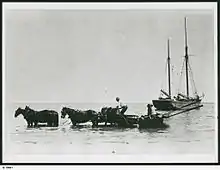
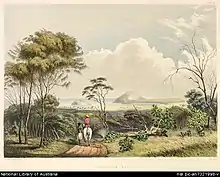
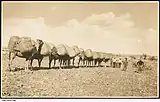
South Australia (commonly abbreviated as SA) is a state in the southern central part of Australia. It covers some of the most arid parts of the country. With a total land area of 984,321 square kilometres (380,048 sq mi), it is the fourth-largest of Australia's states and territories by area, and second smallest state by population. It has a total of 1.8 million people. Its population is the second most highly centralised in Australia, after Western Australia, with more than 77 percent of South Australians living in the capital Adelaide, or its environs. Other population centres in the state are relatively small; Mount Gambier, the second-largest centre, has a population of 33,233. South Australia shares borders with all of the other mainland states, as well as the Northern Territory; it is bordered to the west by Western Australia, to the north by the Northern Territory, to the north-east by Queensland, to the east by New South Wales, to the south-east by Victoria, and to the south by the Great Australian Bight. The state comprises less than 8 percent of the Australian population and ranks fifth in population among the six states and two territories. The majority of its people reside in greater Metropolitan Adelaide. Most of the remainder are settled in fertile areas along the south-eastern coast and River Murray. The state's colonial origins are unique in Australia as a freely settled, planned British province, rather than as a convict settlement. Colonial government commenced on 28 December 1836, when the members of the council were sworn in near the Old Gum Tree. As with the rest of the continent, the region has a long history of human occupation by numerous tribes and languages. The South Australian Company established a temporary settlement at Kingscote, Kangaroo Island, on 26 July 1836, five months before Adelaide was founded. The guiding principle behind settlement was that of systematic colonisation, a theory espoused by Edward Gibbon Wakefield that was later employed by the New Zealand Company. The goal was to establish the province as a centre of civilisation for free immigrants, promising civil liberties and religious tolerance. Although its history has been marked by periods of economic hardship, South Australia has remained politically innovative and culturally vibrant. Today, it is known for its fine wine and numerous cultural festivals. The state's economy is dominated by the agricultural, manufacturing and mining industries. (Full article...) Selected article - The information centre near the base of one of the towers at Wattle Point Wind Farm Wind power became a significant energy source within South Australia over the first two decades of the 21st century. In 2015, there was an installed capacity of 1,475 MW, which accounted for 34% of electricity production in the state. This accounted for 35% of Australia's installed wind power capacity. In 2021, there was an installed capacity of 2052.95 MW, which accounted for 42.1% of the electricity production in the state in 2020. The development of wind power capacity in South Australia has been encouraged by a number of factors. These include the Australian Government's Renewable Energy Target, which require electricity retailers to source a proportion of energy from renewable sources, incentives from the South Australian Government including a supportive regulatory regime and a payroll tax rebate scheme for large scale renewable energy developments. Also the state's proximity to the Roaring forties means there are high quality wind resources for wind farms to exploit. In mid-2009, RenewablesSA was established by the South Australian Government to encourage further investment in renewable energy in the state. (Full article...)Selected Picture - Adelaide Festival Centre from the north bank of the River Torrens. The Adelaide Festival Centre is a multi-purpose arts centre in the South Australian capital of Adelaide. It is situated adjacent to Elder Park on the banks of the River Torrens, northwest of the intersection of North Terrace and King William Street. The centre is distinguished by its three silvery-white tetrahedron dome roofs and its plaza consisting of lego block-like sculptures. It was opened in 1973 by Don Dunstan as the home for performing arts in South Australia, and the centre remains the principal venue for the Adelaide Festival of Arts. General imagesThe following are images from various South Australia-related articles on Wikipedia.
Did You Know... -
Categories Category puzzle Select [►] to view subcategories
South Australia Buildings and structures in South Australia Culture of South Australia Economy of South Australia Education in South Australia Environment of South Australia Geography of South Australia Health in South Australia History of South Australia Images of South Australia People from South Australia Politics of South Australia Society in South Australia South Australia portal South Australia-related lists Sport in South Australia Tourist attractions in South Australia Transport in South Australia South Australia stubs South Australia articles missing geocoordinate data Related Portals
WikiProjects
Major TopicsGeography – Adelaide Hills • Adelaide Plains • Barossa Valley • Clare Valley • Coonawarra • Eyre Peninsula • Fleurieu Peninsula • Flinders Ranges • Kangaroo Island • Limestone Coast • Mid North • Nullarbor Plain • Riverland • Yorke Peninsula History – Kaurna Indigenous people • European settlement • History of Adelaide • Proclamation Day • Australian Overland Telegraph Line • Timeline of South Australian history Towns and Cities – Adelaide • Coober Pedy • Mount Gambier • Murray Bridge| Port Augusta • Port Lincoln • Port Pirie • Victor Harbor • Whyalla Economy and Politics – Premiers • Governors • Parliament • House of Assembly • Electoral districts • Legislative Council • State elections Culture – Croweater • Pie floater • Wine • The Advertiser • Adelaide Festival Centre • Adelaide Entertainment Centre • WOMADelaide • Adelaide Fringe • Elder Park • The Crows • The Power • The Reds • Redbacks • Hindmarsh Stadium • AAMI Stadium • Rundle Mall People – Kaurna Indigenous people • Matthew Flinders • William Light • Charles Sturt • Edward Gibbon Wakefield • John Hindmarsh • George Gawler • Playford family • Don Dunstan More portalsThings you can doHere are some tasks you can do to help with WikiProject Adelaide:
 Associated WikimediaThe following Wikimedia Foundation sister projects provide more on this subject:
Discover Wikipedia using portals
| ||||||||||||||||||||