Portal:Oceania

The Oceania Portal
Oceania (UK: /ˌoʊsiˈɑːniə, ˌoʊʃi-, -ˈeɪn-/, US: /ˌoʊʃiˈæniə/ ( Oceania has a diverse mix of economies from the highly developed and globally competitive financial markets of Australia, French Polynesia, Hawaii, New Caledonia, and New Zealand, which rank high in quality of life and Human Development Index, to the much less developed economies of Kiribati, Papua New Guinea, Tuvalu, Vanuatu, and Western New Guinea, while also including medium-sized economies of Pacific islands such as Fiji, Palau, and Tonga. The largest and most populous country in Oceania is Australia, and the largest city is Sydney. Puncak Jaya in Highland Papua, Indonesia, is the highest peak in Oceania at 4,884 m (16,024 ft). The arrival of European settlers in subsequent centuries resulted in a significant alteration in the social and political landscape of Oceania. The Pacific theatre saw major action during the Second World War, mainly between Allied powers the United States, Philippines (a U.S. Commonwealth at the time) and Australia, and Axis power Japan. The rock art of Aboriginal Australians is the longest continuously practiced artistic tradition in the world. Most Oceanian countries are multi-party representative parliamentary democracies, with tourism being a large source of income for the Pacific Islands nations. (Full article...) Selected geographic article -
Niʻihau (Hawaiian: [ˈniʔiˈhɐw]), anglicized as Niihau (/ˈniː(i)haʊ/ NEE-(ee-)how), is the westernmost main and seventh largest inhabited island in Hawaii. It is 17.5 miles (28.2 km) southwest of Kauaʻi across the Kaulakahi Channel. Its area is 69.5 square miles (180 km2). Several intermittent playa lakes provide wetland habitats for the Hawaiian coot, the Hawaiian stilt, and the Hawaiian duck. The island is designated as critical habitat for Brighamia insignis, an endemic and endangered species of Hawaiian lobelioid. The United States Census Bureau defines Niʻihau and the neighboring island and State Seabird Sanctuary of Lehua as Census Tract 410 of Kauai County, Hawaii. Its 2000 census population was 160, most of whom are native Hawaiians; Its 2010 census population was 170. At the 2020 census, the population had fallen to 84. Elizabeth Sinclair purchased Niʻihau in 1864 for US$10,000 (equivalent to about $170,000 in 2021) from the Kingdom of Hawaii. The island's private ownership passed on to her descendants, the Robinsons. During World War II, the island was the site of the Niʻihau incident, in which, following the attack on Pearl Harbor, a Japanese navy fighter pilot crashed on the island and received help from the island's residents of Japanese descent. (Full article...)Related portalsSelected article - The coconut crab (Birgus latro) is a species of terrestrial hermit crab, also known as the robber crab or palm thief. It is the largest terrestrial arthropod in the world, with a weight of up to 4.1 kg (9 lb). It can grow to up to 1 m (3 ft 3 in) in width from the tip of one leg to the tip of another. It is found on islands across the Indian Ocean, and parts of the Pacific Ocean as far east as the Gambier Islands, Pitcairn Islands and Caroline Island, similar to the distribution of the coconut palm; it has been extirpated from most areas with a significant human population, including mainland Australia and Madagascar. Coconut crabs also live off the coast of Africa near Zanzibar. The coconut crab is the only species of the genus Birgus, and is related to the other terrestrial hermit crabs of the genus Coenobita. It shows a number of adaptations to life on land. Juvenile coconut crabs use empty gastropod shells for protection like other hermit crabs, but the adults develop a tough exoskeleton on their abdomens and stop carrying a shell. Coconut crabs have organs known as branchiostegal lungs, which they use for breathing instead of their vestigial gills. After the juvenile stage, they will drown if immersed in water for too long. They have an acute sense of smell which they use to find potential food sources, and which has developed convergently with that of insects. (Full article...)Did you know -
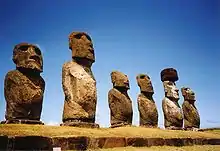
General images -The following are images from various Oceania-related articles on Wikipedia.
TopicsSubcategories Category puzzle Select [►] to view subcategories
Oceania Countries in Oceania Dependent territories in Oceania Oceania-related lists Oceanian portals Academia in Oceania Administrative divisions in Oceania Buildings and structures in Oceania Oceanian culture Economy of Oceania Education in Oceania Environment of Oceania Ethnic groups in Oceania Flags of Oceania Geography of Oceania Government in Oceania Green parties in Oceania Health in Oceania History of Oceania Maps of Oceania Organizations based in Oceania Oceanian people Politics of Oceania Regions of Oceania Science and technology in Oceania Oceanian society Oceania stubs Things you can do
Associated WikimediaThe following Wikimedia Foundation sister projects provide more on this subject:
In other languagesWikipedia in other languages used in Oceania:
More portalsDiscover Wikipedia using portals
| ||||||
.svg.png.webp)


.jpg.webp)


.jpg.webp)


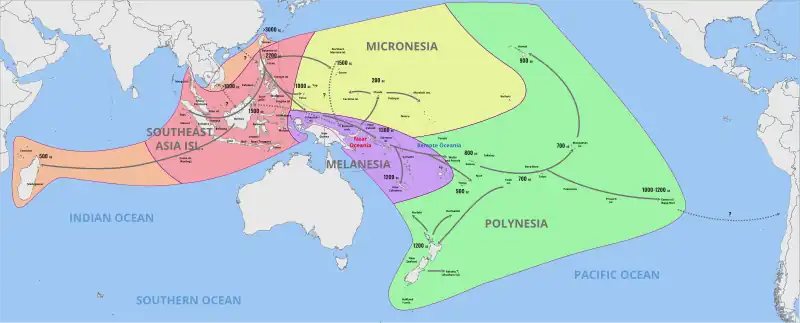

.svg.png.webp)


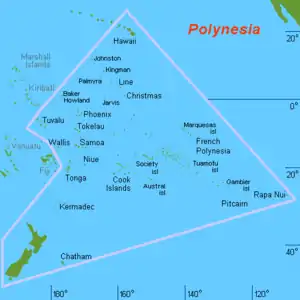
%252C_Temple_du_Roi_dans_la_baie_Tiritat%C3%A9a_(c._1816%252C_published_1822).jpg.webp)




.jpg.webp)


.jpg.webp)


.svg.png.webp)