Portal:Japan

The Japan Portal
The Japan Portal
Main   Geography   Projects
Location of Japan on the world map
Imperial Seal of Japan

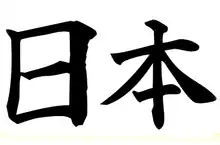
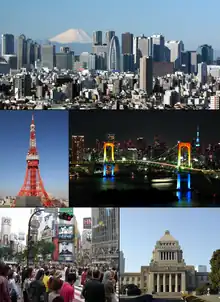
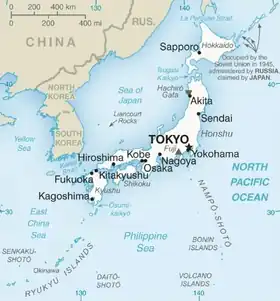
Japan (Japanese: 日本, Nippon or Nihon, and formally 日本国, Nihonkoku) is an island country in East Asia. It is situated in the northwest Pacific Ocean and is bordered on the west by the Sea of Japan, extending from the Sea of Okhotsk in the north toward the East China Sea, Philippine Sea, and Taiwan in the south. Japan is a part of the Ring of Fire, and spans an archipelago of 14,125 islands, with the five main islands being Hokkaido, Honshu (the "mainland"), Shikoku, Kyushu, and Okinawa. Tokyo is the nation's capital and largest city, followed by Yokohama, Osaka, Nagoya, Sapporo, Fukuoka, Kobe, and Kyoto.

Japan is the eleventh most populous country in the world, as well as one of the most densely populated and urbanized. About three-fourths of the country's terrain is mountainous, concentrating its population of almost 125 million on narrow coastal plains. Japan is divided into 47 administrative prefectures and eight traditional regions. The Greater Tokyo Area is the most populous metropolitan area in the world, with more than 37.2 million residents.

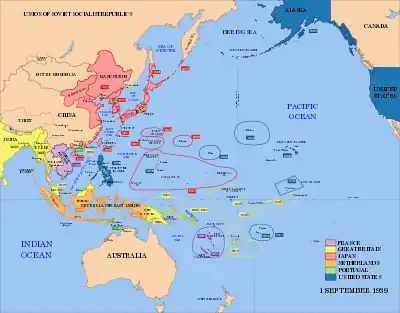
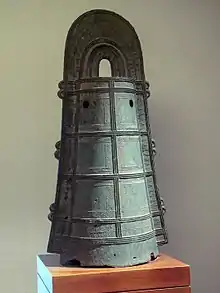
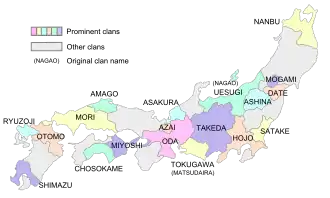
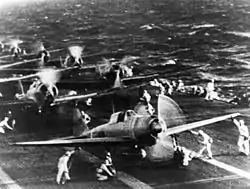
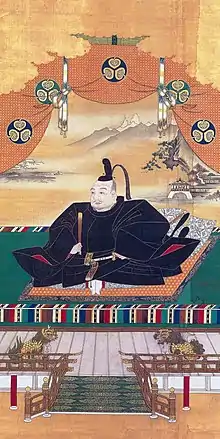
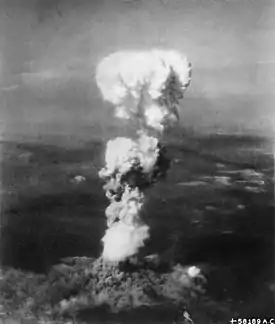
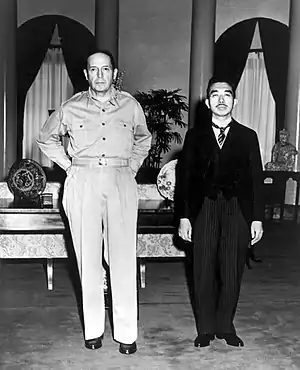
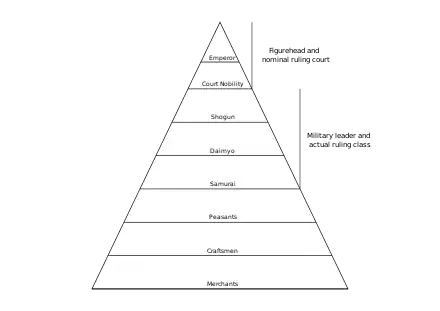
Japan has been inhabited since the Upper Paleolithic period (30,000 BC). Between the 4th and 9th centuries, the kingdoms of Japan became unified under an emperor and the imperial court based in Heian-kyō. Beginning in the 12th century, political power was held by a series of military dictators (shōgun) and feudal lords (daimyō) and enforced by a class of warrior nobility (samurai). After a century-long period of civil war, the country was reunified in 1603 under the Tokugawa shogunate, which enacted an isolationist foreign policy. In 1854, a United States fleet forced Japan to open trade to the West, which led to the end of the shogunate and the restoration of imperial power in 1868. In the Meiji period, the Empire of Japan adopted a Western-modeled constitution and pursued a program of industrialization and modernization. Amidst a rise in militarism and overseas colonization, Japan invaded China in 1937 and entered World War II as an Axis power in 1941. After suffering defeat in the Pacific War and two atomic bombings, Japan surrendered in 1945 and came under a seven-year Allied occupation, during which it adopted a new constitution.

Under the 1947 constitution, Japan has maintained a unitary parliamentary constitutional monarchy with a bicameral legislature, the National Diet. Japan is a developed country and a great power. It is a member of numerous international organizations, including the United Nations, G20, OECD, and the Group of Seven. Its economy is the world's third-largest by nominal GDP and the fourth-largest by PPP, with its per capita income ranking at 36th highest in the world. Although Japan has renounced its right to declare war, the country maintains Self-Defense Forces that rank as one of the world's strongest militaries. Japan has the world's highest life expectancy, though it is experiencing a population decline. A global leader in the automotive, robotics and electronics industries, the country has made significant contributions to science and technology. The culture of Japan is well known around the world, including its art, cuisine, film, music, and popular culture, which encompasses prominent manga, anime and video game industries. (Full article...)

Selected article –

Comet Hyakutake, the Great Comet of 1996
Comet Hyakutake is a comet discovered on January 30, 1996, which passed very close to Earth in March of that year. It was dubbed The Great Comet of 1996; its passage near the Earth was one of the closest cometary approaches of the previous 200 years. Hyakutake appeared very bright in the night sky and was widely seen around the world. The comet temporarily upstaged the much anticipated Comet Hale–Bopp, which was approaching the inner Solar System at the time. Scientific observations of the comet led to several discoveries. Most surprising to cometary scientists was the first discovery of X-ray emission from a comet, believed to have been caused by ionised solar wind particles interacting with neutral atoms in the coma of the comet. The Ulysses spacecraft unexpectedly crossed the comet's tail at a distance of more than 500 million km from the nucleus, showing that Hyakutake had the longest tail known for a comet. Hyakutake is a long-period comet. Before its most recent passage through the Solar System, its orbital period was about 17,000 years, but the gravitational influence of the giant planets has increased this period to 100,000 years. The comet was discovered on January 30, 1996, by Yuji Hyakutake an amateur astronomer from southern Japan. He had been searching for comets for years and had moved to Kagoshima Prefecture partly for the dark skies in nearby rural areas. He was using a powerful set of binoculars with six-inch (152 mm) objective lenses to scan the skies on the night of the discovery. (Full article...)

Selected pictures

On this day...

April 8:

Events

Births

Deaths

Film and television

In the news

6 April 2023 –
The Japanese Coast Guard reports that a Black Hawk military helicopter carrying ten crew members crashed near Miyakojima, Okinawa Prefecture. (Reuters)
1 April 2023 –
Professor Alan Jamieson of the University of Western Australia's Minderoo-UWA Deep Sea Research Centre announces that his team has captured footage of a snailfish species, Pseudoliparis belyaevi, swimming at 8,336 metres (27,349 ft) in the Izu–Ogasawara Trench off Japan's southern coast. This is the lowest depth recorded for any fish, and closest to the estimated maximum depth possible for fish to survive. (BBC News)
21 March 2023 – 2023 World Baseball Classic championship
The World Baseball Classic concludes with Japan defeating the United States for the championship. (Japan Times)

Selected quote –


Selected biography –

Hiroh Kikai, in 2011

Hiroh Kikai (鬼海 弘雄, Kikai Hiroo, 18 March 1945  19 October 2020) was a Japanese photographer best known within Japan for four series of monochrome photographs: scenes of buildings in and close to Tokyo, portraits of people in the Asakusa area of Tokyo, and rural and town life in India and Turkey. He pursued each of these for over two decades, and each led to one or more book-length collections.

Although previously a respected name in Japanese photography, Kikai was not widely known until 2004, when the first edition of his book Persona, a collection of Asakusa portraits, won both the Domon Ken Award and Annual Award of the PSJ. In 2009, the ICP and Steidl copublished Asakusa Portraits for an international market. (Full article...)

Selected prefecture –

Flag of Akita Prefecture
Akita Prefecture is a prefecture of Japan located in the Tōhoku Region of northern Japan. The capital is the city of Akita. Separated from the principal Japanese centres of commerce, politics, and population by several hundred kilometres and the Ou and Dewa mountain ranges to the east, Akita remained largely isolated from Japanese society until after the year 600CE. Populated principally by the Ainu people, Akita was a region of hunter-gatherers and principally nomadic tribes. The first historical record of Akita-ken dates to 658CE, when the General Abe no Hirafu conquered the native Ezo tribes at Akita city and Nushiro. Hirafu, then governor of the Koshi region, established a fort on the Mogami river, and thus began the Japanese settlement of the region. In 733, a new military settlement—later renamed Akita Castle—was built in modern-day Akita city at Takashimizu, and more permanent roads and structures were developed. The region was used as a base of operations for the Japanese empire as it drove the native Ezo people from northern Honshū. It shifted hands several times in the interim. During the Tokugawa shogunate it was appropriated to the Satake family in 1602, who ruled the region for 260 years, developing the agriculture and mining industries that are still predominant today. Throughout this period, it was classified as part of Dewa Province and remained politically quite stable. In 1871, during the Meiji Restoration, Dewa province was reshaped and the old daimyō regions (called "han") were abolished and administratively reconstructed, resulting in the modern-day borders of Akita.

Did you know... –

Kuga Katsunan

  • ... that Japanese anime director Rintaro has worked in animation for 50 years and co-founded the animation studio Madhouse?

General images

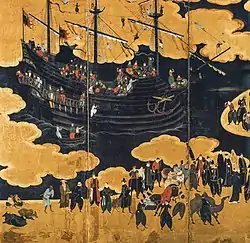
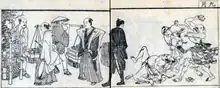
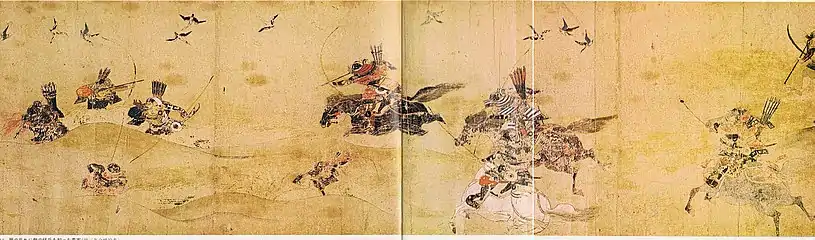
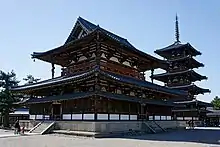
The following are images from various Japan-related articles on Wikipedia.

Japan topics

Eras Paleolithic | Jōmon | Yayoi | Kofun | Asuka | Nara | Heian | Kamakura | Muromachi | Azuchi-Momoyama | Edo | Meiji | Taishō | Shōwa | Heisei | Reiwa
History Economic history | Educational history | Military history | Naval history | Sengoku period | Meiji Restoration | Empire of Japan | Occupied Japan | Post-occupation Japan
Politics Constitution | Government | Emperors | Imperial Household Agency | Prime Ministers | Cabinet | Ministries | National Diet (House of Councillors · House of Representatives) | Judicial system | Law of Japan | Elections | Political parties | Japanese political values | Japan Self-Defense Forces | Foreign relations
Culture Clothing | Customs and etiquette | Education | Festivals | Food | Holidays | Language | Religion | Imperial House of Japan | National symbols of Japan | National Treasure (Japan) | Monuments of Japan | Media of Japan | Honne and tatemae | Kawaii | Yamato-damashii | Wa | Miai | Ishin-denshin | Isagiyosa | Hansei | Amae | Kotodama | Onsen | Geisha | Kimono | Bushido | Shogun | Samurai | Ninja | Yakuza | Mythology | Karaoke
Art Architecture | Cinema | Literature | Music | Pornography | Theatre (Noh · Kabuki · Bunraku) | Anime | Manga | Ukiyo-e | Japanese tea ceremony | Japanese aesthetics | Ikebana | Poetry | Bonsai | Origami
Sports Sumo wrestling | Nippon Professional Baseball | Football J1 League | Super GT | All Japan Road Race Championship | Judo | Karate | Kendo | Kyūdō | Jujutsu | Ninjutsu | Aikido
Economy Japanese Companies | Primary sector | Industry | Tourism | Currency | Tokyo Stock Exchange | Japanese economic miracle | Communications | Transportation (Shinkansen · Tokyo Metro · Railway companies) | Japan Business Federation | Housing in Japan
Science and Technology Consumer electronics in Japan | Japanese automotive industry | Japanese inventions | Japan Aerospace Exploration Agency (JAXA) | Nuclear power in Japan | Japanese robotics
Geography Geography of Japan | Japanese archipelago | Islands of Japan | Cities | Lakes | Rivers | Waterfalls | Mountains | National Parks | Japanese Alps | Mount Fuji | Lake Biwa | Seto Inland Sea | Sea of Japan | EEZ of Japan
Demographics Demographics | Yamato people | Hāfu (half Japanese people) | Ainu people | Japanese people | Japanese names | Aging of Japan
Animals Animals in Japan | Japanese macaque | Japanese raccoon dog (Tanuki) | Japanese Green pheasant | Koi | Japanese Bobtail | Hokkaido dog | Shiba Inu | Akita (dog) | Asian giant hornet | Japanese badger
Other Tokyo | Kyoto | Nara | Osaka | Sapporo | Okinawa | Kinkaku-ji | Kiyomizu-dera | Yakushi-ji temple | Tōdai-ji temple | Sensō-ji temple | Meiji Shrine | Akihabara | Shinjuku | Tokyo Tower | Tokyo Imperial Palace | Himeji Castle | Matsumoto Castle | Osaka Castle | Nagoya Castle | Tokyo Disney Resort

Subcategories

Category puzzle
Category puzzle
Select [►] to view subcategories
Japan
Japan-related lists
Japanese culture
Economy of Japan
Education in Japan
Environment of Japan
Fugitives wanted by Japan
Geography of Japan
Government of Japan
Health in Japan
History of Japan
Organizations based in Japan
Japanese people
Politics of Japan
Society of Japan
Images of Japan
Japan stubs

Recognized content

Extended content

Good articles

Picture of the day pictures

Associated Wikimedia

The following Wikimedia Foundation sister projects provide more on this subject:

Discover Wikipedia using portals

This article is issued from Wikipedia. The text is licensed under Creative Commons - Attribution - Sharealike. Additional terms may apply for the media files.