顬
See also: 颥
| ||||||||
Translingual
Han character
顬 (radical 181, 頁+14, 23 strokes, cangjie input 一月一月金 (MBMBC), composition ⿰需頁)
References
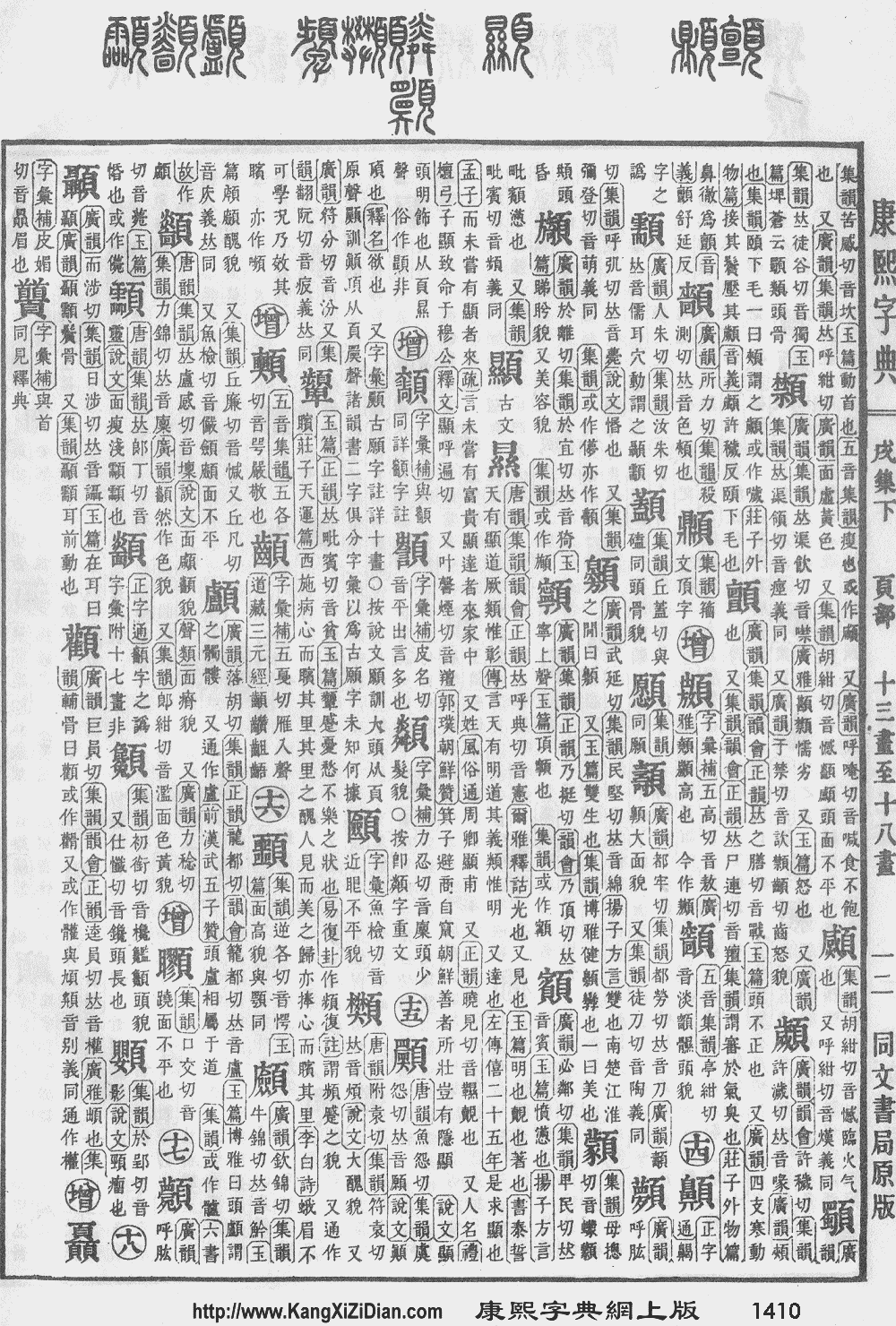
- KangXi: page 1410, character 11
- Dai Kanwa Jiten: character 43716
- Dae Jaweon: page 1929, character 3
- Hanyu Da Zidian: volume 7, page 4395, character 4
- Unihan data for U+986C
Chinese
| trad. | 顬 | |
|---|---|---|
| simp. | 颥 | |
Glyph origin
| Characters in the same phonetic series (需) (Zhengzhang, 2003) | |
|---|---|
| Old Chinese | |
| 羺 | *noː |
| 獳 | *noː |
| 擩 | *noːs, *njoʔ, *njos, *njul, *njod |
| 譳 | *noːs |
| 懦 | *noːls, *njo |
| 糯 | *noːls |
| 需 | *sno |
| 繻 | *sno, *njo |
| 鑐 | *sno |
| 儒 | *njo |
| 濡 | *njo, *noːn |
| 襦 | *njo |
| 嚅 | *njo |
| 顬 | *njo |
| 鱬 | *njo |
| 嬬 | *njo |
| 臑 | *njo |
| 醹 | *njo, *njoʔ |
| 蠕 | *njo |
| 孺 | *njos |
Pronunciation
Japanese
Compounds
Compounds
- 顳顬 (komekami), 顳顬 (shōju): temple (region of skull)
- 顳顬骨 (shōjukotsu): temporal bone
This article is issued from Wiktionary. The text is licensed under Creative Commons - Attribution - Sharealike. Additional terms may apply for the media files.