脹
See also: 胀
| ||||||||
Translingual
Han character
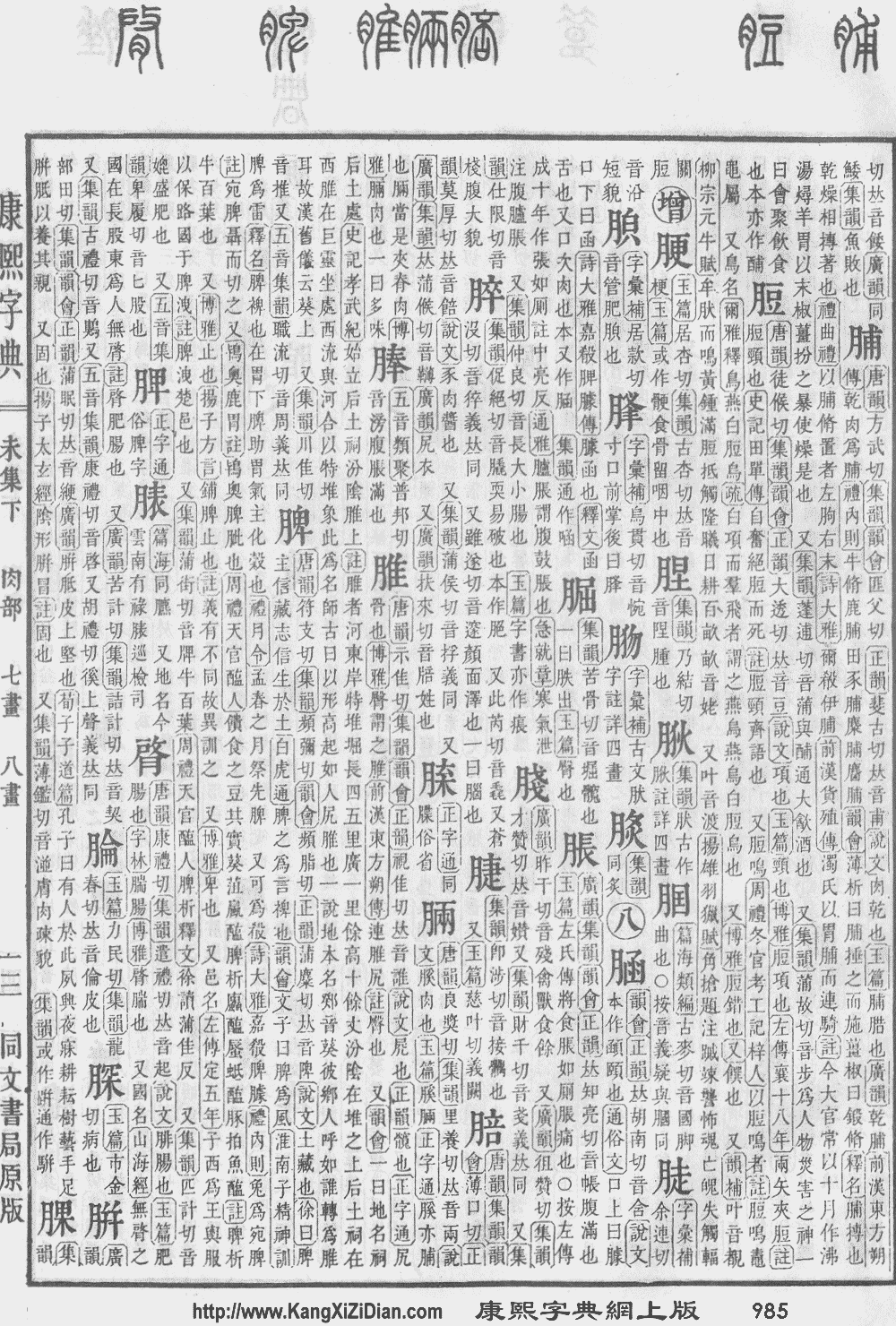
脹 (Kangxi radical 130, 肉+8, 12 strokes, cangjie input 月尸一女 (BSMV), four-corner 71232, composition ⿰⺼長)
References
- KangXi: page 985, character 14
- Dai Kanwa Jiten: character 29570
- Dae Jaweon: page 1438, character 10
- Hanyu Da Zidian (first edition): volume 3, page 2083, character 4
- Unihan data for U+8139
Japanese
Readings
- Go-on: ちょう (chō)←ちやう (tyau, historical); じょう (jō)←ぢやう (dyau, historical)
- Kan-on: ちょう (chō)←ちやう (tyau, historical)
- Kun: ふくれる (fukureru, 脹れる)
Usage notes
Removed from the daily use Jōyō kanji by the Japanese government in 2010.[1]
Korean
Etymology
From Middle Chinese 脹 (MC ʈɨɐŋH).
| Historical readings |
|---|
|
Pronunciation
- (SK Standard/Seoul) IPA(key): [t͡ɕʰa̠(ː)ŋ]
- Phonetic hangul: [창(ː)]
- Though still prescribed in Standard Korean, most speakers in both Koreas no longer distinguish vowel length.
Compounds
Vietnamese
This article is issued from Wiktionary. The text is licensed under Creative Commons - Attribution - Sharealike. Additional terms may apply for the media files.