綿
See also: 绵
| ||||||||
Translingual
Han character
綿 (Kangxi radical 120, 糸+8, 14 strokes, cangjie input 女火竹日月 (VFHAB), four-corner 26927, composition ⿰糹帛)
References
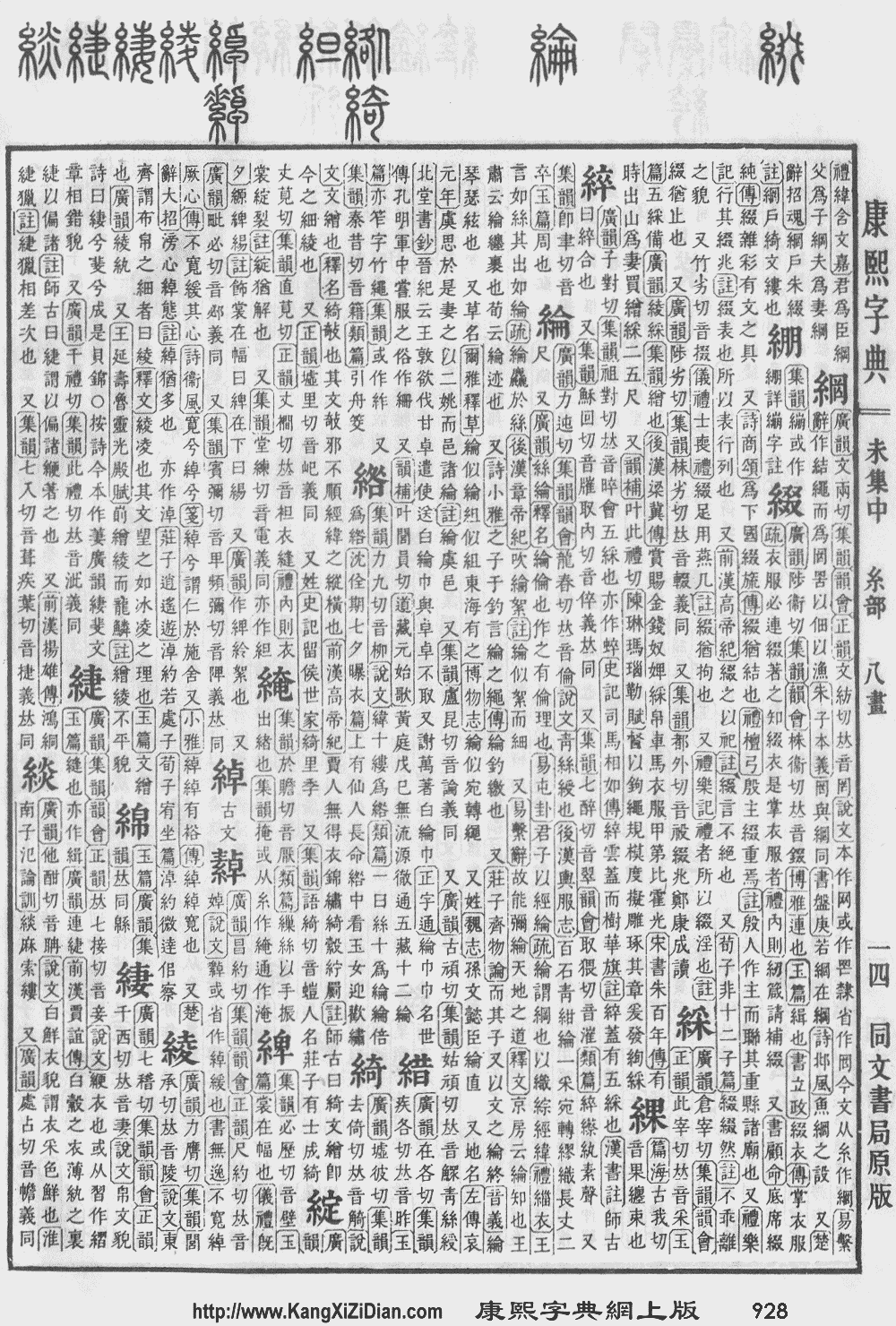
- KangXi: page 928, character 17
- Dai Kanwa Jiten: character 27592
- Dae Jaweon: page 1366, character 6
- Hanyu Da Zidian (first edition): volume 5, page 3416, character 2
- Unihan data for U+7DBF
Chinese
| trad. | 綿 | |
|---|---|---|
| simp. | 绵 | |
| alternative forms | 緜 | |
Pronunciation
Definitions
綿
Compounds
Derived terms from 綿
|
References
- “Entry #10784”, in 臺灣閩南語常用詞辭典 [Dictionary of Frequently-Used Taiwan Minnan] (in Chinese and Min Nan), Ministry of Education, R.O.C., 2011.
Japanese
Etymology 1
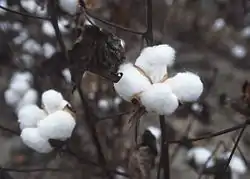
綿 (men, wata): raw cotton on the bush.
| Kanji in this term |
|---|
| 綿 |
| めん Grade: 5 |
| on’yomi |
From Middle Chinese 綿 (miɛn, “wool; cotton; soft, downy”).
Usage notes
As a standalone noun, the term 木綿 (momen, “cotton”, literally “tree or bush + woolly batting”) is used more often. This is especially true in speech, to avoid ambiguity with the various homophones, such as 面 (men, “face”) or 麺 (men, “noodle”).
Synonyms
- 木綿 (momen)
Etymology 2
| Kanji in this term |
|---|
| 綿 |
| わた Grade: 5 |
| kun’yomi |
From Old Japanese. Originally referred to any batting or stuffing, which was generally unspun silk. The meaning shifted after the spread of cotton in the Muromachi period.
Alternative forms
- (both rare) 棉, 草綿
Noun
綿 • (wata)
Derived terms
Derived terms
- 真綿 (mawata): silk batting; silk floss
- 綿菓子 (watagashi): cotton candy, candy floss
Korean
Vietnamese
This article is issued from Wiktionary. The text is licensed under Creative Commons - Attribution - Sharealike. Additional terms may apply for the media files.