毄
| ||||||||
Translingual
Han character
毄 (radical 79, 殳+10, 14 strokes, cangjie input 十口竹弓水 (JRHNE), four-corner 57647, composition ⿰軎殳)
References
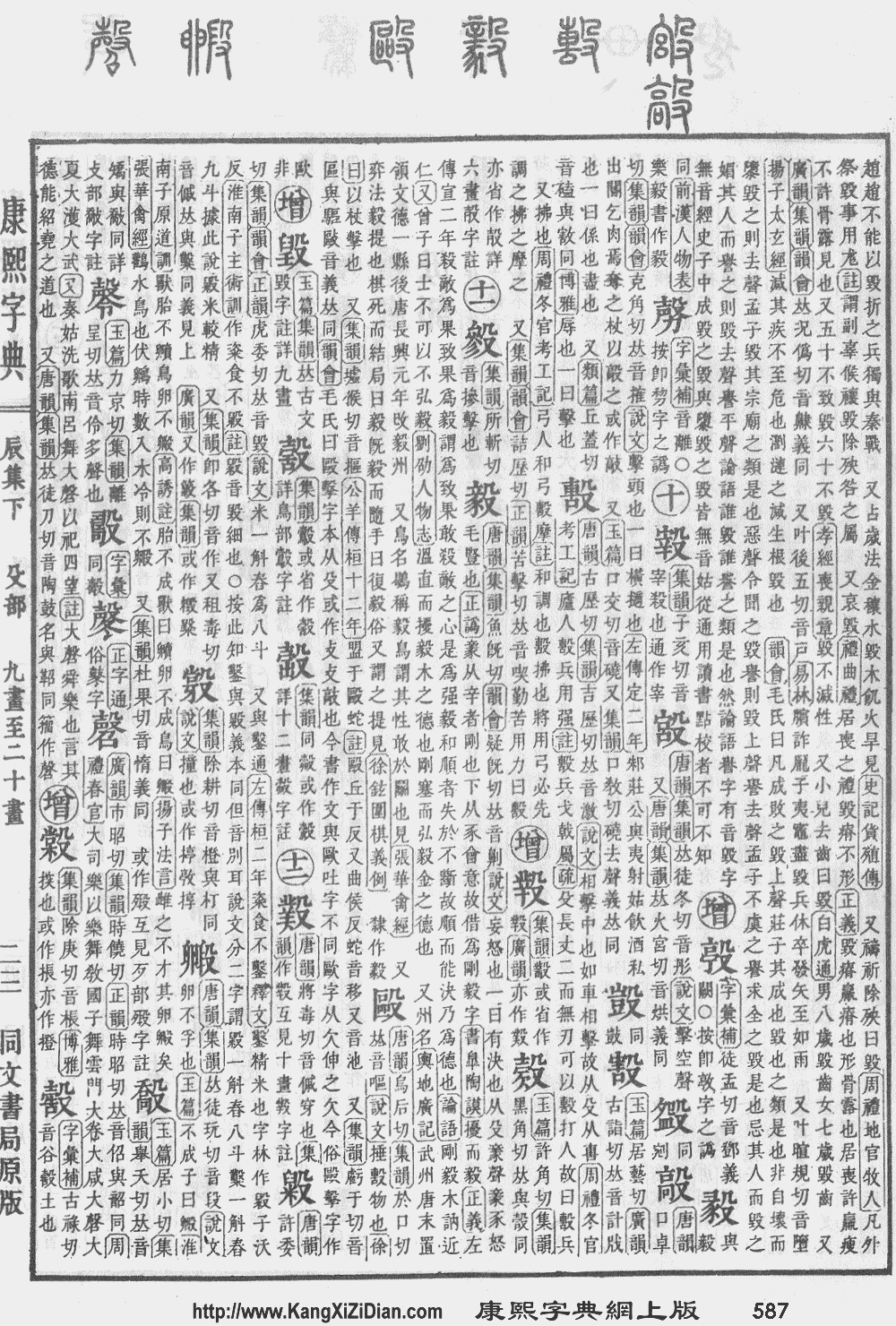
- KangXi: page 587, character 10
- Dai Kanwa Jiten: character 16668
- Dae Jaweon: page 979, character 12
- Hanyu Da Zidian: volume 3, page 2163, character 10
- Unihan data for U+6BC4
Chinese
| trad. | 毄 | |
|---|---|---|
| simp. | 𬆦 | |
Glyph origin
| Characters in the same phonetic series (毄) (Zhengzhang, 2003) | |
|---|---|
| Old Chinese | |
| 繫 | *keːɡs, *ɡeːɡs |
| 檕 | *keːɡs, *kʰeː |
| 轚 | *keːɡs, *keːɡ |
| 蘻 | *keːɡs |
| 罊 | *kʰeːɡs, *kʰreːɡ |
| 蟿 | *kʰeːɡs, *kʰiɡs |
| 礊 | *kʰreːɡ, *kʰreːɡ, *qʰʷreːɡ |
| 擊 | *keːɡ |
| 墼 | *keːɡ |
Ideogrammic compound (會意) : 軎 (“axle tip”) + 殳 (“weapon”) - things which hit each other.
Pronunciation
Japanese
Kanji
毄
Usage notes
This character does not appear to be used in modern Japanese.
Korean
Hanja
毄 • (gyeok) (hangeul 격, revised gyeok, McCune–Reischauer kyŏk, Yale kyek)
- to hit against, to strike
This article is issued from Wiktionary. The text is licensed under Creative Commons - Attribution - Sharealike. Additional terms may apply for the media files.